THINK BEYOND THE FACTS, THINK CONCEPTUALLY
  • Home
  • Services
  • Free Resources
  • Blog
  • About
  • Contact

Concepts in Action

My Journey to Joyful 'Mathematizing'

10/30/2025

0 Comments

 
Picture
Mathematics class was never a place where I felt curious, a sense of anticipation or even reasonably challenged within a zone that kept me motivated and mentally engaged. Memories of math class across K-12 do not bring warm, fuzzy feelings or a smile to my face. My relationship with numbers, problem-solving and equations was strained; it lacked joy and always struck feelings of fear and anxiety about incompetence and a lack of intelligence. When a colleague talked about math, my pulse would pick up immediately. Panic would start to set in. Every memory of elementary math class consists of rote memorization, a quiet classroom watching a teacher perform operations and then mimicking equations without any conceptual understanding of why. I really had no idea why we were doing some of these problems, what was their connection to my world and the purpose. We did math in the abstract. There was no reference made to relevance, a real life context or the ways in which I could apply that for real world problem-solving.

Over time math concepts and equations became increasingly inaccessible. Such that I could not access prior knowledge to make meaning. As a visual person, I know I understand something well when I can use visualizing strategies to synthesize my thinking. I found I lacked the knowledge to visualize representations (model) and reason through problems to find a solution. It was such a relief to listen to Dr. Jo Boaler describe math trauma as I realized I was not alone. Many others globally suffered the same feelings of inadequacy. K-12 math evokes memories of tears, arguments and extreme frustration for me. Because of my experiences with math, I determined that students in my care would not carry those same feelings. I determined to ensure my approach to teaching mathematics brought a spirit of joy, evoked curiosity and created motivation. I would do my utmost to ensure my students could access the concepts and make sense of the problems they faced. In order to do so,
I had to unlearn and relearn so much of what I had been taught down to how I saw, visualized and comprehended numbers, digits, place value, and sentences. It was a messy process, challenging my efficacy, mindset and resilience but over time, I experienced the results. How it warmed my heart to hear my learners shout with joy because it was time for math on the schedule!

Stage 1: George Mason University M. Ed. Program

A door opens to a new approach...
Every class in the GMU postgraduate VA certification program framed its content around international education, the IB and the PYP. When I arrived in July 2013, one of my first three classes was Mathematics in International Schools. To be completely honest, this class utterly terrified me. I walked in to the first day of math class feeling highly anxious. Dr. Baker was the first person to introduce me to the idea that there are strategies for problem-solving. We spent 8 days together wrestling with problems in a constructive, psychologically safe classroom. I discovered I was not the only one feeling a deep lack of confidence which was comforting. Over 7 days, I learned math can be constructed, visualized, accessible and even fun. However, 7 days did not help me overcome my math anxiety from 16 years of memorizing and mimicking. It did not help me unlearn and relearn math strategies for Number Operations. I knew I had a long road ahead of me so I challenged myself to develop myself at a pace that I could cognitively process.

Picture
Assessment for Process Errors
Assessment in mathematics involves the process of solving a problem. You can see that the solutions we analyzed were all traditional algorithms. At this stage in my math journey, I found it  comforting to work with familiar problems. Our class analyzed student process to identify the error within the process that led to an incorrect answer. The idea is to use this information to map out the teaching and learning response to support the student to move forward. Years down the road, I will learn that reasoning through a problem for efficient, clever solutions uses a process but it does not have to be through an algorithm only.

Setting the stage
Dr. Baker modeled math routines through the way she organized our learning day at GMU that summer. We solved a problem of the day, experienced a math read aloud and played with strategies that she showed us. Below are some of the topics we talked about which all made sense to me and gave me ideas for how I would approach math instruction for my young learners at IDBEC.

Problem of the Day
Every day, Dr. Baker introduced the problem of the day as a contextual meaningful problem that we could all access and solve in the way that best suited us. We enjoyed these so much as a class! I took these back to Mexico and used them in a new after school club - Math club for grade 3-6. My students had not been exposed to math and over time, I found them looking forward to math club which gave me great joy! This was my first baby step towards becoming a math teacher and I celebrated the small wins.​

Math Picture Books
Every day, Dr. Baker included a read aloud which I absolutely loved! This inspired me to begin my own collection of math related pictures books. And when I arrived to IDBEC in Iraq, we had Marilyn Burns collections available which I readily put to use with my learners. Later I discovered Book Source which has collections of math read alouds. ​

Stage 2: My initial steps as mathematics teacher at IDBEC...

Picture


Returning to the Classroom to learn the PYP, August 2014
Halfway through my M. ED. program, I decided to take a courageous step to leave my home of 11 years in Cancun, Mexico. I was an empty-nester, separated and ready for a new adventure so I accepted a position as a PYP Grade 2 Homeroom teacher in Erbil, Iraq (the Kurdistan Regional Government) at İhsan Doğramaci Bilkent Erbil College. I left Cancun for Iraq just a couple months after the war with ISIS began in June 2014. Besides learning to facilitate transdisciplinary inquiry, this would be my first experience to teach math. In Mexico, only the Spanish teachers taught mathematics. However, I was determined to do well, so I rolled up my sleeves, invested the time and pushed forward.

At IDBEC, we had incredibly experienced teachers on our faculty who I collaborated with and learned from. Two of those math champions were Perico Pineda (IBEN) and Nicole Panoho on my Grade 2 Team. One thing I quickly realized about Nicole was how much schema knowledge she brought to her classroom. She had no math anxiety. On the contrary, she loved math and had learned to solve problems with a wide variety of strategies as part of her elementary and secondary education.

As our Grade 2 team leader, Perico brought a passion to differentiate for our diverse learners to ensure all our learners developed as mathematicians; he urged us to use our Team Teaching time to challenge learners at their appropriate levels. These two colleagues helped me to explore and use strategies to teach our learners. Together, we developed visuals as anchor charts to unify our grade level language so that when we were team teaching we were using the same approaches. These were really for me more than anyone else!! I used them to teach myself so I could model strategies for my students in small groups and coach them. 

What I did not yet understand: 
  • the difference between strategies and models
  • how to make math contextual
  • teaching reasoning over simply explaining a procedure to follow (reliance on memorization)
    • using number talks to build reasoning skills without encouraging mimicking
  • running a problem string
  • the best way to use the tools or manipulatives in my classroom
  • how to spiral mathematical themes to ensure everyone was challenged

Vertical vs Horizontal
Our faculty meetings rotated between classrooms where the hosting teacher presented a lesson or shared a best practice prior to the start of the agenda. One afternoon, Frank Lewthwaite (New Zealand origin), Grade 4 teacher, put an addition problem on the board as a vertical algorithm. He shared that his students found it impossible to solve problems unless they moved the numbers from a horizontal number sentence to a vertical addition algorithm. His talk challenged us to move beyond the vertical algorithm and wrote memorization to teach the children to see numbers flexibly. This short number talk played a role in shifting my thinking about problem-solving.

​Strategy Posters (more for me than my learners)


Picture
Introduction to Count Me In and Count Me In, Too!
Our school was following the Ontario Mathematics Standards supported by Australia's First Steps Math, Count Me In and Count Me In, Too as well as some printed Abacus workbooks. It was overwhelming for me to get my head around; huge amounts of information that I could not easily digest. Stacks of materials that were in essence inaccessible because of the time it would take me to read them and then make sense of them.

Over time, I began to create my own games for the children to play using dice to build number sense. I also spent a lot of money on Teachers Pay Teachers to download games. My Australian colleagues introduced me to Partitioning as a tool to build number knowledge beginning with numbers to 10, 20 and then 100. Then we had in-house training sessions on using games to build number fluency. It was a monumental work on the part of our colleagues who organized this program for our team.

Karen Zuvich and Gail Houghton brought deep knowledge about mathematics to our team. I remember sitting in meetings listening to them elaborate on math strategies which were so far ahead of me cognitively, I could not follow as I would have liked. This manifested as resistance; however, I was not actually resistant. Simply, I just did not understand yet. I could not make sense of it in my head and get a vision for math. I needed someone to plan math with me every week, to show me how to use those games, to help me understand what knowledge and skills I was assessing through those games and how I was helping children build fluency. There remained so many unanswered questions:
  • How do games help build fluency?
  • What standards outcomes align?
  • How do I assess the skills that are forming through games?
  • What tool will help me organize the data that I observe?
  • How do I choose the right game to challenge students?

I continued in survival mode, buying materials from Teachers Pay Teachers and creating my own materials. Schools frequently provide Literacy Specialists to support teachers with the complexity of teaching students to be communicators but a Mathematics Specialist is rare. I would have loved to have ongoing access to a math mentor but they had full time jobs in other grade levels.

Years down the road, now that I have spent a couple years taking math courses to relearn math, I want to go back to the resources of Count Me In, Too. I want to analyze the progression and how they build fluency. I want to play with those math games with students to notice where it supports their conceptualization or comprehension of math facts and concepts.  

the_ontario_curriculum_math18curr.pdf
File Size: 957 kb
File Type: pdf
Download File


Picture
Gail and Karen facilitating a workshop for our team at IDBEC.
Picture

Designing Math Games
Over time, I began to create my own games for the children to play using dice to build number sense. I also spent a lot of my own money on Teachers Pay Teachers to download games that made sense to me and connected to the Ontario math standards. My colleague, Karen Zuvich, introduced me to Partitioning as a tool to build number knowledge beginning with numbers to 10, 20 and then 100. This is a strategy I have held onto and continue to use and build with learners working on fluency.

Fun Partitioning Game: 
  1. I give them a cup of cubes or beans (i.e. 20).
  2. Student covers the top of the cup with one hand and shake it up and down
  3. Then, student closes their eyes
  4. They turn the cup upside down on the table and they remove some cubes/beans while leaving the rest inside.
  5. Then they open their eyes, check how many are on the outside.
  6. Use strategies to calculate how many are left inside.
  7. They can check their answer by lifting the cup.
Partitioning with Ten 

Here is a video I made for my learners during the pandemic several years later to explain to them how to play the partitioning game with number to ten.

Picture
IDBEC Years 2 into Year 3
After the first year with my grade two, I began to make conceptual connections between number (visualizing groups & partitioning), multiplication, division, fractions and time. I decided to leave Time (Measurement strand) to the end of the year after we had a solid amount of experiences with partitioning and working with fair shares, equal groups or fractions of a whole (one item or a group of items). Because of this, I decided to experiment with spiraling the concepts. I created more activities that could serve as warm up or independent small group work. Students would practice visualizing a number they chose (usually rolling a dice or two) and then to move towards thinking about equal groups. I found these to be very effective and engaging. I would make sure they understood what to do in a small group and then reinforce in an independent group when I felt they grasped it. Because it was group work, my students always had support and felt empowered to get tools when needed or to ask for support from a classmate. By leaving the Measurement Strand of Time to the end of the year, I noticed it was much easier for my learners to grasp the concept. They could understand the 60 minutes divided up into chunks based on groups of 5 much better and learning to read a clock was easier.


Assessment at IDBEC
Our school decided to follow Ontario, Canada's mathematics standards for number knowledge and strategies. However, as a school we used the Australian SENA to assess and track number knowledge and strategies. We did not tackle the work to see where the SENA aligned with the Ontario standards and where there were gaps. Using the SENA 1 and SENA 2 helped me to build understandings about the content I should be spiraling in the classroom. This led me to implement Number of the Day for number talk warm up with the whole group. I then began to include Number of the Day in our weekly centers work (examples below the sena assessments).​
sena_1_guidelines.pdf
File Size: 129 kb
File Type: pdf
Download File

sena_2_guidelines.pdf
File Size: 169 kb
File Type: pdf
Download File

sena_3_guidelines.pdf
File Size: 127 kb
File Type: pdf
Download File

sena_4_guidelines.pdf
File Size: 101 kb
File Type: pdf
Download File

sena_1_recording_sheet_1.pdf
File Size: 184 kb
File Type: pdf
Download File

sena_2_recording_sheet.pdf
File Size: 477 kb
File Type: pdf
Download File

sena_3_recording_sheet.pdf
File Size: 646 kb
File Type: pdf
Download File

sena_4_recording_sheet.pdf
File Size: 375 kb
File Type: pdf
Download File

blm_for_sena_1.pdf
File Size: 191 kb
File Type: pdf
Download File

blm_for_sena_2.pdf
File Size: 365 kb
File Type: pdf
Download File

blm_for_sena_3.pdf
File Size: 330 kb
File Type: pdf
Download File

blm_for_sena_4.pdf
File Size: 392 kb
File Type: pdf
Download File


Stage 3: Mathematics at MEF International School...

Curriculum Mapping Opens Doors to Differentiation (2017-2019)
When I joined MEFIS as PYP Coordinator, we had a significant number of new staff in the primary. The timing was relevant for a team review of our Scope and Sequence documents. We looked for ways to bring alignment of pedagogical practices and curriculum across disciplines including mathematics. Our grade 4 teacher and STEAM specialist, Chinyelu Ndubisi, was keen on joining me in this endeavor so MEFIS sent her to a Mathematics in the PYP Conference in Vienna, Austria. While attending Vienna International School's Mathematics conference, Chinyelu had the opportunity to not only learn more about problem-solving strategies, but also obtained access to a tremendous amount of resources. She was also "able to get a  'whole picture' of how the PYP works" through the lens of mathematics. Chinyelu came back inspired.
"It turns out there is no such thing as a maths brain"
Dr. Jo Boaler
When teachers ask me how this can be possible, I tell them that the best thinking we have on this now is that the brain sparks and grows when we make a mistake, even if we are not aware of it, because it is a time of struggle; the brain is challenged and the challenge results in growth." 
Dr. Jo Boaler
At MEFIS, we began to discover the research by Dr. Jo Boaler on mistakes, math trauma and her connections to mindset. These quotes (taken from the 3P Busting the "maths brain" myth) point to the fact that everyone can become a mathematician. We have a responsibility as educators to open doors of access by building our own capacity as mathematicians.
3p_busting_the_math_brain_myth.pdf
File Size: 5743 kb
File Type: pdf
Download File

Picture
VIS shared the evolution of their mathematics curriculum as it connects to the IP/PYP for an inquiry-based approach. Chinyelu's impression of VIS's approach to curriculum mapping moved her to share this with our PYP team. As a team, we agreed with her proposal to move in a similar direction.

​VIS mapped beyond knowledge, understandings and skills by including strategies for operations. This approach both scaffolds and spirals the strategies across the primary for complexity. It builds common language between classrooms and grade levels. The accessibility of the mapping supports differentiation and more targeted assessment. The alignment of approaches had the aim of bring about increasing consistency across the division. Below you can see an example of Grade 2. We created a map for every grade level aligning it to Ontario Standards which were more inquiry- based and easier to follow than the PYP Mathematics Scope and Sequence available at the time. The hyperlinks led a teacher to a visual example of the strategy specific to that grade level. These pictures were captured from classroom examples and stored in a folder on our Google Drive.

Because we had the math curriculum mapped out like this for each grade level, it was easier to see how to respond to assessment data so we could personalize the learning. For those working below grade level, a teacher could use the previous years overview; and likewise, for those working ahead, the teacher could differentiate by offering extensions from the next grade level.
Picture
Linda Allen, our principal, was from New Zealand so she joined our committee to conduct the review and support the mapping process. It was a deep dive into strategies for me serving as an incredible year of math professional development. Then, to dive deeper into assessing for differentiation, we applied the SENA Assessments across the entire school. Linda and I pulled students to assess their knowledge and use of strategies for solving problems. This experience with students through grade 5 enabled me to build deeper understandings about the assessment of fractions. Investing time in conducting these number interviews provided me, the observer, with multiple ways of learning how our students visualized and approached problems. This informed our teaching, our professional development and how we use resources.

At the time, I was able to download these continuums (see below) from Australia's New South Wales Education website. They are no longer available but I have added those PDFs here.
Aspect 1 Counting Sequences.pdf
File Size: 20515 kb
File Type: pdf
Download File

Aspect 2 Early Arithmetical Strategies.pdf
File Size: 86343 kb
File Type: pdf
Download File

Aspect 3 Pattern & Number Structure.pdf
File Size: 12589 kb
File Type: pdf
Download File

Aspect 4 Multi-Unit Place Value.pdf
File Size: 59270 kb
File Type: pdf
Download File

Aspect 5 Multiplication & Division.pdf
File Size: 38122 kb
File Type: pdf
Download File

Aspect 6 Fraction Units.pdf
File Size: 108980 kb
File Type: pdf
Download File

Aspect 7 Measurement.pdf
File Size: 71592 kb
File Type: pdf
Download File


Picture
Mathematics & Connections to CBCI
When I arrived at MEFIS, I had recently attended and graduated the CBCI Institute in Haarlem, The Netherlands (2017). Dr. Jennifer Chang Wathall presented on mathematics demonstrating ways to teach the concepts of math through experiences and rich real world problems. Mathematics involves both processes and knowledge which are important for us to be aware of so we make space for those in the classroom. As we went through our curriculum, I noticed the lack of understandings. Most curriculum focuses on the skills to develop and facts/algorithms/rules to drill for memorization.

Picture

Materials for Differentiation
We had many resources spread across different closets that were difficult to access.  Our teachers were working so hard (without a teaching assistant), I felt the need to make not only curriculum accessible but to ensure that tools and manipulative materials could be located quickly. So after getting a space approved, I invested the time to organize a room with shelves for shared materials. They were organized by discipline and then by strand. It was amazing to identify, organize and catalog so many resources that were available for scaffolding the learning. And, we freed up space in the homeroom classrooms by putting these materials in that shared space. Working with all the material in this way across the grade levels enabled me to see what kinds of tools are available and how we can differentiate more for our learners.

Stage 4: IICS Math Task Force nurtures curiosity for ongoing inquiry...

Picture
October 2019
A year prior to my arrival at IICS,  mathematics learning and teaching in the PYP had begun a transformational process under Rob Grantham, Greta Hazlett and Monica Hoge's leadership. Through the Curriculum Review Cycle, the IICS PYP team had identified mathematics as an area of focus for complete revision and ongoing professional development. Teachers were unhappy with the written curriculum as it was viewed as a long laundry list of knowledge to be taught and ticked off. They were more unhappy with the taught curriculum and the pedagogy of math visible in the learning community. There was clear room for improvement through an intentional alignment of beliefs, practices and knowledge. Professional Development faculty-wide to shift practices towards to teaching for understanding and reasoning was needed.

This led to a two-week Faculty In Residence program with math specialist, Johnnie Wilson, from University of California Santa Cruz. The entire PYP team participated in the residency. And the initiative continued forward driven by a team of motivated teachers committed to the aims laid out with the guidance of Johnie Wilson. The Math Task Force met regularly to develop the IICS approach to mathematics actively involving all teachers. What was the objective, their goal? 
  • to create a mathematics curriculum grounded in current research and best practice
  • to bring alignment between the program and pedagogy with the mission and beliefs about learning 
    • this manifested as 6 tenets to united the PYP team
  • to prepare students for success as mathematicians; to shift mindsets based on a common belief that 'we are all mathematicians'
These teachers met regularly. It was a pleasure to join the team as an interim PYP Coordinator and jump into these meetings. I listened and observed eager to learn from my new colleagues. As a team, NZ Mathematics (now hosted by Australia) was selected as the program to follow because it was accessible, conceptual and strategies based without an enormous list of knowledge to teach. There was the added bonus of two teachers on the team who were thoroughly trained in the program. NZ Mathematics provided a scope and sequence, student profiles to track knowledge and skill development, teacher materials with lessons and assessment tools to track stages (GLoSS, IKAN and JAM). A Program of Inquiry for mathematics was organized to make all the information and resources accessible through a single document on Google Drive.

The Math Task Force lead the ongoing work, making decisions about curriculum, resources and professional development. Many teachers and students participated in an online YouCubed course by Jo Boaler on mindsets. The Task Force drew on the research of Drs. Jo Boaler, John Hattie, Jeremy Bruner, and Van Der Walle et al., as well as the framework documents of the IB PYP. The IICS pedagogical approach to mathematics was elaborated and shared with the wider learning community.

​NZ Maths Pedagogy was enriched with other resources: 
  • Van der Walle Books K - 2 and 3-6
  • Number Talks by Sherry Parrish
  • Mathematical Mindsets Big Ideas K-6 by Jo Boaler
  • Cathy Fosnot's Contexts for Learning 
  • Rich Learning with Dan Finkel and the games in Math for Love
  • Youcubed Tasks​
  • Which one doesn’t belong?
  • Would you rather?
  • Estimation 180 - Great warm ups
  • Visual Patterns
  • Number Strings
  • Choral Counting
  • Math Visuals
  • GFletchy Progression Videos
  • Same or Different?
  • Always, Sometimes, Never
  • Open Middle - Rich Math Tasks
  • Dan Meyer’s Three Math Acts - Rich Math Tasks
  • Yummy Math
  • Robert Kaplinsky Lessons - Rich Math Tasks
  • Inside Problem Solving
  • A+ Click Maths
  • NRich Maths
  • K5 Math Resources and Math Journals
  • Math Learning Center - Apps
  • Build Math Minds
  • ​Math Strat Chat Collections: Follow Pam Harris on Social Media - StratChat - to solve the problem of the week
  • Love Maths Games

Picture
nzc_mathematics_standards_for_years_1-8_poster__1_.pdf
File Size: 152 kb
File Type: pdf
Download File


NZ Student Profiles
These tools support tracking student progress through ongoing assessment. Maintaining one for each child allows the teacher to personalize the learning by keeping track of student progress.
one_to_one.pdf
File Size: 85 kb
File Type: pdf
Download File

emergent.pdf
File Size: 48 kb
File Type: pdf
Download File

advanced_additive.pdf
File Size: 87 kb
File Type: pdf
Download File

from_one_materials.pdf
File Size: 59 kb
File Type: pdf
Download File

advanced_counting.pdf
File Size: 79 kb
File Type: pdf
Download File

advanced_multiplicative.pdf
File Size: 119 kb
File Type: pdf
Download File

from_one_imaging.pdf
File Size: 64 kb
File Type: pdf
Download File

early_additive.pdf
File Size: 65 kb
File Type: pdf
Download File

advanced_proportional.pdf
File Size: 86 kb
File Type: pdf
Download File


Volunteering for Grade 6 Learning Support Math Groups
That same year, we had some students in grade 6 who needed math support in proportional thinking and fractions. There were knowledge gaps that prevented them from moving forward. I wanted to close those gaps and build confidence for reasoning proportionally. So I decided to participate in providing personalized lessons to get to know the students, the curriculum and build my math capacity. I used the data from the GLoSS Assessment to target specific knowledge and skills through inquiry-based lessons. Knowing my former colleague, Perico Pineda, was teaching grade 5 in Luanda, I reached out to him for some tips. He sent me images of some fractions lessons he was doing with his learners. These activities inspired me to work with my learners creatively and also build my own understanding of the ways of visualizing fractions.
Perico's ideas inspired the following activities that turned into lessons over the remainder of the school year even as we transitioned online with the arrival of the pandemic in March 2020. I used an inquiry-based approach to problem-solving to motivate these learners and they grew. They took risks, developed confidence to participate more actively resulting in more joyful mathematical thinkers. It was wonderful to see my students make improvements in proportional thinking when assessed on GLoSS. Closing those gaps enabled them to move forward.

Jumping forward a few years to 2024 when I was in the middle of Pam Harris' Developing Powerful Fractions 1 course, I believe I can see ways to spiral proportional thinking between fractions, decimals, percentages and ratios. Though, I still need a lot of practice to feel a strong sense of self-efficacy.
Fraction Strategies & Problems.pdf
File Size: 299 kb
File Type: pdf
Download File


Stepping back into the Classroom: Grade 2 Distance Learning (2020-2021) 
For the school year 2020-2021, I made the decision to return to the classroom as I really loved the team at IICS and wished to remain. I was hoping that a leadership position would open up in the near future. This provided me the opportunity to further develop my capacity as a mathematics instructor building on what I had learned at MEFIS and in the past year at IICS.  We made the decision for that school year to use Eureka Math from New York State as it provided slide decks and printable sheets that we could use for Distance Listening. Every day, we provided small group instruction online for math and literacy. For each week, I edited the slides for a week of math warm ups, number talks and application time. Learners had printed packets at home to practice with their parents - something I would not do in the classroom on a regular basis but given the circumstances, I had to choose the best approach to simplify learning for parent involvement that minimized frustration.

The nature of teaching young grade 2 learners online was tough however, using my tools creatively while posing questions, I was able to keep my learners engaged. I used my iPad as a doc camera so I could demonstrate when necessary or document visually what a learner was explaining when solving a problem. We honed in on learning strategies for efficient, clever solutions such as making ten, compensation, and using place value. We learned to model on a number line, to use arrays for moving towards multiplicative thinking. We did a lot of work with equal groups and for those working at a more advanced level, we began to explore multiplying and dividing by 10.

As a visual person, I began to analyze what I was doing and make visuals. We began with a simplified version of the process and practices of a mathematician for our learners. From that I created visual for myself to extend on it.
Picture
Picture
Picture
SMPs bringing it all together to include Pam Harris and Jo Boaler.
Picture

equal_groups_think_concept.pdf
File Size: 2572 kb
File Type: pdf
Download File

Equal Groups Activities
Some of these were designed for language learners to reduce the amount of language to read and through our math groups, we talked about the context together.
      For example, for 3 groups 6, we talked about the unit  - What will we draw? 
  • children
  • animals
  • tools
  • dots
  • candy
  • sports equipment
And then decided together so there was context built in through our math group. As the year progressed, many times I observed my learners giving context themselves as they chose how to visualize numbers
Unpacking NZ Stages - a deep dive analysis to understand assessment indicators 
Following a year in the classroom, I stepped back into the role of PYP Coordinator. I decided to take a deep dive in NZ Stages. I needed to unpack it all for myself so I could make sense of the program, the approach, the stages and the concepts. I needed to make sense each stage; what it meant in terms of knowledge (understanding & facts), skills and strategies for reasoning.

​In order to launch this, I reached out a former colleague from IDBEC, Hannah Moorehouse of New Zealand and who was back in NZ teaching and leading. She thought it would be helpful to look at some of the previous documents and pointed me to the NUMPA. She also pointed me to Twinkle where the NZ Maths Stages were available in a variety of forms such as Posters which I downloaded and posted on my wall.
​
NZ Maths Standards Amended VS3.pdf
File Size: 4053 kb
File Type: pdf
Download File

NUMPA Diagnostic Number Book1.pdf
File Size: 513 kb
File Type: pdf
Download File

NUMPA Diagnostic Book2.pdf
File Size: 806 kb
File Type: pdf
Download File

Unpacking NZ Assessment Tools
​
Following a year in the classroom, I stepped back into the role of PYP Coordinator. I decided to take a deep dive in NZ Stages. I needed to unpack it all for myself so I could make sense of the program, the approach, the stages and the concepts. I needed to make sense each stage; what it meant in terms of knowledge (understanding & facts), skills and strategies for reasoning. 

I began to create a visual using a table to show:
  • Stage
  • Grade Level (which grade is targeting that stage for year end achievement)
  • Expected problem-solving strategies for that developmental stage
  • Basic facts and knowledge needed to apply problem-solving strategies at that stage

Once I organized the information this way, I hyperlinked supplemental resources so that this document could enrich the Mathematics Program of Inquiry. In the middle of this process, I continued my journey to unlearn and relearn math by taking my first courses with Pam Harris and Math-is-Figure-Out-Able. I could not resist after listening to two of my colleagues at the time. Lauren Graham and Breda Hayes (see picture below) would share their insights and enthusiasm for building their toolbox of strategies every time I had a chance to sit with them. Both Lauren and Breda inspired me to find my new worry free math self, to continue building my capacity and to relentlessly pursue the joy in 'mathematizing' (invented by Pam Harris). Kendall Jackson pictured with Lauren below inspired me to learn how to use the Rekenrek which I eventually did at Brewster Madrid using Cathy Fosnot materials as a guide. I value these people who inspire me to dig in for ongoing growth. Thank you!

I began with Pam Harris' free course, Developing Mathematical Reasoning. I loved this course so much, that I decided to take Building Powerful Multiplication. This led me to ponder more deeply about spiraling strategies across grade levels, and developing student capacity to become increasingly efficient, accurate and clever with using what they know to solve a problem without rote memorization. 
Picture
Breda and Lauren presenting a math workshop to our parents at the Hisar campus.
Picture
Lauren and Kendall presenting a mathematics workshop for our Marmara campus parents.
Unpacking NZ Assessment Tools
​
So I then began to analyze the strategies and map those across the grade levels for common metalanguage. I wanted to show how the same strategy can be used on more complex problems while some strategies are stepping stones to more complex strategies. This personal inquiry helped me so much to engage with teachers about math as I felt I could speak their language and make connections to challenges they faced. 

One of these challenges was the assessment tool we used for our lower grades. The NZ JAM was organized in a way that felt inaccessible. Having previously used the SENA (see above), I felt the urge to rearrange the information for flow and accessibility. One major adaptation we made attended to the breadth of numbers to be assessed. Assessing numbers to 10000 in the JAM felt quite daunting for us so we decided to break the content into two separate assessments for numbers to 100 and then up to 1000 moving to 10000. A second adaptation we made attended to the order of the assessment content. We wanted to make it flow more developmentally so Early Years teachers could hone in on the concepts and facts that were more relevant to their age group.​
Picture
As a team we trialed these and made changes over time to improve usability. Here you can see Number Interview I (stages 0-4 and limited to numbers to 100). The front cover checklist was organized with the intent to track a learner's progress over time. We were pondering what it would look like to use this to track development without necessarily conducting the interview. Interviews take a considerable amount of time so learning to track development as an ongoing process is a paradigm shift.

​Over time, after working with these for several years, I realized that I had internalized the indicators for Stages 0-5. Because of the deep dive work I did to build my understanding and then following it up with administering these assessments, I was able to work with a children and quickly see what stage they were working at and what would be the best instructional response to move them forward. This was useful when I took on the role of Founding Head of Lower School at Brewster Madrid.
Picture

Personal Math Journal
Throughout all this time, I kept a math journal where I tried out problems and wrestled with strategies. I recommend having a notebook to keep as a reference point as you learn anything new. It is important to try out the strategies so you can own them - flex your math muscles and try out problems on your own. It is great to see the changes in my thinking and my ability to apply strategies that occurred over time.
Picture

Stage 5: Brewster Madrid joins the CBIM Pilot Project...

Picture

At the launch of the Brewster Madrid campus, I had the opportunity to make critical decisions about the program. One of these was the decision to join the Concept-Based Inquiry Mathematics Pilot Project. While attending the CBI Lesson Labs Conference 2023 in The Hague, I listened excitedly as Rachel French unveiled the CBIM project. Now I had the chance to participate! I was drawn to this project a couple of reasons:
  • It was aligned to the CBI in Action inquiry cycle: I proposed this inquiry cycle to our team and they embraced the idea so it was a natural alignment.
  • It would serve as a tool to support capacity building for the team to become CBI facilitators. Everyone also had a copy of Concept-Based Inquiry in Action.
  • Understandings for each strand and phase or grade level are articulated and developmentally appropriate. This means teachers could structure the class to support their students to generalize about mathematics.
  • The unit flow for each strand was designed for accessibility of the user and easily navigated.
  • The responsiveness of PLI over time - I believed confidently in Rachel's team at PLC to build a quality math program and respond to feedback from participating schools to make improvements.
  • I was eager to participate in a math program that aimed at conceptual understandings with meaningful, relevant problem-solving through CASE STUDIES!
  • I believed this program would in the end, make the life of our teachers less stressful. My previous schools had so much curriculum, it overwhelmed! I wanted to reduce for a less is more approach. I wanted to work with a sustainable math program that would provide a common metalanguage and process to spiral across the Lower School.
At the introductory call, our team met with Kelvin Sparks, the math specialist shaping the program. We shared our challenge of opening a new school with zero assessment data on anyone. We needed to know as much about our students as quickly as possible so he suggested we continue with the NZ Assessments. So we began to track NZ Stages while building our understanding of the CBI Phases. 

The decision to join the CBIM project turned out to be precisely what I had hoped for. All the reasons for which I chose this direction came to fruition with the seeds of CBI popping up on the walls, the digital portfolios, conferences and in learning conversations.

Picture

Math Learning Support
​
Over the next two years, I supported identified learners with significant gaps in basic knowledge to be able to move forward. These learners were dependent upon non-efficient strategies and facing issues with accuracy. This left some with low levels of confidence and self-efficacy. So I needed to work on mindset as well as to shore up the basic knowledge that would open the door to efficient, clever problem-solving. Using problem strings, I was able to document their thinking and talk through the problems together. Pam Harris urges problem strings over number talks because it is accessible to all learners in the room.  According to Pam Harris, "everyone grows and everyone participates" as we engage with the string, make observations together and strategically asking share our reasoning as a community. It is not a 'how to' talk where we explain how to solve the problems. I found using these with my students built confidence to communicate as the mathematized - learning from mistakes and identifying efficient, clever strategies together.

At the same time, I continued to unlearn and relearn math with Pam Harris and Journey. I took Building Powerful Division and then her Building Powerful Fractions 1. Then I began to practice this with my students using her Problem Strings. I wanted to learn to facilitate the thinking in the group without teaching them a procedure to be memorized and mimicked. I wanted my students to internalize ways to see problems that helped them move away the inefficient, clunky strategies they were currently struggling with. Pam Harris provides many free resources which you can try out to get a taste of her approach to math - instructional routines, reasoning and thinking together about problems. Check out her #MathStratChat on social media for the problem of the week. And listen to her Podcast with Kim Montague when you have a chance as it always makes me smile!

Now that Pam Harris has released Numeracy Problem String Books for Kindergarten to Grade 5, I have a copy of each. I love them! My students engage in problem-solving enthusiastically, they developing reasoning skills and the joy of working with numbers surfaces. We ordered these resources for all our classrooms as a supplement to the CBIM project so that Number Operations becomes an ongoing endeavor across the school year. 

​An inquiry into Visualizing Groups: Subitizing Leads to Groupitizing, and then Unitizing
This idea of Visualizing Groups fascinated me as once again, I was keenly aware of how much I had missed in my own children for a rich math education. Charaine Poutasi, our Early Years 3-4 teacher at IICS, used ten frames and student pictures to take attendance each day. She stressed to me the importance of asking, 'What do you see?' over "How many are there?"  I watched how she organized her playful lessons to spiral around subitizing. The impact on these learners by the time they reached grade 1 was impressive. They knew so much about number by then from a deep sense of understanding, not from a place of habit, memorization or mimicking. This captivated me! So, I finally made some time to dig into this idea. I needed to understand it more deeply especially after Jo Boaler released Mathish. There she highlighted new research on the idea of groupitizing!

Subitizing
Kaufman et al. first coined the term subitizing back in 1949 (Guillaume et al., 2023). Subitizing means learners develop the ability to instantly recognize and see patterns. Humans naturally have the ability to see and group numbers (Boaler, 2024). It is “considered as one of the core systems of numbers since it allows the precise representations of distinct objects” (Guillaume et al., 2023, p. 1). “Subitizing plays a critical role in the development of numerical skills, mostly in helping young children grasp the meaning of the first number words” (Guillaume et al., 2023 p. 1). We begin working with learners through subitizing and patterns over counting from 1 by posing these types of questions:
  • How do you see that?
  • What do you see?
This emphasis sets the children's focus on what they see and not to habitually begin counting from one. Subitizing is a skill that begins in the early years and continues throughout primary school. It develops the mental flexibility to easily make ten which can then be applied to 100, 1000 and greater when we scale up or down to decimals. Subitizing opportunities can be organized using dots, or patterns with any kind of object as well as pointing out nature or and the patterns around us in the world. It is a skill that can be practiced all the way through fifth grade with disappearing pictures of groups on a slides at which point, you have probably moved your learners to groupitize. Build Math Minds provides many nice ideas for building this skill.

Groupitizing
McCandliss et al. first coined the word ‘‘groupitizing’’ to capture the idea of “capitalizing on grouping cues during enumeration” (2010; Starkey and McCandliss, 2014). Starkey and McCandliss refer to “a phenomenon in which enumeration speed is enhanced by the presence of grouping cues, especially those that cue the presence of subsets in the subitizing range” (2014, p 122). Pam Harris defines groupitizing as the ability to use strategic grouping to parse arrays into subitizing chunks (2024). Jo Boaler explains these as “powerful mental models that are visual and physical and also foundational for a rich and deep understanding of mathematics” (2024, p. 142). Boaler goes on to highlight the importance of developing learner ability to use visual representations both physically and mentally as this has been found to be a powerful indicator for high achievement on high stakes math tests (Boaler, 2024, p. 144).
 
This is a strategy we want to encourage as it supports visualization strategies for sense-making with numbers. When we work with seeing groups (subsets) inside of 2-, 3-, and 4-digit numbers visually, we are groupitizing. We may also be working with groupitizing when we begin to think about fair shares and equi-partitioning. Here is a subitizing/ groupitizing resource or in these slides. Youcubed and Mahesh Sharma of Mathematics for All also have some resources.

Unitizing
“Fractions are relationships: they are defined in relation to an implicit or explicit whole or unit” (Neagoy, 2017). While unit is the root word, unitizing refers to the flexible thinking students begin to attain when thinking about the unit and it usually begins around third grade (Neagoy, 2017). According to Neagoy, “unitize means to separate, transform or classify something into discrete units” (2017, p. 85). Susan Lamon explains it further, “Unitizing refers to the process of constructing mental chunks in terms of which to think about a given quantity” (2020, p. 109). Lamon illustrates this with a 24 pack of drinks: How do you visualize that 24 pack? As 2 twelve-packs, 4 six-packs or 1 whole pack of 24? The way students chunk that visually affects the way they think about the quantity (Lamon, 2020).
 
The term unitizing applies to how we see fractions in relationship to the whole - the unit. A fraction is a quantity or a value. It is not a whole number. It is a small portion of a proportion of something - the unit. It is when we identify the unit of measure or the whole; we always identify a fraction that represents a unit of a whole. It is very important to always understand through unitizing what that whole thing is. Is the unit referring to one granola bar or a group of 5 granola bars? This supports making meaning for the fraction identified.
 
“The concept of a whole underlies the concept of a fraction.” (Behr and Post 1992, p. 213)
 
Continuous units: time, length, area, volume
Discrete units: sets or collections
Composite units: single entities that contain within them a set of items (case of cokes, dozen eggs)
Fractional units: the unit itself is a fractional quantity (i.e. ¼ km, ½ hour)

References


​Behr, M. J., & Post, T. R. (1992). Teaching rational numbers and decimal concepts. In T. R. Post (Ed.), Teaching mathematics in grades K-8: Research-based method. Boston: Allyn & Bacon.

Boaler, J. (2024). MATH-Ish: Finding creativity, diversity and meaning in mathematics. Harper One.

Guillaume, M., Roy, E., Van Rinsveld, A., Starkey, G.S., Uncapher, M.R. and McCandliss, B.D. (2023). Groupitizing reflects conceptual developments in math cognition and inequities in math achievement from childhood through adolescence. Child development [Online], 94(2), pp.335–347. Available from: https://doi.org/10.1111/cdev.13859.

Harris, P. (2024).  Building powerful fractions [Online]. Pam Harris Consulting, LLC. https://www.mathisfigureoutable.com/

Lamon, S. J. (2020). Teaching fractions and ratios for understanding: Essential content knowledge and instructional strategies for teachers, 4th ed. Routledge.

McCandliss, B. D., Yun, C., Hannula, M., Hubbard, E. M., Vitale, J., & Schwartz, D. (2010). Quick, how many? fluency in subitizing and “groupitizing” link to arithmetic skills, Poster Presented at the Biennial meeting of the American Educational Research Association, Denver, CO, USA.

​Neagoy, M. (2017). Unpacking fractions: Classroom-tested strategies to build students’ mathematical understanding. ASCD.

Starkey, G.S. and McCandliss, B.D., 2014. The emergence of “groupitizing” in children’s numerical cognition. Journal of experimental child psychology [Online], 126, pp.120–137. Available from: https://doi.org/10.1016/j.jecp.2014.03.006.

Stage 6: My Next Steps...

Picture
Cognitive Load Theory and Time
And as I reflect on this 12 year Math Journey, which remains ongoing, I reflect on the time it has taken me to undo years of bad instruction. I still get nervous when someone mentions a math problem that I don't quickly understand, I have not arrived! But there is good news, I regularly now make ten mentally to solve problems quickly. I multiply and divide by ten to make the numbers more accessible. I think about larger chunks naturally. I have built a bank of strategies and models to use regularly and I enjoy working through problems, making mistakes, figuring out my error and moving forward. I have clear goals to continue building my own capacity as a mathematician.

I decided to share my Math Journey because I know I am not the only one and sharing our stories will help learn more about how teachers can overcome challenges. As I processed my journey, I began to realize something critical about resistance - there are hidden reasons for resistance and I am beginning to wonder if it is connected to cognitive load theory. The greatest lesson I am pulling from taking the time to articulate my personal learning journey is that this process took significant time. Content had to be made accessible to me over time in chunks. I could not process it all at the start. Going back to 2014 in Iraq, I remember the panic, the ringing in my ears moments where I mentally shut down. Panic would set in because of the extreme lack of self-efficacy as a mathematician. There were nights I would sit by myself and cry out of frustration, embarrassment and desperation.

Learning can be far from a neat, linear process. It can resemble a winding path with unexpected turns, requiring resilience and persistence to navigate. Each challenge and setback presents an opportunity for growth, pushing learners to adapt and develop a deeper understanding. As professionals, there are always ways we can push ourselves to evolve, and we have to recognize the supports we need to survive the messiness of the learning journey. If we as educators can embrace the process it can be so enriching and we experience the transformation. Embracing the complexities and uncertainties of the learning journey can lead to more meaningful insights and a stronger grasp of the subject at hand. By cultivating a mindset that welcomes mistakes as stepping stones, means we are authentically recognizing when we fall short and modeling this mindset for our community. This fosters a resilient approach that ultimately leads to personal and community success.

As I ponder working with teachers, I think on these:
  • Funds of Knowledge and Identity
  • Schema; Memories; Emotions connected to those memories
  • Mathematics Understanding (knowledge, skills, processes, strategies, facts combined)
  • New Curriculum - every school means learning a new curriculum 
  • Mindset
  • Cognitive Load Theory - Where is the correct starting point?

I am left with these questions which may surface as I work on my thesis: 
  • How can I get to know the teachers I work with in a similar way I would get to know my students in a classroom?
  • How can we as a learning community make decisions about professional development in response to learning needs and are accessible to the teachers? An approach for less panic, and more baby steps moving forward
  • What ways can we leverage agency for addressing gaps (known/unknown)? No shame, just support!​​


GAP YEAR PLANS
Now that I am in a gap year, I am pondering what my next learning community will be curious about and what mathematics will look like. I know that I am interested in moving increasing towards ongoing assessment over spending hours and hours on summative assessment. The benefit of having growth markers against a baseline data point is that schools can track assessment growth over time and identify trends. Secondly, transparent assessment data supports shared ownership for learning. As a team, we can respond to the data and meet the needs of the learners. 

However, there is a downside to these. Number interviews take so much time; most times about 45-50 minutes. They generally lead to someone (like me, a learning support team member or a teaching assistant) pulling children for the teacher to conduct the interview. If it is a learning support team member then that person is not supporting students in their learning and their time is traded for assessment. I am unsure now if that is a valuable use of their time. It also means the homeroom teacher has not seen the student perform the assessment tasks. They are given a report with assigned stages thus internalizing what the assigned stages mean slows down drastically. I want to figure out an efficient system that allows us to track over time based on daily math observations and interactions. Our teachers work so hard so finding ways to improve our efficiency will ease the load. 

​I am so grateful to trusted colleagues like Christine Lewthwaite, Perico Pineda, Nicole Panoho of IDBEC; to Linda Allen and Chinyelu Ndubisi, of MEFIS; to Lauren Graham, Charaine Poutasi, Breda Hayes, Michelle Dirlik, Nichole Krissman, Rob Grantham, Monica Hoge and Greta Hazlett of IICS; and Olivia Popovitch, Celeste Hinshaw and Melanie McClean of Brewster Madrid all of whom supported me through moments when math anxiety unexpectedly surfaced, many times unbeknownst to them!
​
0 Comments

A collaborative initiative converts into meaningful CBCI PD

5/23/2025

0 Comments

 
Picture
The collaborative work to create 6 interdisciplinary units for grade 6 began out of two needs. One, to generate 6 new units for our Murcia campus grade 6 students to investigate in the upcoming school year. Our second motivation stemmed from a need to become more effective at supporting language development for our grade 6 Chamberi students. As a school, we wanted to begin a shift in mindset from pull-out English support to integrated intentional language support for all within every discipline. This would increase alignment to the language policy which stated, 'every teacher is a language teacher.' We saw an opportunity for the Middle School English class to integrate with social studies and science contexts using a CLIL (Content & Language Integrated Literacy) approach. This means targeting the genre to read and produce. And following this by utilizing the interdisciplinary unit contexts for accessing and/or developing academic vocabulary for production and communication development.

The Goal: make language accessible for student language development for production and communication AND improve the efficiency of the MS Team by not creating distinctly new contexts across disciplines.
Picture
6 PYP Transdisciplinary Themes used to drive the planning for interdisciplinary learning and teaching.
Middle School teachers, Judith De La Rosa, STEM teacher and Thomas Wiaduck, our English teacher began to meet regularly with me to begin mapping out initial unit webs. Given the units we were designing would still be considered primary years in Murcia, we utilized the 6 transdisciplinary themes to support our brainstorming process (see above). I wanted to make the process accessible so beginning with what was already begun in the Lower School helped support the work. 

We started as a small team to get the ball rolling at a manageable pace. Across the school, people were very busy and engaged in a variety of initiatives. To do this, Tommie, Judith and I used the MS scope and sequence documents to create a first draft of the unit webs. They were familiar with the content their colleagues were teaching and this also helped us begin to make initial connections to identify conceptual lenses and best matches for content (see picture below).
Picture
We gathered all our curriculum documents: Science, Humanities, ELA, ISTE, NCAS, SHAPE America, SEL & Safeguarding by ICMEC & CASEL to review and pull from.
What does drafting a set of Unit Webs look like? 
  1. Brainstorming! We mapped out by hand initially to just make notes and map out concepts. We crossed out things, moved content and it got a little messy.
  2. Science Content: We began with the content of grade 6 science by mapping out the concepts across the 6 units, drafting a conceptual lens.
  3. Humanities Content: Then we began to add Humanities content adding sub-conceptual lenses. We were literally just plugging in what was being taught this year and in what order. The concepts were highlighted to make them jump out. 
  4. Once we got a draft put together, we asked our Humanities teacher, Gabriel Murcia, to sit with us during one meeting to review our work to date. I remember clearly as Gabo began to dig into our work, how impressed he was by the connection making, exclaiming spontaneously, 'This is so cool!' Following, Gabo's input, we moved some content around and then made the shift from paper to digital Unit Webs on Canva. 
Picture
For many of our MS, this approach was entirely new. There was a lot of enthusiasm and joy as we worked on these units. The time flew and we always longed for more time to dig into the mapping process. Judith and Tommy's commitment to the process showed up in every meeting even down to making sure we could meet. I looked forward to these meetings as the unit webs evolved. Judith's expertise in STEM opened doors to integration of Digital Citizenship, Technology, and Mathematics in very relevant, meaningful ways. We sought out participation and input from every discipline for relevant integration (Spanish Language & History/Civics; Visual Arts; Performing Arts; Physical Education; Mathematics). When we finally had complete unit webs, we felt ready to write out the lines of inquiry and finally the central ideas with additional understandings.

Picture
Draft 2 of our Unit Webs which underwent further edits with more input from MS team members.

Picture
Picture
Picture
Here were began the final steps of identifying the central ideas and additional understandings. Because I am a certified CBCI trainer, I was able to walk us through the process by scaffolding highly conceptual Level 3 understandings that will require students to dive into deep research and use their thinking skills for evaluating, analysing and connection making to draw conclusions.
Picture
Tommy supports the brainstorming of a central idea.
Picture
By inviting, Ricardo Tardaguila to join us, we (Tommy, Judith and I) were able to get insight on Physical Education/Music integration.
Tools that support Generalizing
I think it is important to provide tools when working on these kinds of projects. These images show lists of concepts and command verbs that we used to improve our understandings.

When I work with students, I pull out similar tools as needed. Students learn that tools that support learning needs are welcome. This in turn converts into a class norm; self-advocacy, self-monitoring, self-management. Learners know they can pull the tools needed in any subject to find success.
Picture
Lewis Kemper along with Ricardo Tardarguila supported the development of central ideas and additional understandings for interdisciplinary units.
Picture
Command Verbs and Concepts by Discipline

Below is the final set of units that were designed for launch this school year. Implementation implies ongoing collaboration through regular meeting to discuss how research unfolds, what questions arise and how subject teachers are approaching the inquiry. Connections to local and global contexts to address each conceptual lens can be supported through collaboration with teachers and the local community networks. 

Overall, this was such a rewarding experience for us all. Most of our team had not had experience with this approach to curriculum mapping. Our work to bridge Lower and Middle School approaches to teaching and learning made interdisciplinary teaching more accessible for the team. Because I was able to make the process supportive through accessible tools and templates, the energy to engage never diminished, motivation and commitment remained high to see the initiative through. I look forward to hearing about these units over time and how teachers are collaborating to bring them to life for meaningful research, dialogue, debate, writing pieces and student action. This is an example of what CBCI training does. It opens doors to thinking conceptually!
Picture
0 Comments

How we build capacity for conceptual thinking through PLAY: A focus on the Early Years Team

5/12/2025

0 Comments

 
Picture
When we opened Brewster Madrid, I shared a vision for a community of learners who worked together efficiently and effectively so that everyone felt supported. This was how I envisioned achieving our mission to see that every learner of all ages thrived. By establishing a Lower School on the idea of relationships before program, and communicating a strong sense of shared ownership for the learning and teaching process, I was able to guide our team to fully implement systems for learning, teaching and assessment.

In July 2023, I introduced our founding Lower School team to the principles of Concept-Based Curriculum and Instruction (CBCI) based on the works of Drs. Erickson and Lanning. As an Erickson & Lanning CBCI certified trainer, I used our Brewster Summer Institute (BSI) to begin making conceptual teaching and learning accessible to our team. We started with establishing an initial understanding of the role of generalizations, their structure and levels or depth of understanding. Generalizations serve as an assessment tool from which we can respond to through scaffolding the thinking process. This impacts our planning process. When there is an intention to harvest generalizations, the planning process needs to change so that can become a reality.

These themes formed the foundations for our deep dive into inquiry-based learning for conceptual understanding. Every teacher received a copy of Carla Marshall and Rachel French's book, Concept-Based Inquiry in Action: Strategies to Promote Transferable Understanding. Our school joined the Concept-Based Inquiry Mathematics (CBIM) pilot project to begin to dive into CBI through the lens of mathematics. My hope was that this participation would support teacher understandings over time of how the inquiry cycle works, and the intentions behind its design. By the second year, under the guidance of our NEASC visitors, we established Concept-Based Inquiry (CBI) as our first pedagogical anchor, the pedagogy that we would see in action daily. This anchor became one of 4 anchors:
  1. Concept-Based Inquiry
  2. Approaches to Learning
  3. Progress Monitoring & Reflection
  4. Inclusive Classroom (UDL & Differentiation)

Our Early Years program, while inspired by the pedagogy of play, honors the principles of CBCI. We know our early learners can be thinkers. They can think about their play and express understandings as emerging communicators. Between 2023-2025, our team came to in-service training days with open-minds, carefully and thoughtfully considering the concepts of play, space, playful (more teacher-led) and play-based learning. Through reflection, we continually unpacked the ways in which we can plan for play: 
  • play invitations
  • play provocations
  • continuous provisions 
There were ongoing discussions about the documentation of what was observed for learner ownership, participation, reflection and parental involvement.
  • the hard copy portfolio - intended to be student-led
  • the digital Toddle portfolio - parent involvement and feedback
  • the documentation on the walls and bulletin boards - teacher- and student-led
During planning meetings, we slowly unpacked the ideas behind play-based learning endeavoring to elaborate an evolving Philosophy of Play personalized to our learning program. We want a program where we can follow and respond to the developmental needs of the child. This means introducing them to literacy and numeracy concepts when they demonstrate readiness - knowing our learners well to keep them challenged.

The tension lies between our need to be teachers (i.e. to teach phonemic awareness, phonics, the elements of a story) and play without reconciling what that can look like through play. The tensions are real! As teachers learn to facilitate play there is a struggle to identify their role. And it is through patience and ongoing support that each teacher can find the space to wrestle with their individual tensions and explore ways to employ continuous provisions for symbolic exploration and expression. I am thrilled with how far our team has come in their understandings. We have high hopes for program as we continually unpack the needs of our learners and their development.

Progress Monitoring & Reflection
There was a lot of mental tug of war as our team began to dive into the UK Birth to 5 Matters with increasing intention to make sense of those developmental parameters and align those with the observable skills identified in the PYP Early Years Approaches to Learning. We wanted to build an understanding of the two documents so that we could document what we saw, speak to developmental progress based on observations in alignment with stages and help parents understand how learning happens through play. An ongoing project, we continue to consider are the Approaches to Learning and their connection with Birth to 5 Matters for developmental growth tracking. We currently are pondering these questions:
  • What tools will help us track learner development efficiently?
  • How can we organize the information in those documents for accessibility?
  • How can we track development to guide our play plans such that both students and parents are aware of the developmental progress we observe?

Picture
Picture
Picture

Our Documentation Journey

Over these two years, our EY team's curiosity about how to plan for play while making connections to our units of inquiry has led us to dialogues about process, efficiency and learner agency. We aimed to document learning in a way that our learners can connect to their contributions. We also wanted our parents and families to feel connected and informed through our Toddle digital portfolios. It can become overwhelming if we don't find the right approach.
  • By creating Walls of Understandings, we can share the learning story with our families and make the learning visible to our community.
  • Through group learning stories, we can communicate our observations about early childhood development: the emerging knowledge and skills, the approaches to learning and the whole child's physical development.
  • The individual hard copy portfolio become places to store the artifacts chosen by the learners. It is accessible to the child to peruse and reflect on. And its relevance will grow over time as they build connections to tracking their learning journey over time.
Picture
This image represents a CBI approach to How the world works: Construction, so much risk-taking enriched with teacher and learner curiosity, supported by a caring persistent learning environment. Together we learn and grow!

Outdoor Play Challenges

In August 2023, outdoor play presented a challenge for our team as we lacked sufficient equipment and storage. As a new school, we had not been able to participate in planning the outdoor spaces. When we saw what had been organized by the architect, we were uncertain of how to create a welcome space for all ages. The equipment selected was limited, lacking the ability to develop strength and the vestibular system (equilibrium, balance). We were overwhelmed by what we lacked: a mud kitchen, creative play spaces and a storage shed to teach our learners how to care for the equipment for sustainability. It was difficult to make the space stimulating and engaging. Unintentionally, we found ourselves focussed on controlling the play area with lots of rules and increasingly eliminating risky play opportunities.
Protected cement blocks that we could not move. The school also did not want to pay a crane to move them.
This slide was not on the original plans. The wall was missing the climbing elements and rope.
Stairs down to the court
August 2023: Cement court that was later covered by astroturf and dirt because the Heritage Society cancelled our lower court pitch plans. All had to be returned to natural spaces.
August 2024: The next stage, covering the playground with dirt to make it look more natural. By January, green astroturf was laid down over the dirt but the dirt kept seeping through.
Two seesaws...
Few were attracted to these...
A climbing structure that did not allow for strength building or balancing. Too small to achieve much...
Temporary soccer nets that broke within a month...
Old picnic tables and lots of rocks...
Left over stones and cables...
Through collaboration with the facilities team and our senior leadership, we were able to get some equipment built. Using the discarded pallets, Juan Carlos built us a mud kitchen, three mini-markets, benches and a mark-making house. These additions began to transform the play though we still lacked the storage to maximize the spaces and the Tuff trays. Most of the equipment was getting abused and worn out by the rocks and the type of dirt we had. We prepared a space for digging dirt to be delivered but was unable to get that approved due to the shortfalls in the budget. 

Our play consultant, Duane Smith, offered the teachers advise on ways to use what we had access to through a continuous provisions approach. By responding to the play observed, teachers can stage the play before children arrive. This system took time for our team to adapt to and slowly, slowly, all this equipment began to shift and move locations. We realized the Tuff Tables needed to be far away from the rocks and mud so that they could be used for blocks and other play invitations. We moved the mark-making table out of the garden and onto the patio to put chairs around it for reading and drawing outside. We saw the children building fairy houses in the trees, using their imaginations creatively.

Planning forward with a significant increase in enrollment for September 2025, we were targeting more didactic materials for outdoor play including oversized blocks, tools for building ramps, large outdoor games, and a new mud kitchen to make sure all children could find materials and something to draw their curiosity. Because of the heritage building, getting swings requires more permitting. Over time, there is hope to replace the seesaws with open space for more flexibility. And to remove the equipment in the sandpit. There is hope to have that in place within a year or two.
Our mud kitchen and Tuff Trays (you can see are full of mud)
Two more markets, a bench and picnic tables. These eventually moved closer to the mud kitchen.
Our garden - it has to be raised and fenced in as it was for the whole school garden club. We wanted to keep the rabbits out!
The back side of the market. What can we use the backside for?
Mark-making table - painted with black chalk paint
In January 2025, we finally got a storage shed installed. It was exciting to organize it so that we could begin teaching the children how to care for their play materials. We wanted to find the way to allow for full access with our learners practicing care and responsible choices.

Resources of Inspiration

Picture
Picture
Our greatest resource was found in our consultant, Duane Smith of Early Learning in Education, who carries a full career heavily invested in the early years teaching and learning. We consulted with Duane in the second year of the school and program launch. He spoke from experience building immediate rapport and igniting curiosity from our EY team. He inspired our entire team to rethink how we defined play, how we used the spaces and to challenge our team to provide for a wide variety of childrens' play needs through continuous provisions.


Picture
Harvard Project Zero's Pedagogy of Play

Picture
Resources and books published by Reggio Children from my visit there to demonstrate documentation, creativity and the impacts of play-based learning.

Picture
We were able to pay for one teacher to take this online course with Dr. Jo Fahey at Professional Learning International.
Picture
The UK Birth to 5 Matters Scope and Sequence - A developmental approach to supporting and tracking early childhood development skills for learning

Picture
Throughout year 2, we began diving into our learner's need to have access to risky play. This remains an ongoing inquiry...
Picture
See MyIB for access to this and other resources on approaches to play in the Early Years.

Picture
Rusty's use of space, nature and loose parts for play, including rough & tumble play... inspired us to continue reimagining our spaces and materials.

0 Comments

A deep dive into Distance Learning

3/22/2020

2 Comments

 
Picture
Picture
Picture
After our first week of Distance Learning (DL), I felt proud of our school's professionalism, commitment to learning and especially to the general wellbeing of our entire community (students, teachers, leaders and parents). Our team pulled together and worked hard to find solutions. The Learner Profile came alive in our staff. No-one on our team had previous experience with conducting DL sessions for primary students. Many of us have experienced DL as learners through the various professional development courses offered (i.e. online masters courses, IBO courses, etc.) but facilitating it is another issue entirely. Everyone demonstrated commitment, open-mindedness and risk-taking while relying on colleagues to support them along the way. Fortunately for our learning community, we were able to provide every student with a Macbook or iPad from school which helped us to avoid many potential issues with technology connections and software.

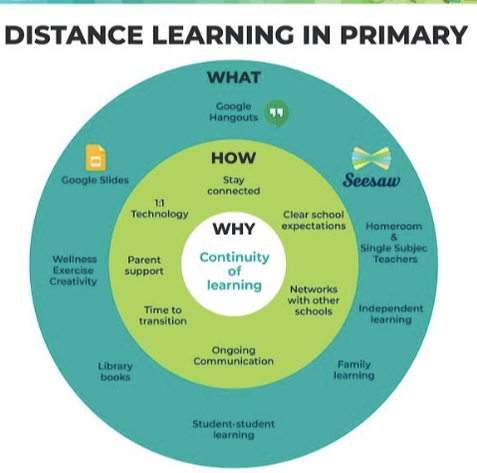
As COVID-19 began to spread slowly from China, our school took steps to begin preparations for launching a balanced DL program aligned not only to our mission and vision but also to 3 core values we identified as a team: continuity of learning, keep us connected as a learning community and make sure it both sustainable manageable for community wellbeing. After the first week of DL, we made adjustments for sustainability to our DL program expectations. Above all, this is one of the biggest take aways for me, the need for flexibility, growth mindset and the ability to think creatively and strategically about best practice teaching in the digital environment.

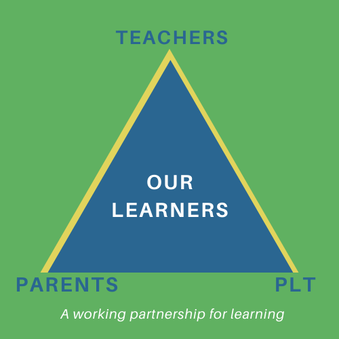
​Our learners are at the heart of the triangle; we seek to facilitate the learning and teaching so that our learners are successful in this new environment. This meant all hands on deck working to create content, learning new platforms and introducing students to an entirely different system for learning. Besides being involved in multiple meetings and joining grade level morning meetings on Google Hangouts, I made myself busy creating digital read aloud videos aligned to the current units of inquiry or to the approaches to learning, key concepts and learner profile of the IB PYP. Now I feel like a pro on iMovie. I've also learned how to ScreenCast. Next, I will be learning how to conduct a math group session on Google Hangouts while sharing my screen. So much to try and so much to learn, but I'm determined to figure it out and be successful so our students feel successful. 

Areas to consider for your program:
  • Child protection - ways to stay connected safely, limiting how we expose little ones to social media, digital citizenship
  • ​Wellbeing - providing creative ways to learn without screen-time (play-based learning, tinkering and maker ideas, forest school approaches; fostering the joy of reading); providing staff with time to unplug, rest and see to their wellbeing; getting the counselor involved with checking in on isolated international teachers
  • Community - sustain the sense of community through department and grade level check-in meetings with leadership; communicate consistently through morning messages from leadership; respond to emails as quickly as possible to ease anxiety and stress; schedule a staff get together in the virtual realm each week (happy hour)
  • Share the load - Encourage teaching teams to split up the disciplines/content; one takes mathematics/number, one take unit of inquiry and one takes literacy/language. Encourage Teaching assistants to get involved with giving feedback and monitoring student posts on Seesaw. Encourage staff to maximize their capacity to collaborate for their own wellbeing.
  • Consolidate learning over new material - perhaps focus on consolidating learning from past lessons at this time rather than introducing new material; focus on conceptual understandings and deepening them in mathematics, language and extending on inquiry skills;
  • Routines - supporting students in establishing a routine at home and a place to learn with all their materials easily accessible to them.
  • Schedule - a balance between synchronous and asynchronous learning engagements, a balance between school programming and allowing for flexibility at home to meet the demands of the family. 
  • Resources - provide key or strategic resources to staff for immediate launch (login list for paid sites, quick training sessions to up-skill, specific platforms to begin using first; tools for staff collaboration and communication); encourage learning support staff to support differentiation needs; prevent teachers from being flooded with resources that lead to lost time following rabbit holes
  • Framing the lessons - do not forget about the ways children learn (make the goal clear, access prior knowledge and provide context, provide new information, provide a means of application, and review the goal). I have always used Jane Pollack's approach to planning a lesson mentally in my mind; it is worthwhile considering her GANAG model as you facilitate digital lessons. See the lesson plan template below for reference.

2 Comments

Equitable Education & Collective Wellbeing: Can we measure ourselves differently?

8/18/2019

4 Comments

 
Picture
It is not my custom to write about concepts in terms of only one nation but recently these concepts have been at the forefront of my thinking and reflection. As I watch the news or read about the issues arising daily around the world, I ponder these things in terms of my home country, the USA. Education is the most important gift we can offer our children. It is through equitable education that we can build a strong united nation. We cannot marginalize people and expect a united future. Our definition of success and prosperity needs to shift. Read the article from NPR and watch the TED Talk by First Minister of Scotland Nicola Sturgeon. Consider the multiple benefits of shifts in mindsets, processes and policymaking...

PicturePerpetuation or Transformation
 Schools can perpetuate the systems currently in place, maintaining the status quo or schools can transform a society. We can transform our country through education that promotes international mindedness and values the process of learning over passing exams. We need a country of people who love to learn, who are creative and innovative. We need a unity, peace and contentment. Which path will we choose for our education system?


Picture

​NPR: This Supreme Court Case Made School District Lines A Tool For Segregation

Bravery requires taking bold steps for action. Who will begin to propose new laws for public fund distribution to public education? Are we not the home of the brave and the land of the free?
This article from NPR is spot on. Reading it this morning, I was relieved to see someone has finally done a study to demonstrate that our district lines, community construction and distribution of funds are organized to promote inequality and segregation. As an educator who truly believes in the power of education, I always saw this issue as our biggest problem in the USA; as it stands, we cannot empower our youth to build a strong unified, diverse community if they do not know each other and learn together. Can we take the steps to begin to organize ourselves differently?

​Financial decisions reflect values and culture. This is a recognized organizational norm. Our finances do not reflect that we value equality or diversity. Every youth in our country is part of our future and each youth deserves an equal chance in the public education system. We can give them the future they desire and live the values we speak about; if we truly believe in bringing equitable education to our nation. Schools should provide equitable education by providing equal access to resources and programs not by property values in a district but by statewide distribution of funds. I love my country but if we perpetuate the current system, then we as a nation choose to perpetuate segregation and marginalization. 


Later in the same week, I received my weekly update from TED Talks. Over the past two years, the issue of how we measure our success as a nation in terms of a growth economy have bothered me. How can we tackle the sustainability issues if we are constantly told our economy has to grow and produce above and beyond the previous years' growth indicator? How is it possible to not abuse the remaining natural resources if the we feel as nations that sales and material wealth are our priorities? I really believe this approach taken by Scotland, Iceland and New Zealand to form a network of Wellbeing Economy Governments is something the world should carefully consider. While I value the free market economy and the American dream, I also do not see the need for promoting such materialism and waste. If we truly want to provide a future for our youth, then changing our measurement of success is vital for a sustainable future. 

To measure our economy in terms different parameters is groundbreaking:
  • Number of people working and sustainable employment
  • Number of people receiving health care, general health of a nation
  • Happiness factor - general human wellbeing, fitness and mental health
  • Equal pay and closing the gender gap
  • Access to nature and green space
  • Resources consumed, reused and recycled
  • State of sustainability - human and material resources
  • Access to education, multiple literacies
  • Decreased violence and benefits of preventative programs
In 2018, Scotland, Iceland and New Zealand established the network of Wellbeing Economy Governments to challenge the acceptance of GDP as the ultimate measure of a country's success. In this visionary talk, First Minister of Scotland Nicola Sturgeon explains the far-reaching implications of a "well-being economy" -- which places factors like equal pay, childcare, mental health and access to green space at its heart -- and shows how this new focus could help build resolve to confront global challenges.

This talk was presented at an official TED conference, and was featured by our editors on the home page.
4 Comments

Sharing the PYP Article

4/15/2019

0 Comments

 
Picture

So proud to have an article on The SharingPYP Blog. I hope you have a chance to read it and learn from all the years of research it took to arrive at these understandings.
Picture
0 Comments

The Concept of Grit

3/4/2019

1 Comment

 
As I began reading through the new IB Primary Years Programme (PYP) publication, Learning and Teaching, I was thrilled to see the transdisciplinary skills had been updated and are now much more relevant to the classroom context than before (2018). The Approaches to Learning includes the same 5 different sets of skill groups,
​
  • Thinking skills
  • Research skills
  • Communication skills
  • Social skills
  • Self-Management skills

but have been improved to include sub-skills for 21st century learners. As a professional learning community (PLC), we decided to take a deep dive into these five skill groups and investigate ways to apply them to the classroom. As a team, we divided up them up between us and I took on the self-management skills but focusing on the newly added sub-skills embedded within the category, states of mind.

As the PYP Coordinator, I do not have a classroom of students to work with so I partnered with our grade 4 team to integrate self-management skills into the upcoming unit of inquiry on How we express ourselves. We planned on times in the schedule (twice weekly) when I could come guide an inquiry into the states of mind for about a month.  I began preparing for this by researching the States of Mind sub-skills: mindfulness, perseverance, emotional management, self-motivation and resilience. Through my research, I discovered a way to approach these skills conceptually for our grade 4 students by teaching the concept of grit. These videos below inspired me with ideas and the curriculum that Amy Lyon created on Edutopia was helpful.
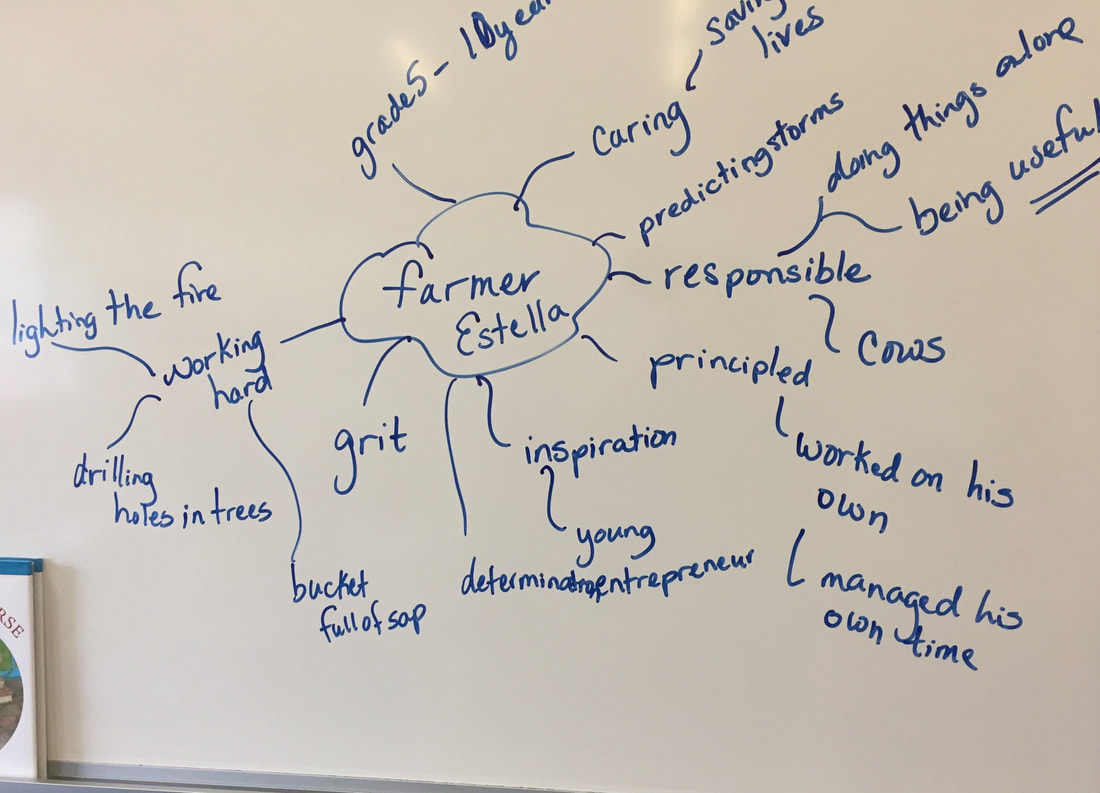
Picture
I introduced grit to our students by making it relevant to them first. We watched a short video clip of the young man who had his on maple syrup business.  After a brief brainstorm about the characteristics we observed in him, I read The Mermaid's Purse aloud and returned to our mind map to add more characteristics.  

​

Picture
Teaching Grit Cultivates Resilience and Perseverance - I showed the kids the first 2-3 minutes
Picture
We used the Frayer Model to slowly begin working towards a common definition of grit. We watched a second video clip about a teenager with grit and I read the story, What do you do with a problem?. We then split into teams and used mind maps to brainstorm what we already knew about resilience, perseverance, emotional management and self-motivation. Our school counselor has already been giving lessons on some of these character traits. Students presented their summaries to help us create a deeper understanding of grit. We were able to describe the characteristics of grit, what it looked like and what it did not look like. ​We built our Frayer Model over a period of a month, as I came twice a week to continue our lessons.
Picture
Kids with Character: Grit
Picture
As a culminating assignment, I asked all grade 4 students to interview a family member who had achieved a goal through perseverance over a long period of time. Once the students had conducted their interviews, we returned to the Frayer Model, checked for more descriptors and wrote a collaborative definition of grit. ​I then asked all students to honestly and privately, take Angela Duckworth's grit scale assessment and set a SMART goal for the upcoming months to strengthen their ability to show grit.
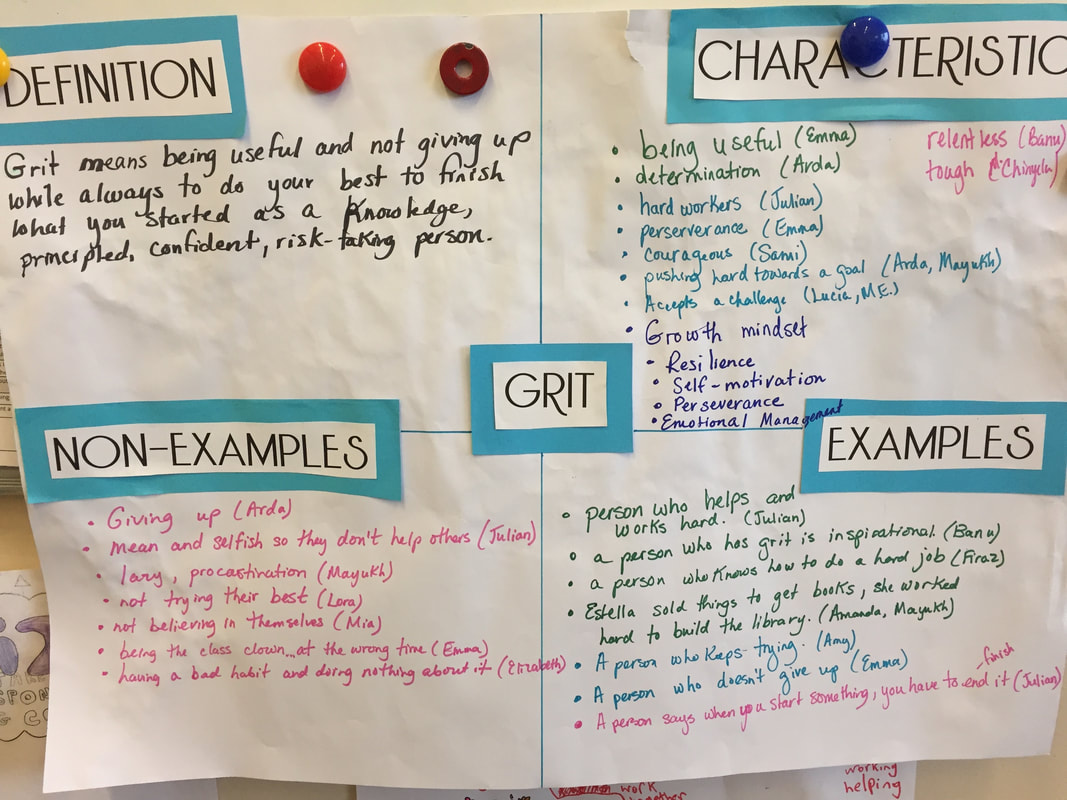
Picture
As a result of our investigation into grit and weekly reflections, the grade 4 teachers have shared that their students are increasingly aware of this character trait; they identify with it and give each other feedback and recognition for demonstrating grit during class meetings. This process has empowered them as agents of their learning to take more responsibility for the things they can change in themselves. Motivation appears to be improving in some students. Let's hope we have set them on a path toward attaining success in their lives through the application of grit. It is certainly a characteristic we are considering to add to our Learner Profile as it embodies so much.
1 Comment

A shift towards concept-based inquiry

2/26/2019

3 Comments

 
Recently, I was invited to facilitate a workshop for a private school in Izmir on concept-based inquiry. The school had recently undergone the self-study process and a revision of its guiding statements. With a newly revised learning and teaching policy based on the new mission and vision, the process of shifting the approaches to teaching had to begin. I was asked to shift their beliefs about learning and teaching from a teacher led classroom to that of a thinking classroom through concept-based inquiry. Sometimes shifting mindsets can be quite a challenge because beliefs are challenged and affected by the need for self-efficacy. 

The school follows Cambridge International Curriculum (CIE) and the International Primary Curriculum (IPC). As the course was not solely for primary teachers but including the whole school staff, I had to consider ways to make the content contextual for all ages so every teacher could visualize concept-based inquiry in his or her context and age range. Thus, I chose the run the workshop through concept-based inquiry day and allow the teachers to learn about inquiry by experiencing it. Before I arrived that Saturday, I sent a short survey to pre-assess their understandings so I could be sure to address any misconceptions and try to find ways to answer their questions. 

Some of the questions and misconceptions I saw were:
  1. How do I get my children to become inquiry based learners?
  2. How do I transition student expectations from traditional to inquiry based and to build their confidence/willingness to fully engage? How does it work? How do I manage it when there is a wide ability range in the classroom? How it would look at different levels (ages)? How do I manage classroom time to meet demands of syllabus? How do I manage preparation time workload?
  3. How can we transform the exam-based program (Cambridge exams) to a concept-based inquiry?
  4. How do I match the success criteria of a concept-based inquiry unit in Maths to the CIE learning objectives? This type of learning is great for engaged students whom take responsibility for their own learning, but what about the students that aren't engaged, and don't care about their education? Wouldn't their concept-learning then need to become more teacher-led, in order to help them achieve the success criteria?
  5. Isn't concept-based inquiry just another word for student centered?
  6. Whereas concept-based learners develop skills related to collaboration and justifying their reasoning, many tests reward fact-based learning with multiple choice and short answer questions. This can cause issues when students take standardized tests, as they may not have the breadth of knowledge needed to achieve high scores. How can this be addressed?
  7. I have tried to implement in past with Social Studies but felt it didn't work as it was a 'stand-alone' class and not worked on alongside other teachers/classes. How do we use inquiry-based practice and still meet very specific learning objectives in the Cambridge Curriculum? Is it possible to take elements, e.g. focus on skills and apply it to our curriculum?
  8. Isn't it necessary for the students to have some kind of background knowledge and at least some basic skills before they can take up the challenge of research and inquiry? When are we sure that our students have acquired those skills? How do we build that previous background knowledge? Are the demands of that kind of knowledge too great for some students?

In order to be able to address these questions and misconceptions, I decided to begin the workshop with a jigsaw activity wherein different groups read articles about concept-based inquiry and created a headline with a summary of the content. During the sharing time, I observed discussion, critical thinking and reflection. Using this learning engagement, enabled the staff to begin to shed some light on their areas of concern. 
Picture
Picture
Picture
Picture
Then we used the Frayer Model to define inquiry-based learning before taking a look at a step deeper to concept-based inquiry.
Picture
Afterwards, I gave a presentation on aspects concept-based inquiry specifically to address their concerns about achieving the outcomes of Cambridge Curriculum. I showed them how to identify or pull out the concepts embedded in the Cambridge Curriculum. From there they can identifying questions (factual, conceptual or debatable) to spark thinking and curiosity. I addressed the need to use cooperative learning, visible thinking tools, graphic organizers and concept maps to make learning visible for discussion and reflection.

To begin concluding the session, we watched a short video of a middle school classroom participating in concept-based inquiry. In the end, I was able to see some major shifts in thinking about concept-based inquiry and am certain the school can move forward with this initiative to teach conceptually. Our final learning engagement left me certain that these teachers had addressed their worries and doubts in a positive, constructive way. Using the visible thinking strategy, Generate-Sort-Connect-Extend, each team created a generalization to show their new understandings. 
As a time of application, I asked the teachers to plan one lesson that would be inquiry-based using the lesson planner acronym from Jane Pollack, GANAG. We did this rather than planning an entire unit because the workshop was for just one day. To guide the teachers, I gave them a template that explained this acronym more thoroughly with examples to show how it can be useful and relevant to the concept-based inquiry classroom. 

G - goal - with inquiry, we begin with a question or a series of questions
A - access prior knowledge
N - new information
A - application
G - goal review / reflection time

Finally, everyone filled out an exit ticket using the visible thinking tool, I used to think but now I think. This was even more rewarding than the conceptual understandings. It was an amazing day and I was so happy to see all teachers finding relevance to their context - from early years to grade 12.  Everyone left the workshop feeling challenged and empowered to try out concept-based inquiry in their classrooms.
3 Comments

My thoughts on interculturalism...

1/14/2019

1 Comment

 
How does one develop the ability to think through the lens of interculturalism?
How does one develop appreciation for interculturalism?
What steps can be taken to move toward an attitude of interculturalism?
What makes a person intercultural?
How do I answer the question, "Where are you from?"
Picture
These are some of the questions I've pondered over time as I have worked my way through the Council of International School standards or the NEASC Ace Principals or the International Baccalaureate Programme Standards and Practices. There is a common theme that resonates through all three and it is the ability to interact with other cultures, to appreciate diversity and work with others with an open-mind. I look around me at the staff I'm working with and wonder how we will grow together as an intercultural staff. We are all speaking English but we all come from different countries. We can communicate but cannot always communicate. We speak English but we don't speak the same culture. How can we move beyond that to hear and understand each other? My life by nature has led me to become adaptable, flexible and open-minded. Sharing my story, experiences and the steps I've taken to become more and more internationally minded may help guide you in the same direction.

My father was an Air Force test pilot so I grew up moving every three to four years changing schools and neighborhood friends. We never lived on a military base as dad's position allowed for us to live as civilians. For middle school, our family got the amazing assignment of NATO in Brussels, Belgium where I attended Brussels American School. This move was pivotal in my development as I embraced new languages and cultures. I fell in love with traveling and in love with Europe. My brother and I spent time with local people at church and in our neighborhood. We rode our bikes throughout the countryside and thoroughly enjoyed the European lifestyle. We became European. Moving back to the United States in the middle of the school year was traumatic for us both. We experienced extreme culture shock. We had become third culture kids. 

Over the next 16 years, I continued to move around the country every few years with my parents and then my husband and our new family. I have lived in seven different US States on both coasts and in the center of the country. In 2003, we made the decision to relocate to Cancun, Mexico. I wanted my own kids to have the opportunity to live outside the USA as I knew it would be good for them and make them more open to culture. We did not seek out expats to be our friends or to socialize with. Most of our social interactions were with Mexican people. While living there my 2 kids attended a bilingual school where they became balanced bilinguals. Our kids play We attended church with Mexicans. Our best friends were Mexican and we became family. We all learned Spanish, Mexican traditions, customs and culture. I listened to the Mexican perspective on global events and began to understand Mexico. My family became Mexican.

Mexico is a part of me. I lived there in that one city for 11 years when I had never lived anywhere that long before. I now feel like I have three identities. I can identify myself as an American, a European, or a Mexican. I was born in Alabama but never really lived there. I have no strong attachment to a particular city in the USA because of frequent moves though I love my country and my family who live there. I always have a feeling that I need to get back to Europe and live there again as an adult since those years were so special to me. After so many years in Cancun, I get very homesick for Mexico at times. 


When I left Mexico as a newly single woman, I landed in Iraq, my fourth country to call home. There I was extremely blessed to meet my current husband a couple weeks after arriving, an Iraqi Australian man, who became my connection to the local Kurdish culture. With him, I was able to experience Iraq through the lens of the Kurds. We traveled around the countryside visiting different towns and historic sites. He would share stories about the Kurds, Persians and Arabs. I was fascinated. For the first time I was learning ancient history through the lens of people in the Middle East. I was learning about current events through the perspective of the Kurds and Arabs I was able to interact with. Through museum visits, exploring the countryside and conversations with locals, I developed a completely different understanding of the Middle East lifestyle, politics and history.

Now that I am living in Turkey, I've tried to learn some of the language during the year and a half that I've been here. I have some Turkish friends and one who is very dear to me who help me understand the culture here. My husband and I have explored the city, finding our favorite Turkish food restaurants. We have traveled all over Turkey. I began to take traditional Turkish marbling classes known as Ebru art. I will be moving again in 6 months. If I were to stay here longer, I would continue to make a greater effort to build community with locals and immerse myself more in the Turkish culture by connecting with Turkish friends and learning the language. 

From my experience becoming an intercultural person involves putting many of the IB learner profile attributes into action with intention. It means cultivating risk-taking by moving away from your comfort zone and making friends with people who don't speak your language or culture, eat your food or listen to your music. It means being open-minded; to appreciate new cultural experiences without judgement as a caring person. It means looking at world travel as a chance to discover history through the lens of perspective respectfully and to consider the different ways the story has been told over the years. It means being a caring communicator, listening for understanding and considering the other viewpoints. As a lifelong learner, one lives as an inquirer, investigating cultures, perspectives, ideas and customs. Get out there and inquire intentionally, get to know others and appreciate the vast differences with grace.

Have I arrived? Am I a perfect example of interculturalism? Some days I do great and other days I fail miserably. It is a choice every day to choose to react to the circumstances with a better, more effective mindset. I hope that every day it becomes more natural for me and that I do not become resistant to change. It is a daily journey that I intend to walk out to the best of my ability alongside my faith, family, and friends.
Picture
1 Comment

A Reflection on the Five Minds of the Future

11/2/2018

4 Comments

 
Picture
 I recently enrolled in a leadership course with Maxine Driscoll and Think Strategic to continue developing my own understandings about leadership and how to approach the changes needed in education today for learners in the 21st century. I haven't made it past module 1 as the reading list is long and rigorous. Currently, I'm making may way through Five Minds for the Future by Howard Gardner. This book addresses the need for schools to develop the cognitive abilities in our students for the needs of the future. 

The minds he addresses are: disciplinary, synthesizing, creating, respectful and ethical minds.

​As I read the chapter on the the disciplined mind, I saw the direct correlation to the work of Erickson and Lanning with concept-based curriculum and instruction as well as the framework of the Primary Years' Program. Howard Gardner defines the disciplined mind as: "the mastery of major schools of thought, including science, mathematics, and history, and of at least one professional craft." He addresses the issues that arise when our students lack a disciplined mind as they are unable to think conceptually, or apply the knowledge in more than one scenario. They may memorize facts about a particular discipline but are unable to demonstrate deep understandings as their teachers have not enabled them to have sufficient experience with the discipline from a variety of entry points, have not enabled them to make connections to concepts or enabled them to demonstrate understandings in a variety of settings or using a scenario that is entirely new to the students (formative as well as summative). I like how Howard Gardner referred to his theory of multiple intelligences in this context. If you approach a discipline with his theory in mind then there will be a variety of entry points and ways to learn about the discipline that enable students to experience it differently and develop understandings. Students don't need to just memorize the facts in mathematics, history or science. They need to understand how things work, generalize about process and apply theory to new scenarios. 

Concept-based curriculum and instruction addresses the disciplined mind as the teachers plans for conceptual understandings before beginning the unit, scaffold the thinking through questioning and facilitates inquiry that connects to concepts. Tools are provided for organizing knowledge in order to facilitate connections to concepts so that students are able to generalize and make transdisciplinary connections.

Our education system depends heavily on standards/outcomes to identify the knowledge our students must learn and know. But simply filling our students with knowledge without facilitating rich discussions through conceptual questions and tools for recording and organizing information will not suffice. It has to be intentional, both thoughtfully and  deliberately planned. Do not assume your students will move beyond the facts independently. Understandings are constructed through a variety of experiences working with the knowledge and considering different contexts. It really is essential for educators to continue to learn new ways to prepare for and facilitate concept-based inquiry for the development of deep conceptual understandings. 

Howard Gardner offers 5 tips for improving your teaching:
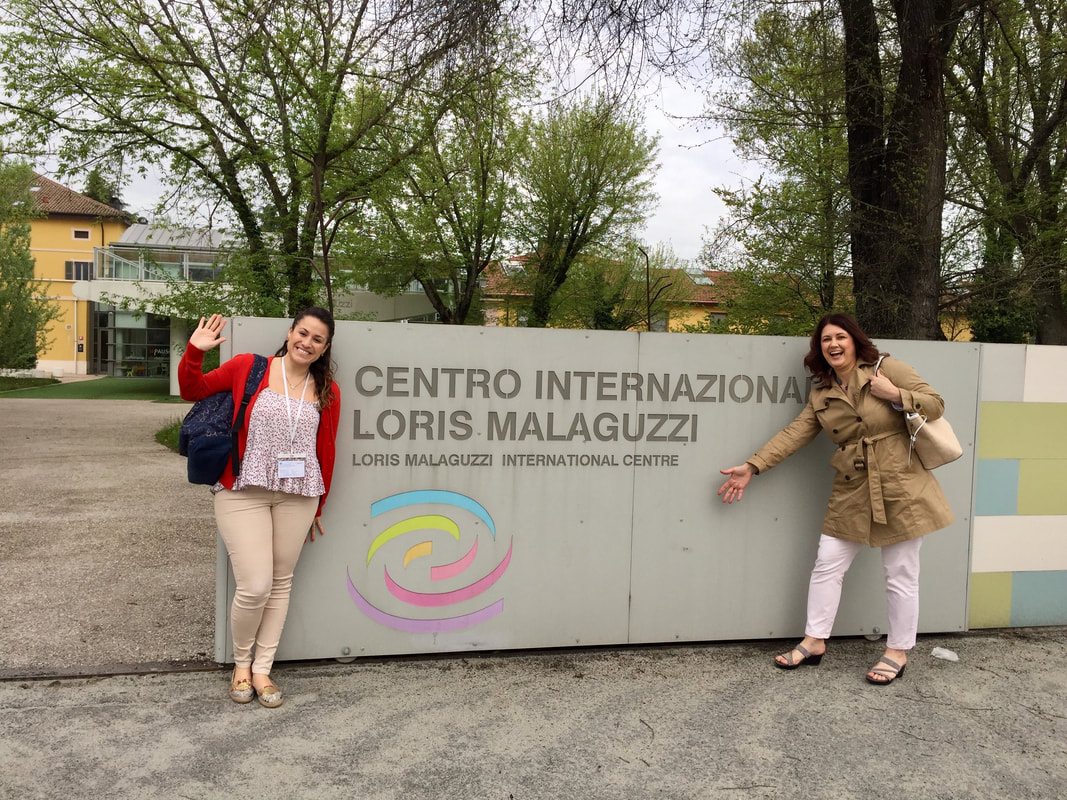
  1. Identify the concepts and big ideas from the outcomes/standards. CBCI uses this same process to organize the unit plan and prepare for concept-based inquiry.
  2. Spend significant time on the subject. Make sure you plan time for inquiry that allows for deep inquiry and not just light covering of facts.
  3. Approach the subject from a variety of different entry points and he states that "one cannot be disciplined without conceptual agility" which comes from experiencing the subject in a variety of ways. This also aligns to transdisciplinary learning in the PYP framework. Consider the theory of multiple intelligences as a way to brainstorm ideas for a creative entry point.
  4. Use performance based assessments but also provide multiple opportunities for students to demonstrate understandings. Pose a new question or puzzle. Change the context or the conditions. Provide a new scenario that is different from what they have been coached on and check for understandings.
The world is overwhelmed with accessibility to information and this information is available any time on the internet. It is no longer essential to memorize facts or to have photographic memory. It is more important to filter, and connect to concepts. The important content we want our students to know is far more meaningful when it is made relevant and contextual by making connections between scenarios. By approaching learning this way, we will also hook our students intellectually and a hunger for more. This is encourages the discipline we long to see in our students - lifelong learners who are passionate about learning. Student who enjoy thinking, who enjoy learning about the world and understand the process of learning.

4 Comments
<<Previous

    Author

    As an international educator, I work with colleagues in my local and global network regularly to implement inquiry through concept-based approaches to learning and teaching. It is a journey of discovery, learning and growing our own understandings about the ways children learn.

    Categories

    All
    Action Cycle
    Agency
    Approaches To Learning
    Beliefs
    Big Idea
    CBCI
    Cognitive Load
    Collaboration
    Collective Wellbeing
    Competent
    Comprehensible Input
    Concepts
    Conceptual Understandings
    Contexts
    Continuous Provisions
    Creativity
    Curiosity
    Curriculum Mapping
    Distance Learning (DL)
    Documentation
    Education
    Equal Groups
    Equitable Education
    Equity
    Feedback
    Generalizations
    Grit
    Image Of The Child
    Inductive Learning
    Inquiry
    Inquiry Cycle
    Integration
    Interculturalism
    Interdisciplinary Learning
    International Mindedness
    Language Development
    Learning Panels
    Mathematics
    Mindset
    Motivation
    Play
    Play-based Learning
    Playful Learning
    Play Invitations
    Play Provocations
    Portfolios
    PWIM
    Questioning
    Reflection
    Reggio Emilia Approach
    Relevant Learning
    Selling The Why
    SIOP Method
    Social Construction
    Sustainability
    Sustainable
    UN 17 Sustainable Goals
    Values
    Wellbeing

    Archives

    October 2025
    May 2025
    March 2020
    August 2019
    April 2019
    March 2019
    February 2019
    January 2019
    November 2018
    April 2018
    March 2018
    December 2017
    November 2017
    October 2017
    September 2017

    RSS Feed

    View my profile on LinkedIn

    This website uses marketing and tracking technologies. Opting out of this will opt you out of all cookies, except for those needed to run the website. Note that some products may not work as well without tracking cookies.

    Opt Out of Cookies

Home

About

Services

Menu

Contact

Copyright © 2015
  • Home
  • Services
  • Free Resources
  • Blog
  • About
  • Contact