|
While I have played witness to conflicts throughout my lifetime both at home and around the globe, the last 10 years working and living in Iraq, Turkey and Spain have challenged my worldviews significantly. As an international educator, I feel compelled to dig into concepts related to interculturalism, global citizenship and sustainability. We all experience the world differently given our own schema - funds of knowledge and identities. It is an ongoing endeavor to train my brain to listen for understanding as an open-minded observer: to understand other ways of seeing, hearing and doing as well as to accept these differences while looking for the commonalities. Then, it is our common humanity - human dignity that surfaces to the forefront for me. I can build cultural bridges for constructive relationship that work from a place of care and wisdom. My time in Iraq was impactful as I arrived during the war with DAESH. My students were daughters and sons of parents who had experienced the Baathist party's war on diversity, free speech and thought. This experience drove me to focus two of my research papers for the University of Bath doctoral program on Iraq so I could better understand the region, the constant turmoil that leads to waves of conflict and the history of my husband's Kurdish family. What I uncovered through touring the Kurdish north, teaching Kurdish children for 3 years during the ISIS war and then through my research is reflected in the image below. What happens when we begin to see people as others, less pure, worthy, intelligent, or human? I leave you to draw your own conclusions...
To read more explore...
In 2023, we immigrated to Spain for two years. My first trip to the Reina Sofia Art Museum, I got to spend time observing Picasso's work, Guernica (which I have now seen on 3 different occasions). I have to admit, at that time, I was ignorant about the Spanish history behind the painting entirely. The painting itself is massive with so much symbolism and I found it difficult to understand as I lacked the background knowledge. I knew quite a lot about World War II and had visited many memorials across Europe back in the 80's and later the Holocaust Museum in Washington, DC. I had read books and taken World History and Geography at the university. However, I had yet to understand the role of Spain, Franco and Spanish fascism during that time period as well as the history behind the Spanish Civil War. I had seen movies (in Spanish) that impacted me like Pan's Labyrinth (El Laberinto del Fauno) and Butterfly's Tongue (La Lengua de las Mariposas). So like I have done in other countries I have immigrated to, I began to educate myself more about Spanish history by traveling and visiting museums to learn my host country's stories, perspectives and challenges. One of our first trips was to the Basque region in northern Spain as I wanted to learn more about the region. Picasso's painting provoked significant curiosity to learn more. We booked a place just outside of Bilbao, in a hotel that was a converted mansion (see image to the left). This trip took place over a long weekend because of The National Day of Spain (October 12) that celebrates the voyage of Christopher Columbus and the spread of Spanish culture and language across the Americas. When we arrived at the hotel, I quickly realized that the Basque region does not celebrate no do they appreciate this holiday. Over the weekend, I learned about the uniqueness of their language, culture and historical experiences. Basque is a language that is uniquely its own with no connections to Castellano or any neighboring countries' languages for that matter. The people have safeguarded and protected their language by using it; it is taught in schools, used in public signage and menus and in daily interactions. The Guernica Peace Museum [Museo de la Paz de Gernika], Spain The trip to Gernika (Guernica) did not start as an inquiry into peace for me. It unfolded throughout the visit to the museum itself. It is a powerful museum that confronts the visitor with the concept of peace through an epistemological lens. Additionally, I made connections to my prior research that I did for my coursework at University of Bath as well as life experiences while living abroad. I spent a lot of time that morning slowly reading the various case studies highlight in the museum. These activists over the years who have fought for peace by advocating for freedom of speech (economic status, race, gender), equal representation (economic status, race, gender), an invitation to participate equitably in the legislative process and the access to equal rights for all. Provocative questions ran throughout the exhibition...
While there, I purchased this book by William Smallwood (pictured above) who was the first reporter to arrive and document the events from primary source survivors. Following this short visit to the Basque Country, I began to get to know my neighbors in my urbanización [apartment complex] while lounging at our common pool area together. I learned that several of my neighbors grew up abroad and only returned to Spain in the late 70's following the death of Francisco Paulino Hermenegildo Teódulo 'Franco' Bahamonde (November 20, 1975), the former General and dictator of Spain since 1939. At work, I began to listen deeply to my Spanish colleagues and the families. I began to see that there are histories, wounds and conflicting beliefs that continue to create tension points for the Spanish around me. The Spanish film industry continues to tell stories about the past and I highly recommend these:
Hopes for a Sustainable World As an international educator now for over 22 years, I have internalized a more global perspective that seeks to understand other cultures, countries and peoples rather than to categorize, label and de-value them through "othering" or by using a deficits-based lens. Over time, I have felt increasingly connected to the cultures and countries who have welcomed me to contribute to their society through residency. Now, I see the world increasingly intertwined, as interdependent sectors who can support and benefit from one another for a sustainable global future. I find myself fully aligned with the ideals of the United Nations as stated in these documents below: Universal Declaration of Human Rights UN Convention on the Rights of the Child (UNCRC) Secondly, I recognize that I stand on the shoulders of so many women who came before me to fight for equal rights - the right to citizenship independent of a man, the right to vote, to own property, to have a bank account, to drive a vehicle, to travel independently, to determine a career path... it is a long list for certain. Current global events challenge the very fabric of what I have taken for granted - the norms of honor, integrity, respect and global collaboration ever since the formation of NATO and the end of World War II. If we all have human rights, why do governments exclude demographics and excuse themselves from obligations to honor those rights with distinct people groups? Look at the following timeline:
Global norms are shifting, cracking and begin to break down. The world as we know it may be changing beyond what Artificial Intelligence is changing. As an expat, it is hard to believe and accept. I am unable to accept the increasing rhetoric of hate as well as the ostracizing tactics that I hear coming from politicians in the country of my birth, the USA. What does one do in the face of polarizing political rhetoric? Or the dehumanizing actions by government officials who we expect to protect us? Or the outright aggression that results in wars?
The nagging in the back of my brain returns to the concept of peace. And the ways we can guide our students to be inquirers into the concept of peace. We cannot hide our students from what is happening in the world. One action international educators can take is to use the current events as points for an inquiry into peace. Position Statement – Strand D: Leadership, Management, and Teacher Development “Alliance for International Education World Conference 2025” hashtag#AIE2025 Our schools must be places where young people and our wider communities experience and demonstrate peace, social justice, and equity not as abstract ideals, but as lived realities shaping their daily learning and growth. As leaders, researchers, and educators within international education, we affirm our collective responsibility to embody peace, social justice, and equity in both vision and practice. Leaders play a pivotal role in ensuring that these values are not only articulated in mission statements but lived daily within our institutions. Together, we commit to leading with courage, compassion, and integrity, ensuring that international education remains a force for peace, justice, and shared humanity
0 Comments
How we build capacity for conceptual thinking through PLAY: A focus on the Early Years Team5/12/2025 When we opened Brewster Madrid, I shared a vision for a community of learners who worked together efficiently and effectively so that everyone felt supported. This was how I envisioned achieving our mission to see that every learner of all ages thrived. By establishing a Lower School on the idea of relationships before program, and communicating a strong sense of shared ownership for the learning and teaching process, I was able to guide our team to fully implement systems for learning, teaching and assessment. In July 2023, I introduced our founding Lower School team to the principles of Concept-Based Curriculum and Instruction (CBCI) based on the works of Drs. Erickson and Lanning. As an Erickson & Lanning CBCI certified trainer, I used our Brewster Summer Institute (BSI) to begin making conceptual teaching and learning accessible to our team. We started with establishing an initial understanding of the role of generalizations, their structure and levels or depth of understanding. Generalizations serve as an assessment tool from which we can respond to through scaffolding the thinking process. This impacts our planning process. When there is an intention to harvest generalizations, the planning process needs to change so that can become a reality. These themes formed the foundations for our deep dive into inquiry-based learning for conceptual understanding. Every teacher received a copy of Carla Marshall and Rachel French's book, Concept-Based Inquiry in Action: Strategies to Promote Transferable Understanding. Our school joined the Concept-Based Inquiry Mathematics (CBIM) pilot project to begin to dive into CBI through the lens of mathematics. My hope was that this participation would support teacher understandings over time of how the inquiry cycle works, and the intentions behind its design. By the second year, under the guidance of our NEASC visitors, we established Concept-Based Inquiry (CBI) as our first pedagogical anchor, the pedagogy that we would see in action daily. This anchor became one of 4 anchors:
Our Early Years program, while inspired by the pedagogy of play, honors the principles of CBCI. We know our early learners can be thinkers. They can think about their play and express understandings as emerging communicators. Between 2023-2025, our team came to in-service training days with open-minds, carefully and thoughtfully considering the concepts of play, space, playful (more teacher-led) and play-based learning. Through reflection, we continually unpacked the ways in which we can plan for play:
The tension lies between our need to be teachers (i.e. to teach phonemic awareness, phonics, the elements of a story) and play without reconciling what that can look like through play. The tensions are real! As teachers learn to facilitate play there is a struggle to identify their role. And it is through patience and ongoing support that each teacher can find the space to wrestle with their individual tensions and explore ways to employ continuous provisions for symbolic exploration and expression. I am thrilled with how far our team has come in their understandings. We have high hopes for program as we continually unpack the needs of our learners and their development. Progress Monitoring & Reflection There was a lot of mental tug of war as our team began to dive into the UK Birth to 5 Matters with increasing intention to make sense of those developmental parameters and align those with the observable skills identified in the PYP Early Years Approaches to Learning. We wanted to build an understanding of the two documents so that we could document what we saw, speak to developmental progress based on observations in alignment with stages and help parents understand how learning happens through play. An ongoing project, we continue to consider are the Approaches to Learning and their connection with Birth to 5 Matters for developmental growth tracking. We currently are pondering these questions:
Our Documentation JourneyOver these two years, our EY team's curiosity about how to plan for play while making connections to our units of inquiry has led us to dialogues about process, efficiency and learner agency. We aimed to document learning in a way that our learners can connect to their contributions. We also wanted our parents and families to feel connected and informed through our Toddle digital portfolios. It can become overwhelming if we don't find the right approach.
Outdoor Play ChallengesIn August 2023, outdoor play presented a challenge for our team as we lacked sufficient equipment and storage. As a new school, we had not been able to participate in planning the outdoor spaces. When we saw what had been organized by the architect, we were uncertain of how to create a welcome space for all ages. The equipment selected was limited, lacking the ability to develop strength and the vestibular system (equilibrium, balance). We were overwhelmed by what we lacked: a mud kitchen, creative play spaces and a storage shed to teach our learners how to care for the equipment for sustainability. It was difficult to make the space stimulating and engaging. Unintentionally, we found ourselves focussed on controlling the play area with lots of rules and increasingly eliminating risky play opportunities. Through collaboration with the facilities team and our senior leadership, we were able to get some equipment built. Using the discarded pallets, Juan Carlos built us a mud kitchen, three mini-markets, benches and a mark-making house. These additions began to transform the play though we still lacked the storage to maximize the spaces and the Tuff trays. Most of the equipment was getting abused and worn out by the rocks and the type of dirt we had. We prepared a space for digging dirt to be delivered but was unable to get that approved due to the shortfalls in the budget. Our play consultant, Duane Smith, offered the teachers advise on ways to use what we had access to through a continuous provisions approach. By responding to the play observed, teachers can stage the play before children arrive. This system took time for our team to adapt to and slowly, slowly, all this equipment began to shift and move locations. We realized the Tuff Tables needed to be far away from the rocks and mud so that they could be used for blocks and other play invitations. We moved the mark-making table out of the garden and onto the patio to put chairs around it for reading and drawing outside. We saw the children building fairy houses in the trees, using their imaginations creatively. Planning forward with a significant increase in enrollment for September 2025, we were targeting more didactic materials for outdoor play including oversized blocks, tools for building ramps, large outdoor games, and a new mud kitchen to make sure all children could find materials and something to draw their curiosity. Because of the heritage building, getting swings requires more permitting. Over time, there is hope to replace the seesaws with open space for more flexibility. And to remove the equipment in the sandpit. There is hope to have that in place within a year or two. In January 2025, we finally got a storage shed installed. It was exciting to organize it so that we could begin teaching the children how to care for their play materials. We wanted to find the way to allow for full access with our learners practicing care and responsible choices. Resources of Inspiration Our greatest resource was found in our consultant, Duane Smith of Early Learning in Education, who carries a full career heavily invested in the early years teaching and learning. We consulted with Duane in the second year of the school and program launch. He spoke from experience building immediate rapport and igniting curiosity from our EY team. He inspired our entire team to rethink how we defined play, how we used the spaces and to challenge our team to provide for a wide variety of childrens' play needs through continuous provisions.
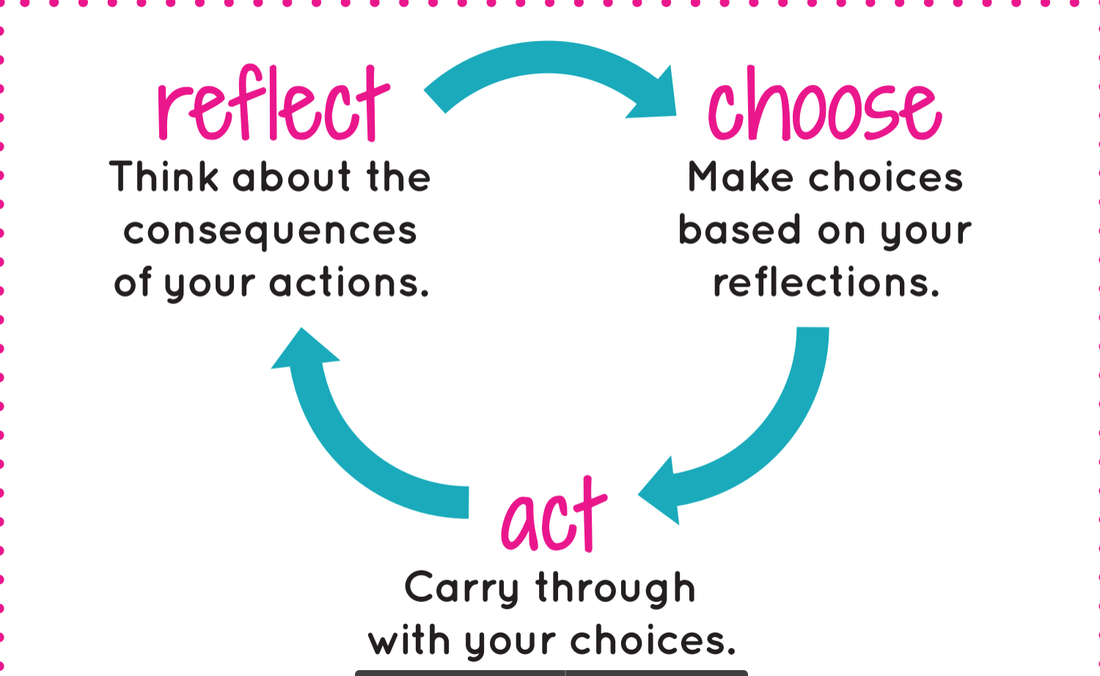
One of the five elements of the inquiry cycle is Action. Action is a powerful response to learning so at MEF IS, we watch for it, foster it and celebrate it. Our students are encouraged to act on new understandings developed from relevant learning. We see the learner profile in action through the action cycle as students become reflective thinkers, knowledgeable risk-takers and principled communicators. This is the season of general reflection for the world as we move towards a New Year celebration. Most people are reflecting on this past year and setting goals to achieve for the upcoming year whether it be to lose weight, participate in a triathlon, learn a new art form or pursue a promotion at work. While seasonal goal setting is a noble, worthwhile process, I challenge you make an adjustment to that yearly routine. This does not have to wait until December. Goals can be incremental and it takes making reflection a daily practice. This transforms life into a daily learning journey as you learn from your mistakes through reflection and set achievable goals for new accomplishments and knowledge or skills to learn. Know yourself, be honest with yourself and take action on your reflections. Below are some reflective questions for metacognitive thinking:
|
AuthorAs an international educator, I work with colleagues in my local and global network regularly to implement inquiry through concept-based approaches to learning and teaching. It is a journey of discovery, learning and growing our own understandings about the ways children learn. Categories
All
Archives
March 2026
This website uses marketing and tracking technologies. Opting out of this will opt you out of all cookies, except for those needed to run the website. Note that some products may not work as well without tracking cookies. Opt Out of Cookies |


RSS Feed