THINK BEYOND THE FACTS, THINK CONCEPTUALLY
  • Home
  • Services
  • Free Resources
  • Blog
  • About
  • Contact

Concepts in Action

How we launched a new Lower School

6/21/2024

0 Comments

 
Picture

We do not always get the opportunity to launch a brand new school aligned wholly to our beliefs, values, experience, knowledge and understanding. In 2023, I was trusted with this responsibility; I was given the chance to sell and enact a vision for a program founded on the principles of Concept-Based Curriculum & Instruction with the pedagogies of Play-based and Playful Learning. Additionally, I was able to organize an approach to Language & Literacy based on context, that balanced Structured Literacy (elements of the Science of Reading) with the Teaching and Learning Cycle of Systemic Functional Linguistics. This functional approach allows learners to inquire into how language works. Not to mention, the full participation of our team in the the CBI Mathematics Project pilot while integrating the works of Pam Harris, Cathy Fosnot, and Jo Boaler. 

AND then to build such a collaborative, constructive curious team who willingly took the risks while supporting one another for full implementation from day one! Through transparent data sharing, we leveraged our team's expertise to challenge every learner appropriately.

After 2 years of implementation, our team saw significant measurable growth for ALL learners in language development, literacy skill development for decoding, fluency and comprehension, mathematical reasoning & understanding.

We reflected together on all the observable skills for lifelong learning that we saw begin to blossom: self-management (resilience, executive function), collaboration and community building skills for building norms and respecting agreements, the ability to generalize understandings, and to pose thoughtful questions.

Our 2025 spring performance, was the icing on the cake. Our learners demonstrated tremendous growth in performance skills: stage presence & protocols, choral performance, harmony, drama and dance with props, and oratory skills.

Enrollment grew by 225%!
​Happy families spread the word...

Picture
Our caring, curious, persistent and creative founding Lower School team embracing the challenge head on!
We designed and launched a brand new program for Brewster Madrid. Our original campus in New Hampshire, Brewster Academy, has existed for over 100 years as a high school (day and boarding). We looked at the Portrait of a Graduate and scaffold back.

Read further to learn some of the steps we took.
In July 2023, our founding team members came together committing to a shared vision. This vision focussed on building a caring community using an exceptional approach to learning and teaching. We truly believed in our school mission, that we prepare diverse thinkers for lives of purpose. We united around our guiding statements enthusiastically to build a Lower School program for Brewster Madrid that would realize our school's vision statement: an approach to learning that has the exponential power to transform education, communities and the lives of our students.

​What follows are pieces of the story behind our thoughtful intention, the aspirations to build a gold-standard, exceptional Lower School program using processes, structures, and systems to personalize learning. We are proud to say that Caring, Curious, Persistence and Creative manifest across our program.
Community Building - Relationship, Partnership, Caring
The first step with any new role or initiative begins with community, belonging and relationships for learning. During our Brewster Summer Institute, we had 30 hours designated to our Lower School division time. A large proportion of this time was dedicated to coming to common understandings. As the founding team, we made decisions together that would drive the direction of lower school pedagogy and program for Brewster Lower Schools henceforth. 
Picture
Picture
Picture
It was important to me to make space for full participation in decision-making and programming. I took intentional steps to invite participation for shared ownership,  responsibility and as a motivator for professional learning. I invited questions, proposals and identified together pending projects. We began this process by using an inclusion activity that opened the door to sharing who we are (schema, funds of knowledge) with one another.

We considered rituals and routines that would be evident across the Lower School. Ideas elaborated in the images below guided our school launch and evolved from here. Over time, morning meeting evolved to include SEL focused time as well as safeguarding and child protection lessons.
Picture

Rituals and Routines: Unity, Community
Picture
Picture
Picture
Picture
In order to build our essential agreements for collaborative, psychologically safe interactions, we began with a JIGSAW activity to dive into some research (audio and journal articles) about constructive relationships. Building a common understanding for learning would help us interact in caring, professional ways. Themes examined included:
  • Collective Responsibility - Jennifer Abrams
  • Psychological Safety -  Dr. Amy Edmondson & Dr. Fran Prolman
  • Nurturing Wellbeing - Dr. Helen Kelly
  • Emotional Regulation - Adam Grant
  • Teaming - Dr. Amy Edmondson
  • Trauma-Informed Practices - Vicky Kelly, Mays Imad

The Formation of Strategy Teams: Curious, Persistent, Creative
We divided up into small working groups to take ownership for driving the documentation of our philosophical and pedagogical approach: best practice research, content, strategies, skills for clear scope and sequence documents. As a completely new program, we had to ensure alignment across the grades. This would also ensure that our practices reflected the sales pitch our parents heard. 

What documents needed articulation?
  • Collaboration in the Lower School: This document encompassed all of our Essential Agreements for interactions, ongoing meetings (a wide variety of types of meetings), homeroom/specialist responsibilities for tier 1 instruction, steps to collaborate with learning support for tier 2 or 3 support, approaches to behavior issues, playground agreements, etc. Over two years, this document expanded to articulate all expectations clearly.
  • Assessment Handbook: This document encompassed our approach to assessment elaborating our cycles of reporting through conferences or formal student reports. It also elaborated ways to conduct assessment, to triangulate data and how to use assessment to make decisions about teaching and learning.
  • Language & Literacy Scope and Sequence: This document encompassed our beliefs about language development and literacy instruction. We strove to align to the Science of Reading through Structured Literacy and the application of a functional approach using Systemic Functional Linguistics. It explained the strands that must be included in the homeroom practices each week for holistic literacy instruction. It also elaborated the AERO standards and UK Birth to 5 Matters for the Early Years. This document also included our host country, the Spanish Language for homeroom teachers to be informed.
  • Philosophy of Play: This document opened the discussion to our Early Years team and how we would approach learning and teaching in Kinder 1, 2, 3 and into grade 1. We had to learn a holistic, developmental program that made space for play with a team who had not been exposed to play-based learning yet. In the document, we defined play and playful guided by Harvard Project Zero's newest publication. Then we began to unpack over the next two year, through ongoing training, what continuous provisions implies; how we can invite, nudge and provoke interest; the role of the teacher and the role of the student. Over time, we wanted to have the resources and spaces for play-based learning to always be available to all ages on campus. 
  • Mathematics Essential Strategies: This supporting document encompassed our approach to reasoning by developing skills for problem-solving through strategies that build and extend upon one another. This aligned to NZ Mathematics and Pam Harris' resources for problem strings as well as her top models and strategies document. Our school chose to participate in the CBI Mathematics Project Pilot which would take time for us to fully understand and internalize the phases and understandings. So, it remained important to us to map out our strategies and models sequentially.
  • Documents launched after school start:
    • Technology Usage / Digital Citizenship / Scope and Sequence
    • Social and Emotional Learning / Safeguarding and Child Protection

Picture

The Design of our Initial Program of Concept-Based Inquiry

As a CBCI consultant, I took the team through the introduction to teaching for conceptual understanding. We reviewed the Structure of Knowledge, the role of facts and concepts, the ways to identify a concept. Then we reviewed the purpose of learning to scaffolding the thinking by assessing generalizations. It is important to understand why we generalize and how we assess those generalizations - statements of understanding. Then we reviewed the the types of questions we can pose.

Additionally, every teacher was provided a copy of Concept-Based Inquiry in Action which became our guide for a book study throughout the school year. Also, we frequently referred to it during collaborative planning meetings when thinking about strategies to use at each stage of the cycle. To further support this process, our team also joined the CBI Mathematics Project which organizes units aligned to the same cycle for inquiry leading to generalizations as a form of assessment.
​
Using the Standards that we had agreed upon, we began to identify the concepts that we could use to build a program of inquiry. It was a messy process with lots of sticky notes and moving concepts around. We began with science and then added social studies until we could identify the conceptual lens that would be the driver of the unit. This would allow for authentic connections by specialist teachers. This was an initial attempt with almost all teachers new to inquiry-based learning except two. There was great enthusiasm as we brainstormed in small teams the units of inquiry for the upcoming launch. As small groups began to present their units of inquiry, they share their reasoning for the units and how they drew upon the standards. Others across the team provided feedback for further revision or adaptations. I chose to take a supportive stance even when I saw some units as potentially challenging for one reason or the other so that teachers could thoroughly experience the process of creating a unit, rolling it out and then later reflecting and revising based on their own experiences with the units of inquiry. 

Time and ongoing support would be the strategies that we would rely upon to build strategies and tools for full implementation. Our team as well as our brand new incoming cohorts of students faced a sharp learning curve. The majority of our students transferred because of a learning challenge and they had never been exposed to inquiry-based learning. It would take time!

Picture
In June 2024, we conducted a vertical and horizontal review of our Program of Concept-Based Inquiry to improve our units of inquiry as transdisciplinary learning opportunities. Our review process intentionally uses processes to provide participation that is authentic and agentic. I want to see teachers in reflective conversation about practice and content. This yields meaningful changes for improvements. Taking the time to make it interactive always pays off. Teachers are active, on their feet, observing, discussing and making notes. This brings the level of energy up, engagement increases and participation is more meaningful.
Our Spanish Department used this process to see how to integrate Social Studies and Civics into the POI in relevant ways.
After organizing the curriculum, they taped the curriculum where it was relevant on the various POI transdisciplinary themes and grade levels.
We also conducted a thorough review of our entire program in general by identifying strengths and areas for growth.
This process led to the identification of goals for the upcoming school year.
Initially, we worked with teachers individually and virtually (Murcia campus) to strengthen our units of inquiry by considering adaptations that would allow increased connection to local context. This would support authentic opportunities for research. Some of our units of inquiry lacked enough breadth for transdisciplinary learning so they felt locked into one discipline. So we wanted to improve that by expanding opportunities for integration within the homeroom disciplines as well as the specialist content integration. We wanted to make our POI provide meaningful ways to engage with the local community of Madrid and then make connections to global issues (17 UN Sustainable Development Goals).

Secondly, we wanted to review all our decisions about programming (curriculum content, handbooks and philosophies) to assess our progress towards program articulation and alignment. We reflected on every element of our program and it took a couple of meeting times to conclude that reflection for goal setting.

Ongoing professional development on restorative practices conducted by one of our team members. This was supported by further development of our handbook on learning support as well as identifying a curriculum framework to include in our program - Second Step with Safeguarding and SEL Curriculum Standards and Benchmarks by ICMEC and CASEL.
Picture
Picture
Picture
I facilitated ongoing professional development on Systemic Functional Linguistics after school to make SFL relevant and accessible. These lessons were organized for a grade 2 classroom level; however, the lesson lab experience opens doors to ideas for ways to make adjustments for different levels of challenge.
PicturePosted by Julie Stern on LinkedIn
End of Year Professional Growth Reflection
In June of 2025, our Lower School team dedicated time to reflect once more. This time, I organized a reflection that focussed on a continuum of personal growth and development through the lens of our pedagogy. If you click through the images below, you will see examples of the continuum (beginner to world class). Based on feedback from our NEASC visitor, we had focussed our program on 4 pedagogical anchors as follows: 
  • Concept-based Inquiry
  • Approaches to Learning
  • Inclusion and Differentiation
  • Progress Monitoring and Reflection

I asked our team members (including myself) to honestly consider personal strengths and potential areas for growth. Areas for growth can be seen as opportunities to explore and extend on what we know now. They do not have to be seen as a weakness. The objective was to end the school having given thought to goals for development and making those reflections visible to our community. This information would inform the faculty meetings calendar for PD as well as the identification of resources for supporting PD.

This image above highlighted by Julie Stern on LinkedIn was helpful for guiding our conversations with a trusted colleague. I encouraged everyone to partner up with a trusted colleague to discuss how they were growing and what personal goals he/she might be considering to move their learning journey forward. Everyone on our team participated, including myself. The energy in the room was engaging. Teachers were reflecting, writing reflections and sharing honestly with one another. Exit tickets were used by each individual to identify personal strengths and areas for growth.

UPDATE:
Unfortunately, I was unable to see this endeavor through due to sudden layoffs over the summer of July 2025. It is terribly sad when one invests so heavily in an organization (knowledge, skills, schema and passion) and cannot see the results or impact of the vision-casting and investment - all the hours dedicated (evenings, weekends, vacations), the intellectual knowledge and the energy. The school's value of caring (integral to the guiding statements) did not manifest in the financial management or strategic planning of the institution. 

When I launched the program with our team, we spoke of taking 5-6 years to develop our team's collective capacity to facilitate concept-based inquiry using an embedded language approach. We believed that all teachers are language teachers so developing our capacity to use strategies that support that was a significant aim that would require ongoing sustainable support. Our homeroom teachers were learning to provide critical structured literacy lessons. Secondly, we wanted to develop our ability to facilitate reasoning by integrating the Problem Strings recently published by Pam Harris and Math-is-Figureoutable with the CBI Mathematics project. These goals were no small endeavor whatsoever; however, I bid the school farewell. I look forward to the next learning community in whom I will have the opportunity to inspire and pour my energy into; a community with belonging, care and financial sustainability.
0 Comments

Move from a Season of Reflection to a Lifestyle of Daily Reflection

12/8/2017

0 Comments

 
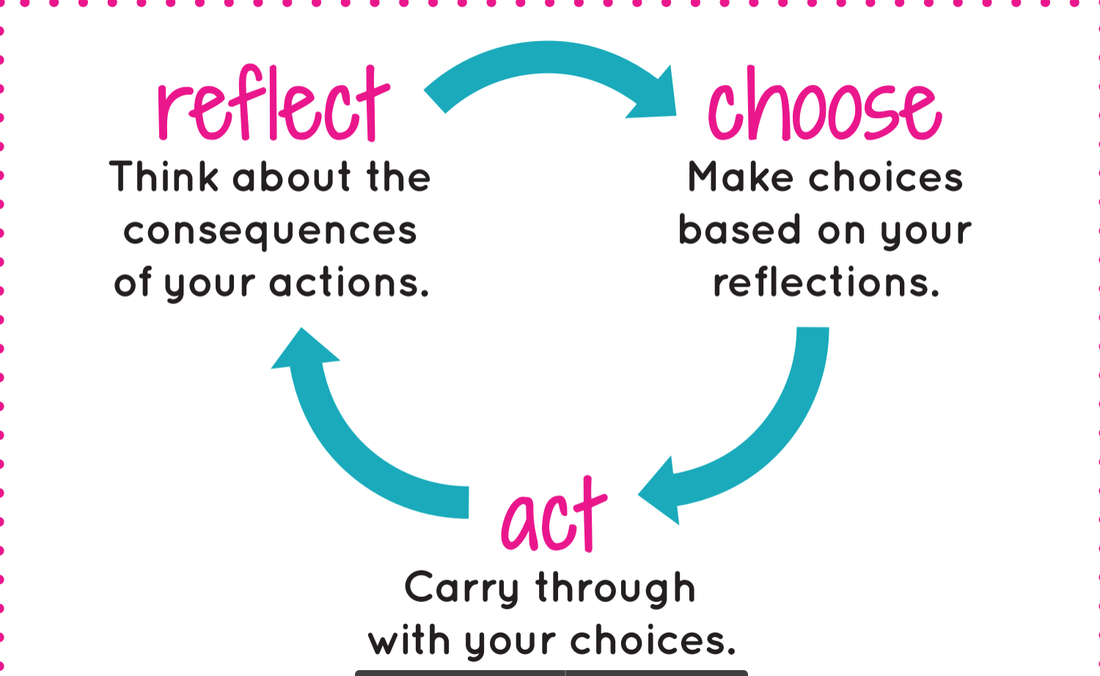
​One of the five elements of the inquiry cycle is Action. Action is a powerful response to learning so at MEF IS, we watch for it, foster it and celebrate it. Our students are encouraged to act on new understandings developed from relevant learning. We see the learner profile in action through the action cycle as students become reflective thinkers, knowledgeable risk-takers and principled communicators.

This is the season of general reflection for the world as we move towards a New Year celebration. Most people are reflecting on this past year and setting goals to achieve for the upcoming year whether it be to lose weight, participate in a triathlon, learn a new art form or pursue a promotion at work. While seasonal goal setting is a noble, worthwhile process, I challenge you make an adjustment to that yearly routine. This does not have to wait until December. Goals can be incremental and it takes making reflection a daily practice. This transforms life into a daily learning journey as you learn from your mistakes through reflection and set achievable goals for new accomplishments and knowledge or skills to learn. Know yourself, be honest with yourself and take action on your reflections.
​
Below are some reflective questions for metacognitive thinking:
  • What did I do well? How did I achieve that?
  • What was a struggle for me? Why was that? How can I change that?
  • What would l like to work on next? How will I achieve that? What goals might I set for myself?
  • What skills need developing to turn my weakness into a strength? How will I know I've developed the skill I needed?
  • How can I support those around me in their learning journey? What encouragement can I give to both motivate and inspire him/her?
  • With whom can I share my struggles to support me on my learning journey? Who can hold me accountable and help me set goals? Who can speak positively into my life and open my eyes to my limitations so I can make adjustments?
If we can all model this lifestyle for our students, then they can have reflective footsteps to follow and be empowered to make changes in their own choices and actions. Find a partner, best friend, or mentor to join you. And as Winston Churchill once said, "Never, never, never, never give up!"
Picture
Action Cycle
  • Action can be as small as a thought...
  • Action can be as big as a world wide campaign...
  • Action comes from within. 
  • It begins with reflection.
  • It is a lifestyle of accountability to self and others.
  • Learn to implement the action cycle daily.
0 Comments

    Author

    As an international educator, I work with colleagues in my local and global network regularly to implement inquiry through concept-based approaches to learning and teaching. It is a journey of discovery, learning and growing our own understandings about the ways children learn.

    Categories

    All
    Action Cycle
    Agency
    Approaches To Learning
    Beliefs
    Belonging
    Big Idea
    CBCI
    Cognitive Load
    Collaboration
    Collective Wellbeing
    Community
    Competent
    Comprehensible Input
    Concepts
    Conceptual Understandings
    Contexts
    Continuous Provisions
    Creativity
    Curiosity
    Curriculum Mapping
    Distance Learning (DL)
    Documentation
    Education
    Equal Groups
    Equitable Education
    Equity
    Feedback
    Generalizations
    Grit
    Image Of The Child
    Inclusion
    Inductive Learning
    Inquiry
    Inquiry Cycle
    Integration
    Interculturalism
    Interdisciplinary Learning
    International Mindedness
    Language Development
    Learning Panels
    Mathematics
    Mindset
    Motivation
    Play
    Play-based Learning
    Playful Learning
    Play Invitations
    Play Provocations
    Portfolios
    PWIM
    Questioning
    Reflection
    Reggio Emilia Approach
    Relevant Learning
    Selling The Why
    Shared Vision
    SIOP Method
    Social Construction
    Sustainability
    Sustainable
    UN 17 SDGs
    Values
    Wellbeing

    Archives

    January 2026
    October 2025
    May 2025
    June 2024
    March 2020
    August 2019
    April 2019
    March 2019
    February 2019
    January 2019
    November 2018
    April 2018
    March 2018
    December 2017
    November 2017
    October 2017
    September 2017

    RSS Feed

    View my profile on LinkedIn

    This website uses marketing and tracking technologies. Opting out of this will opt you out of all cookies, except for those needed to run the website. Note that some products may not work as well without tracking cookies.

    Opt Out of Cookies

Home

About

Services

Menu

Contact

Copyright © 2015
  • Home
  • Services
  • Free Resources
  • Blog
  • About
  • Contact