|
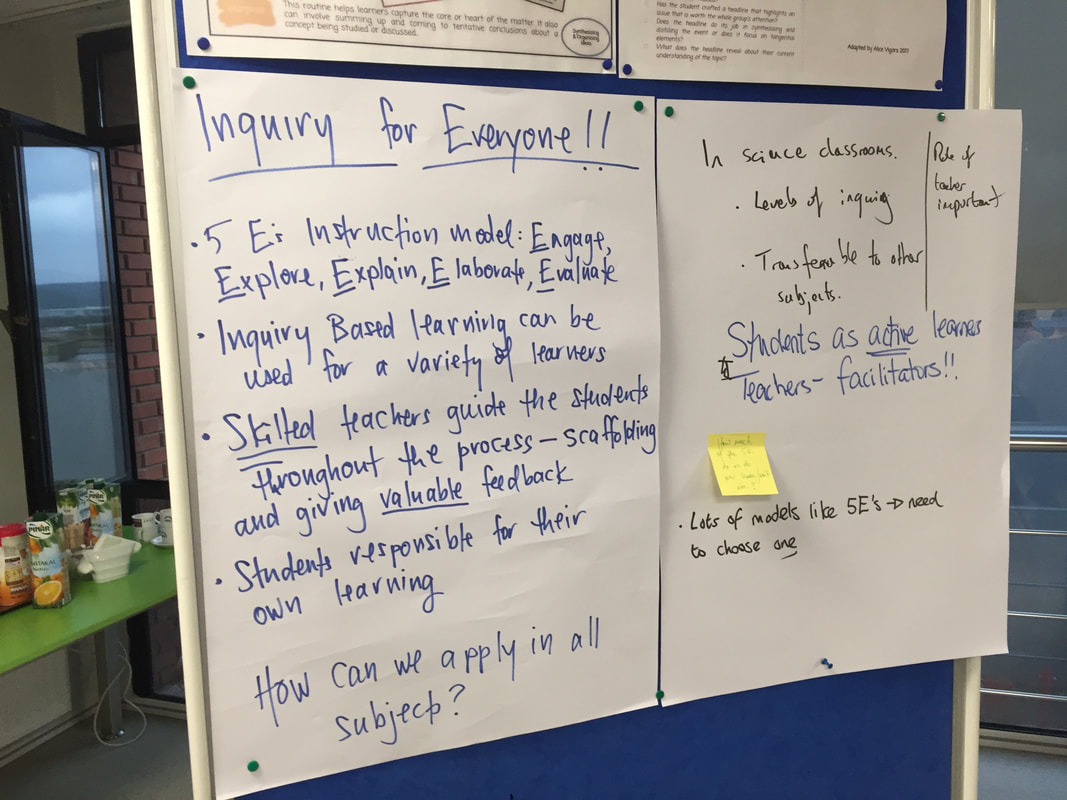
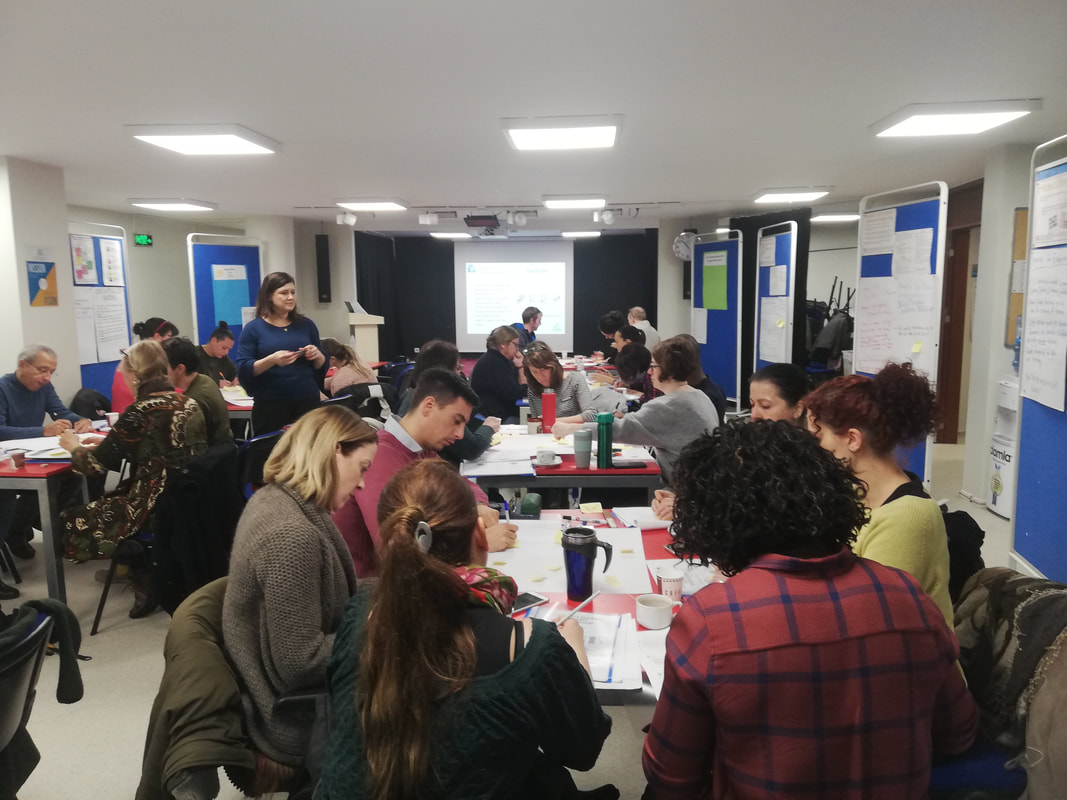
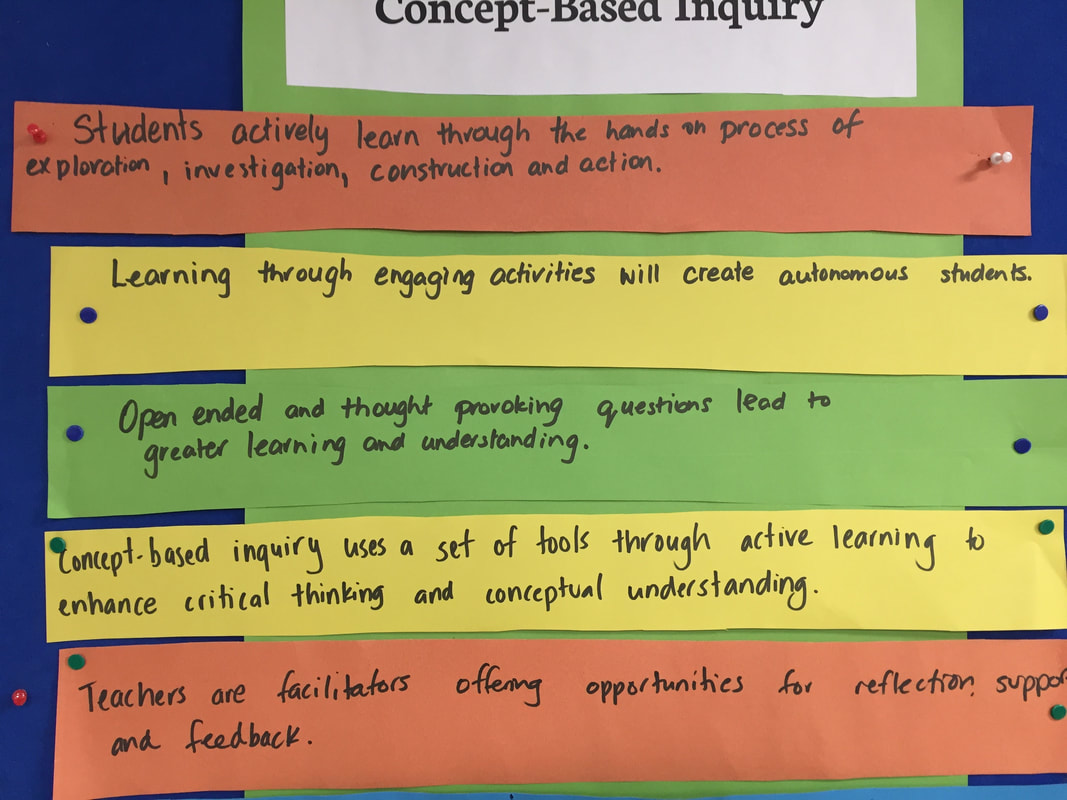
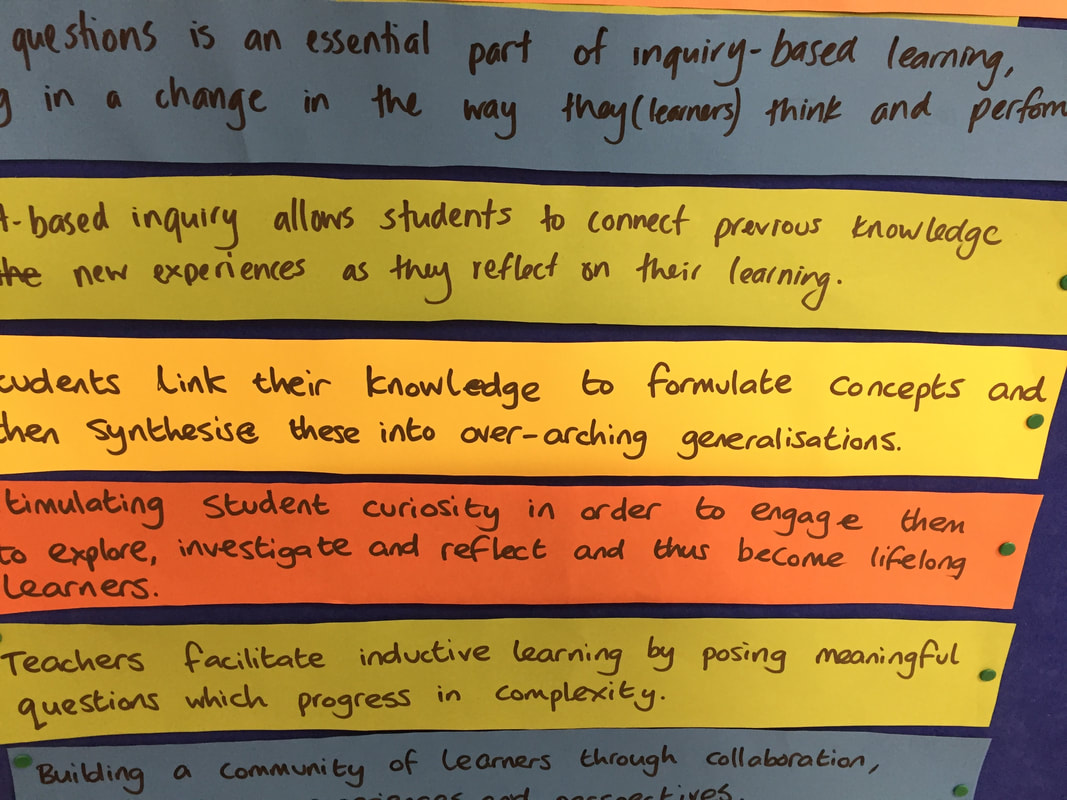
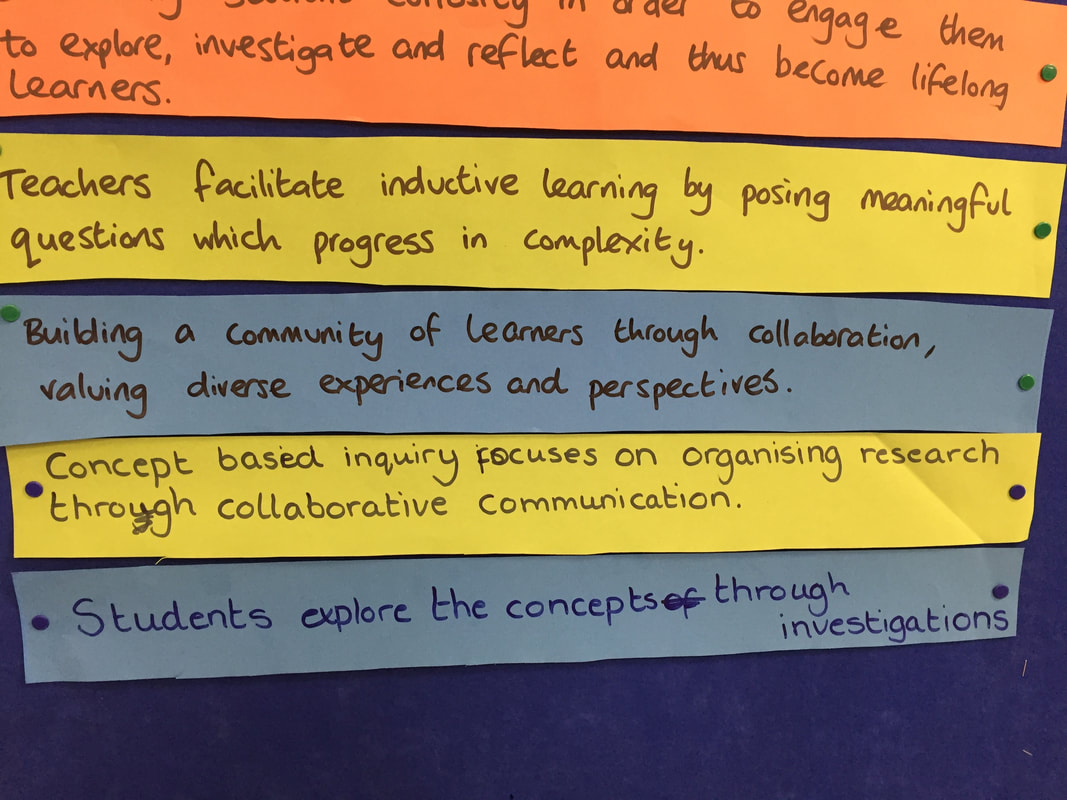
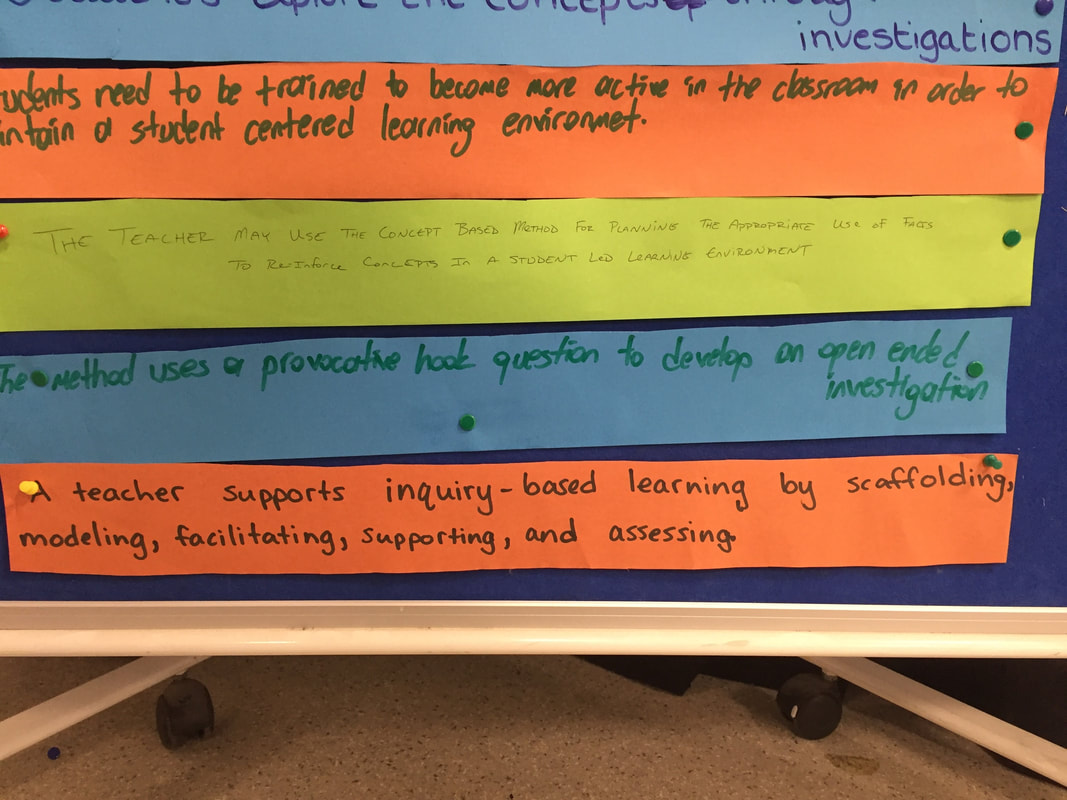
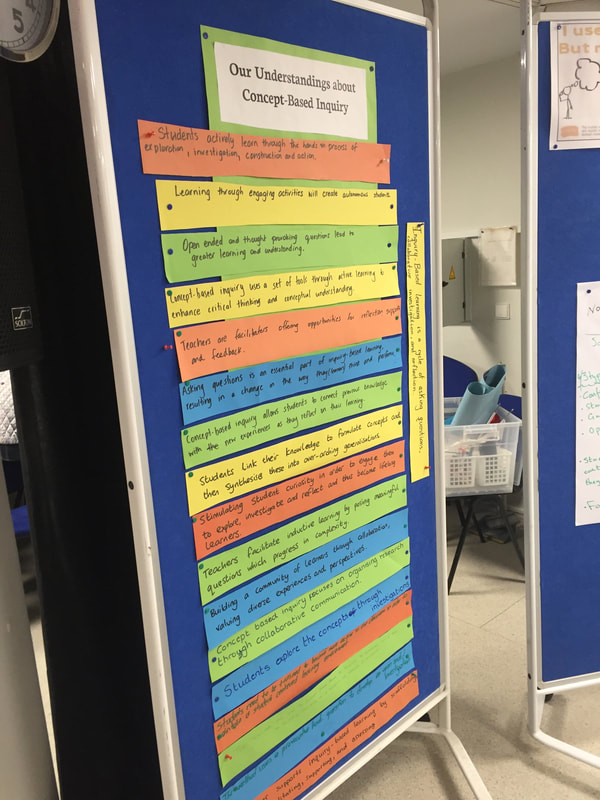
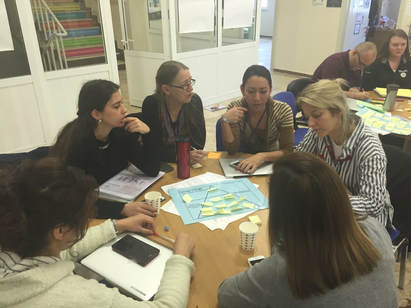
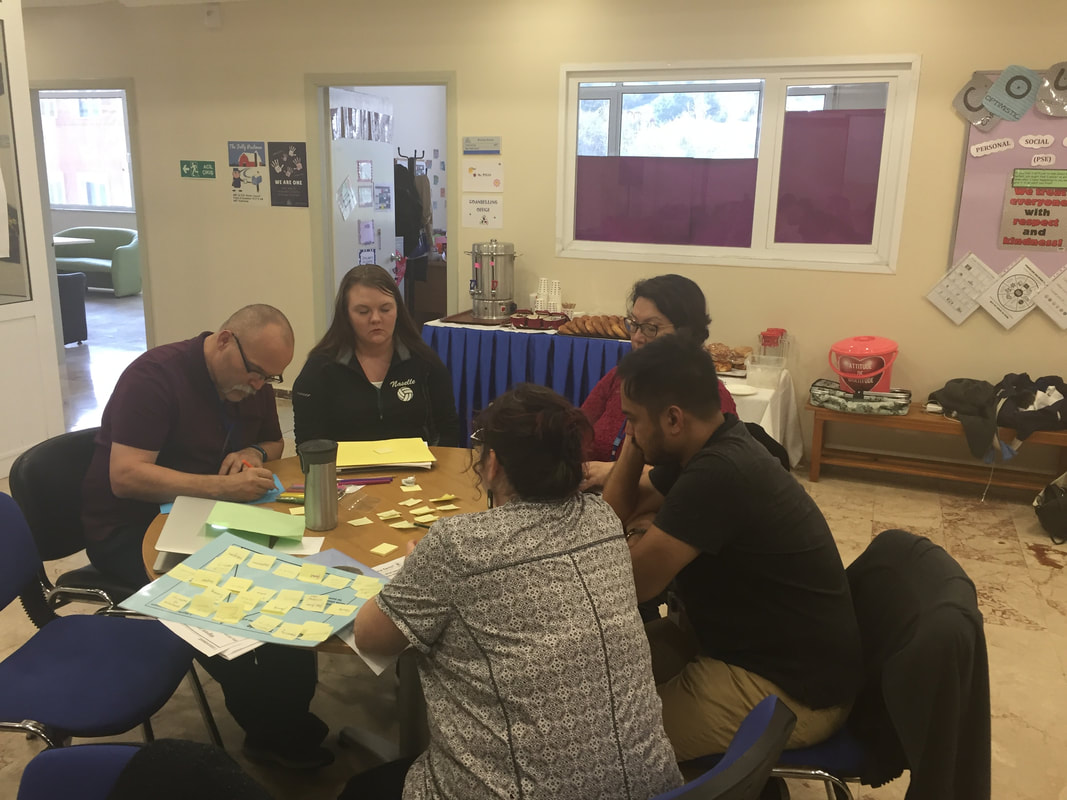
Recently, I was invited to facilitate a workshop for a private school in Izmir on concept-based inquiry. The school had recently undergone the self-study process and a revision of its guiding statements. With a newly revised learning and teaching policy based on the new mission and vision, the process of shifting the approaches to teaching had to begin. I was asked to shift their beliefs about learning and teaching from a teacher led classroom to that of a thinking classroom through concept-based inquiry. Sometimes shifting mindsets can be quite a challenge because beliefs are challenged and affected by the need for self-efficacy. The school follows Cambridge International Curriculum (CIE) and the International Primary Curriculum (IPC). As the course was not solely for primary teachers but including the whole school staff, I had to consider ways to make the content contextual for all ages so every teacher could visualize concept-based inquiry in his or her context and age range. Thus, I chose the run the workshop through concept-based inquiry day and allow the teachers to learn about inquiry by experiencing it. Before I arrived that Saturday, I sent a short survey to pre-assess their understandings so I could be sure to address any misconceptions and try to find ways to answer their questions. Some of the questions and misconceptions I saw were:
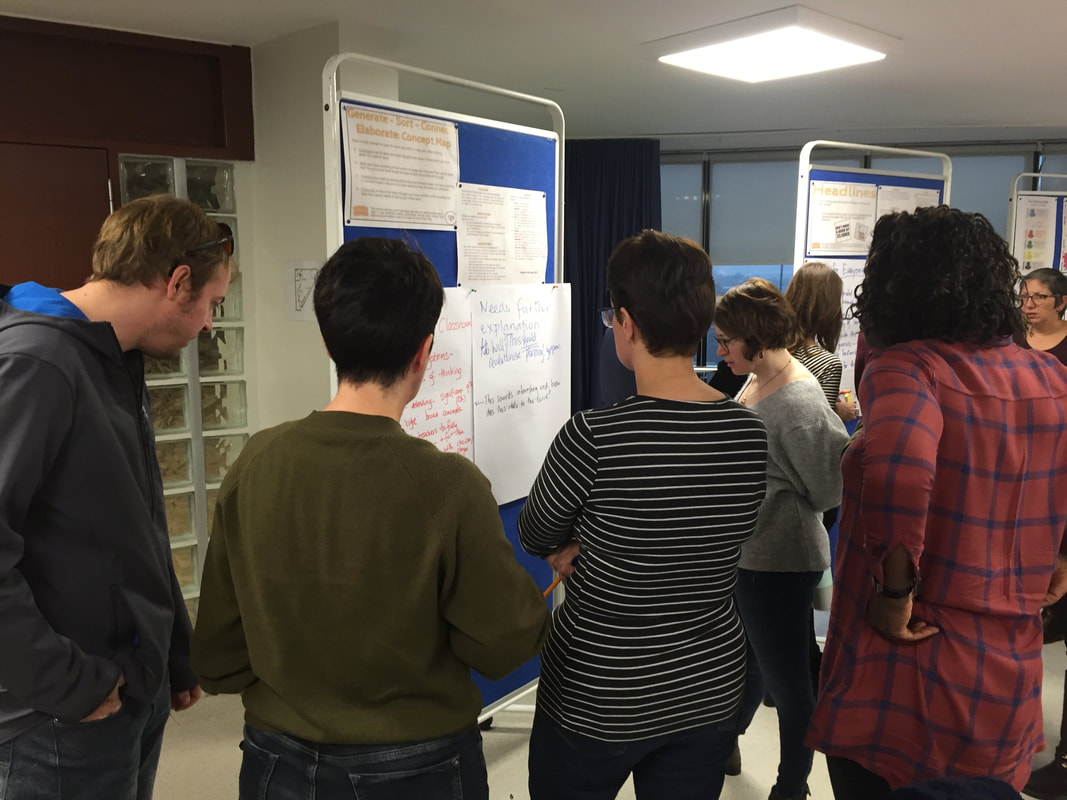
In order to be able to address these questions and misconceptions, I decided to begin the workshop with a jigsaw activity wherein different groups read articles about concept-based inquiry and created a headline with a summary of the content. During the sharing time, I observed discussion, critical thinking and reflection. Using this learning engagement, enabled the staff to begin to shed some light on their areas of concern.
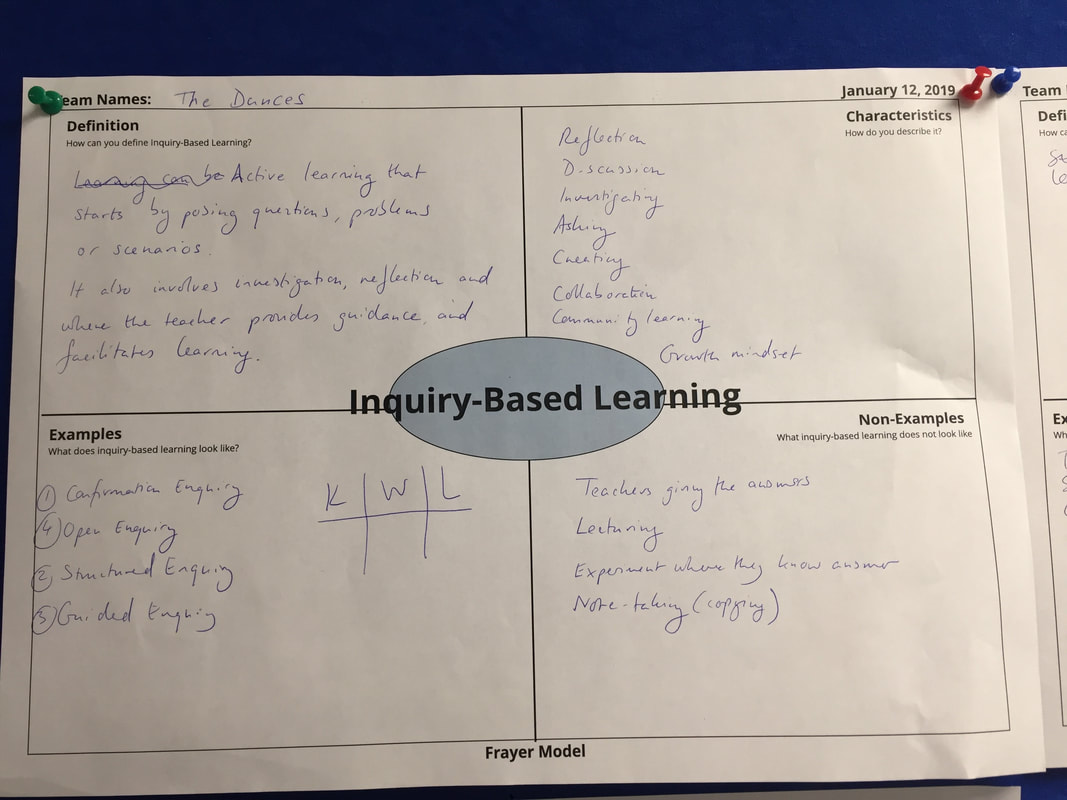
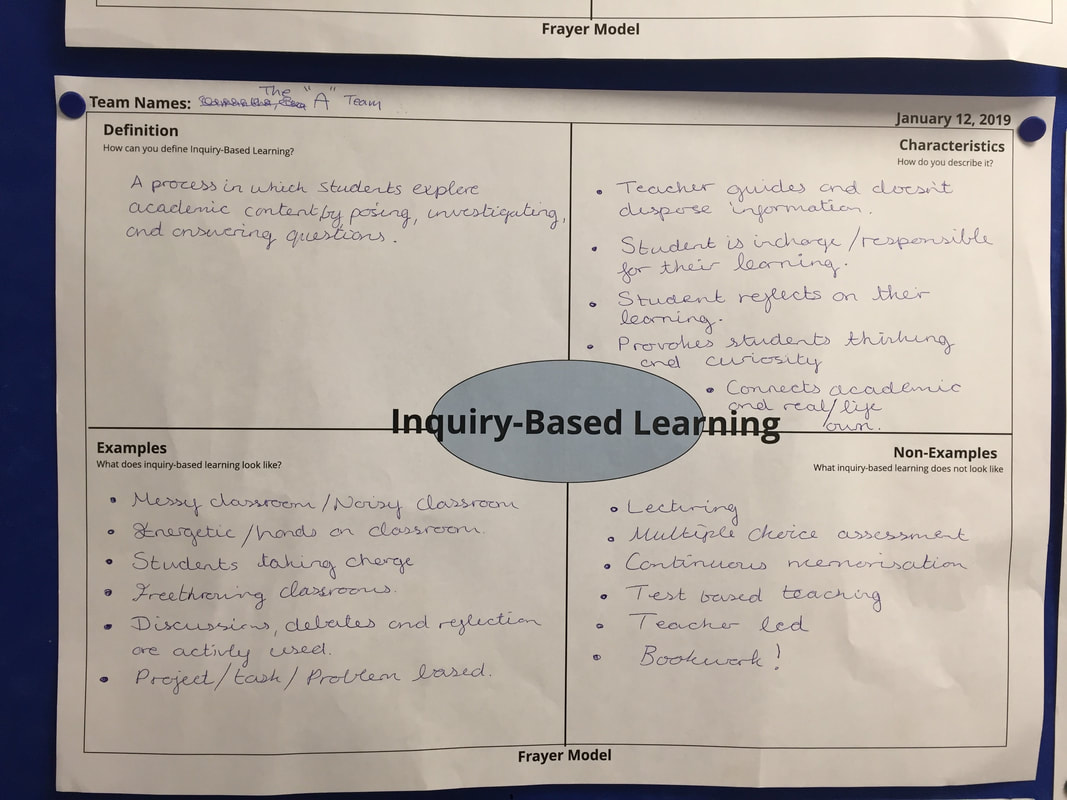
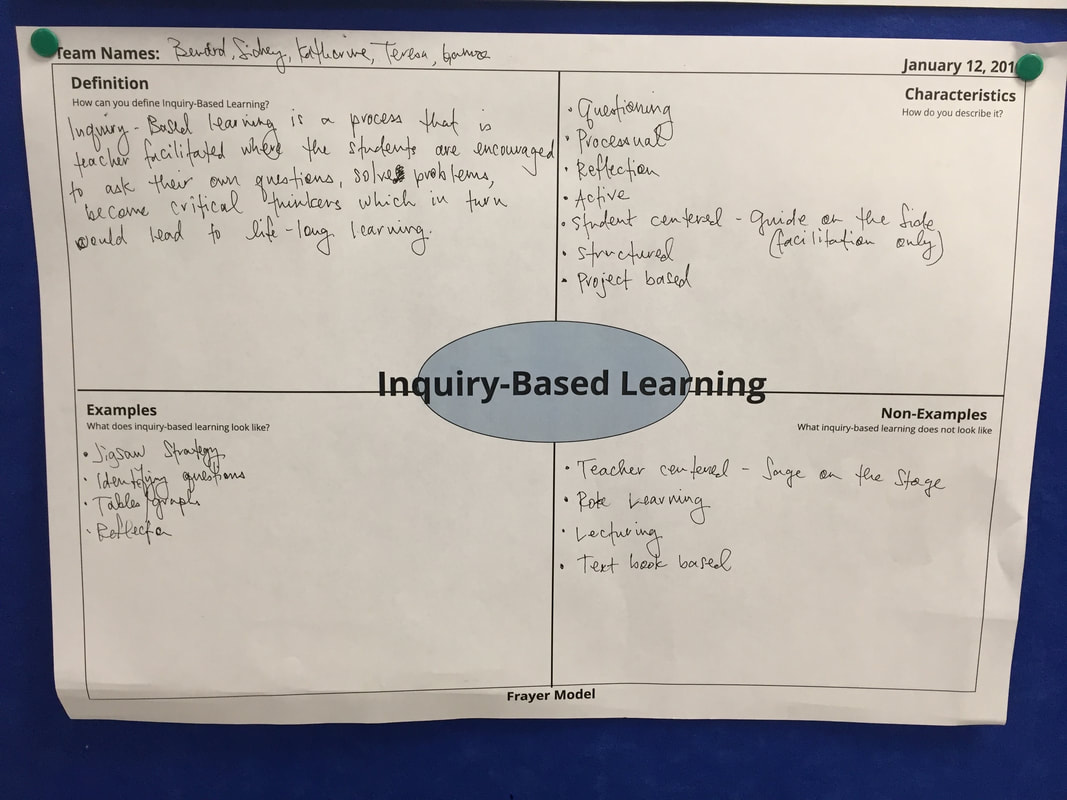
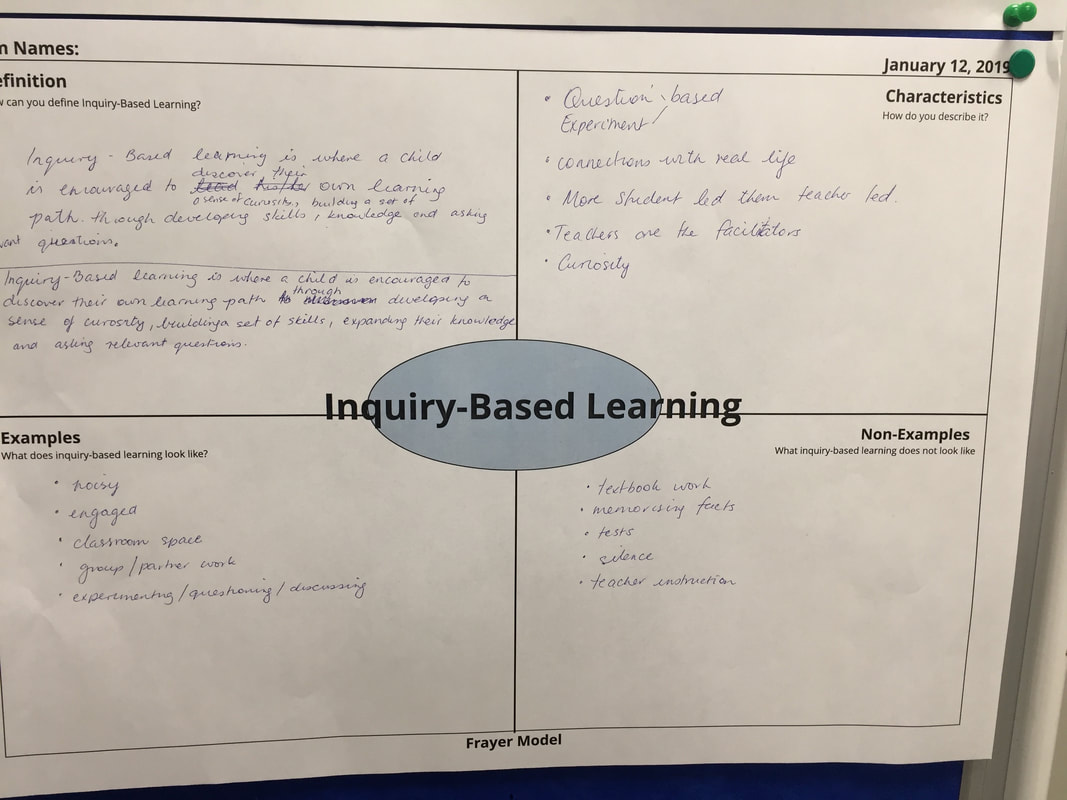
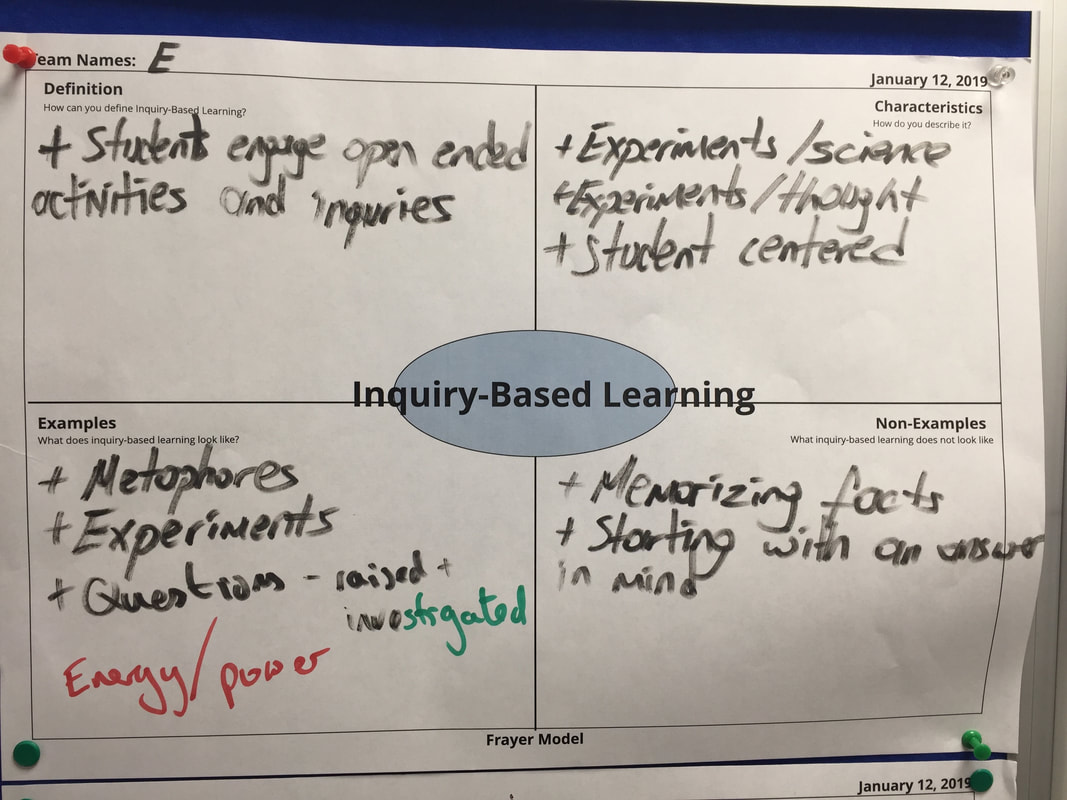
Then we used the Frayer Model to define inquiry-based learning before taking a look at a step deeper to concept-based inquiry.
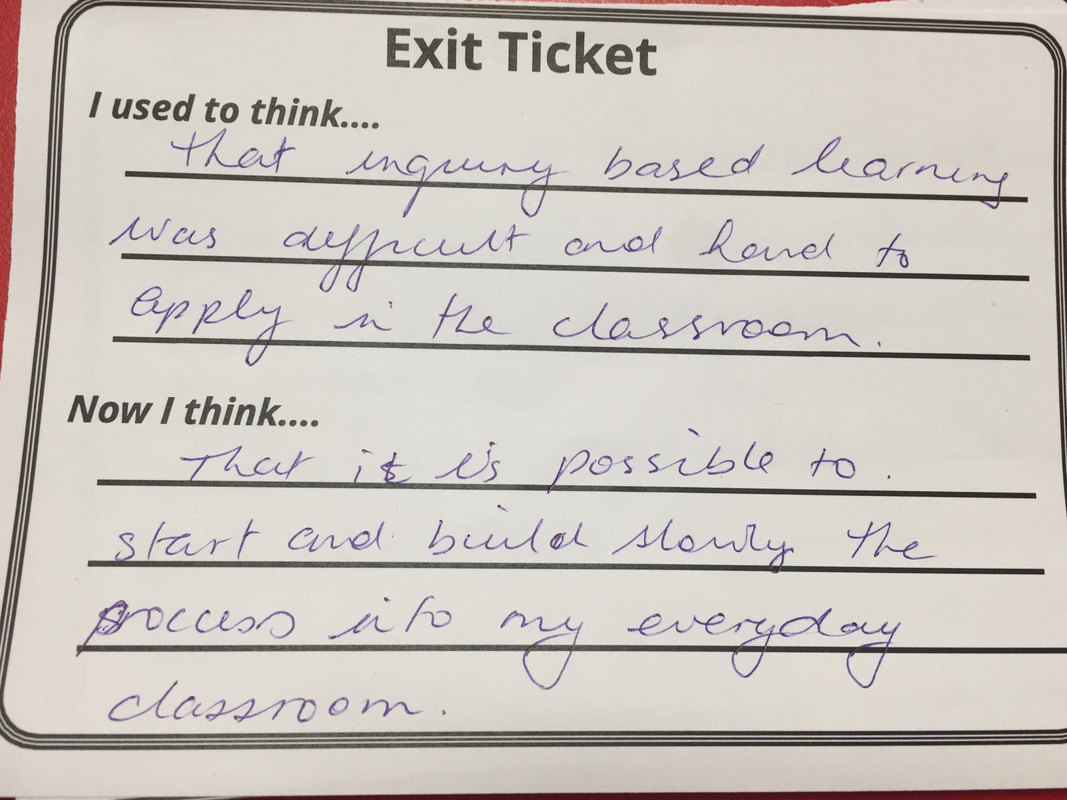
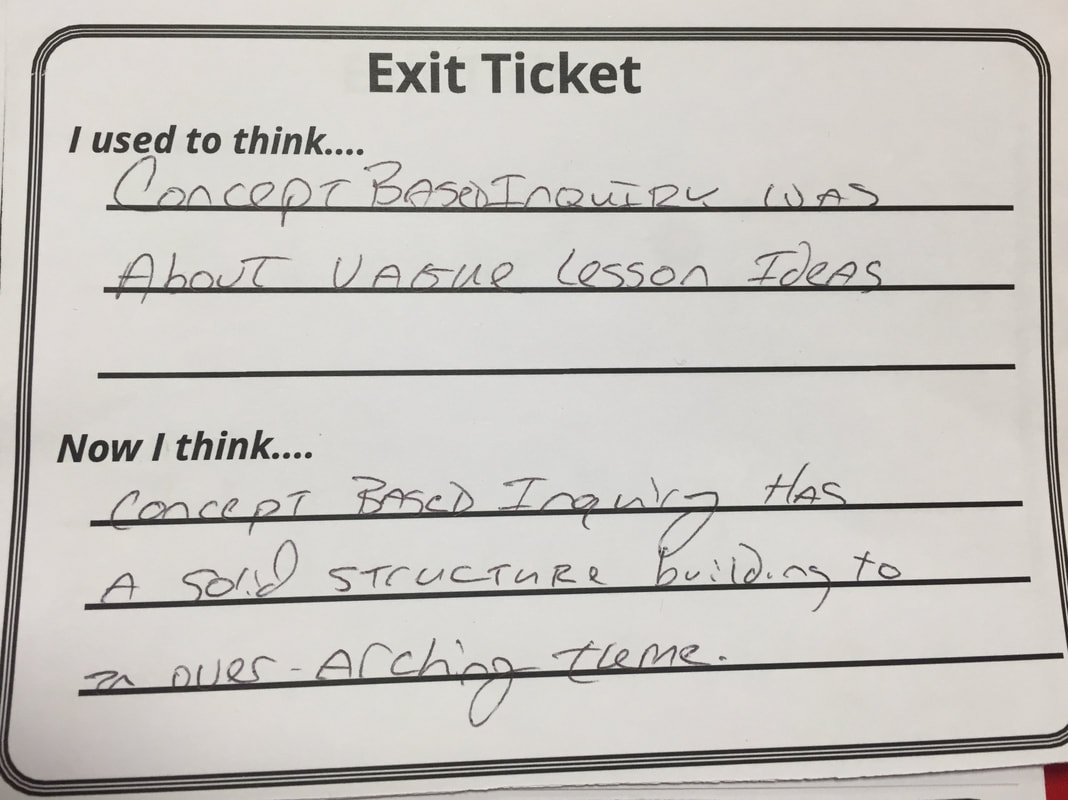
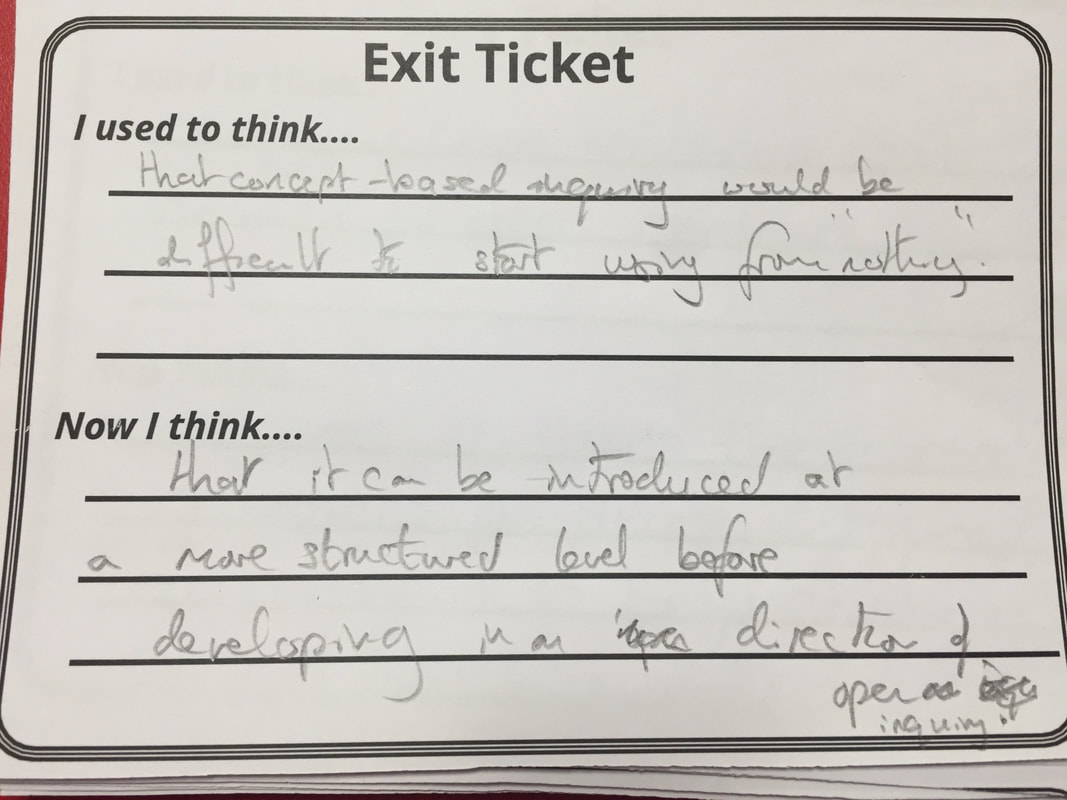
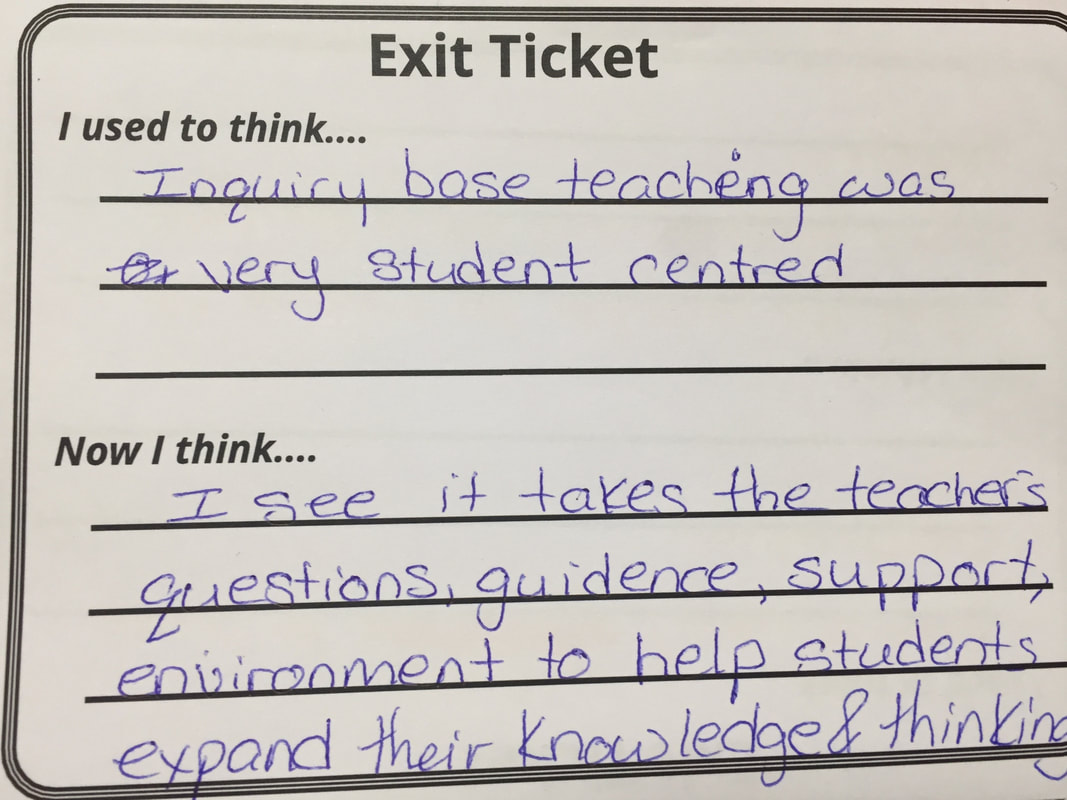
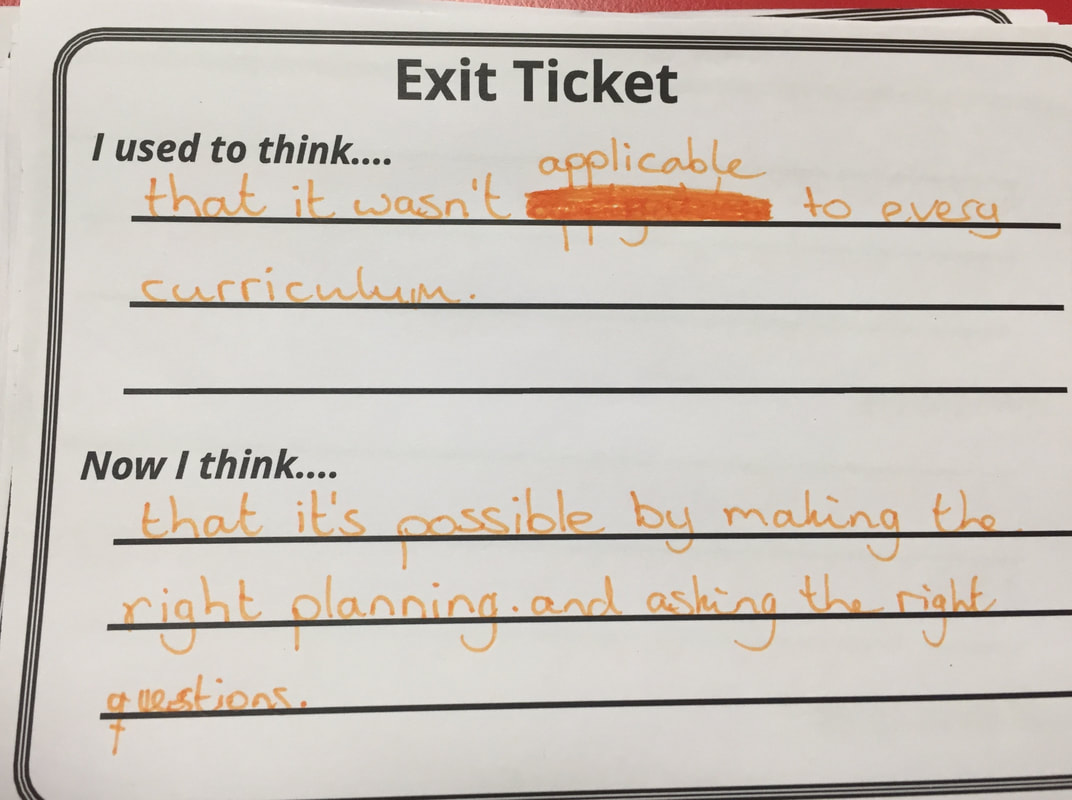
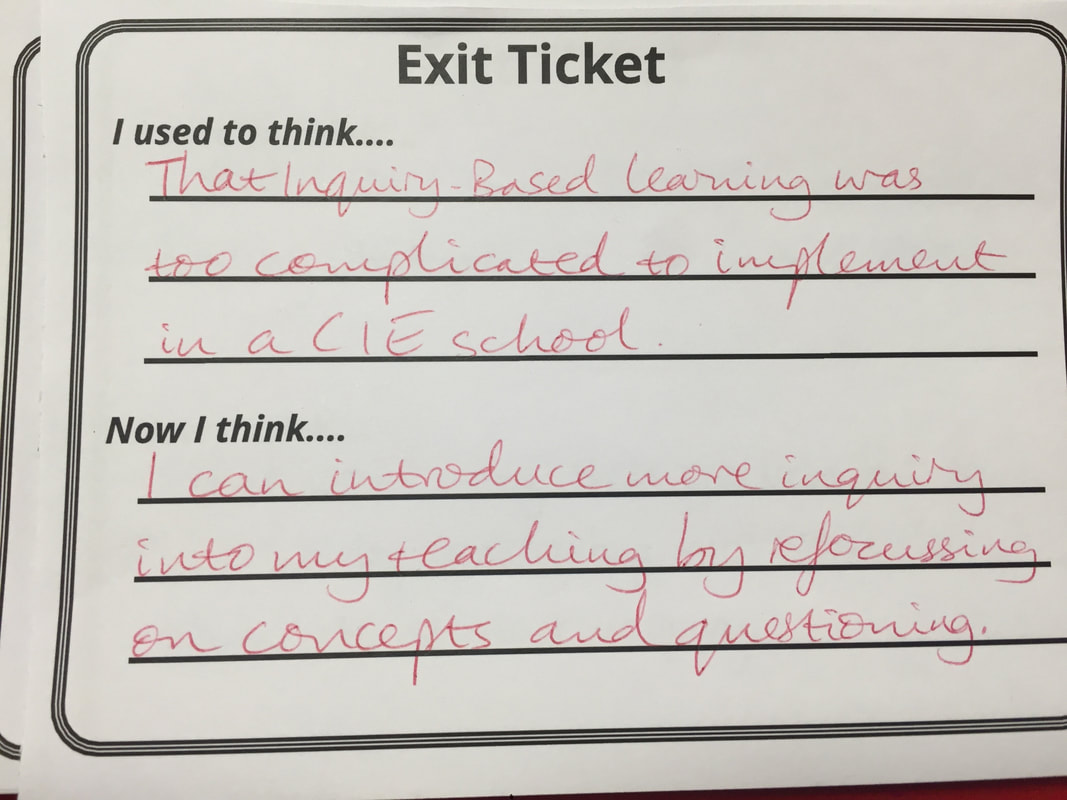
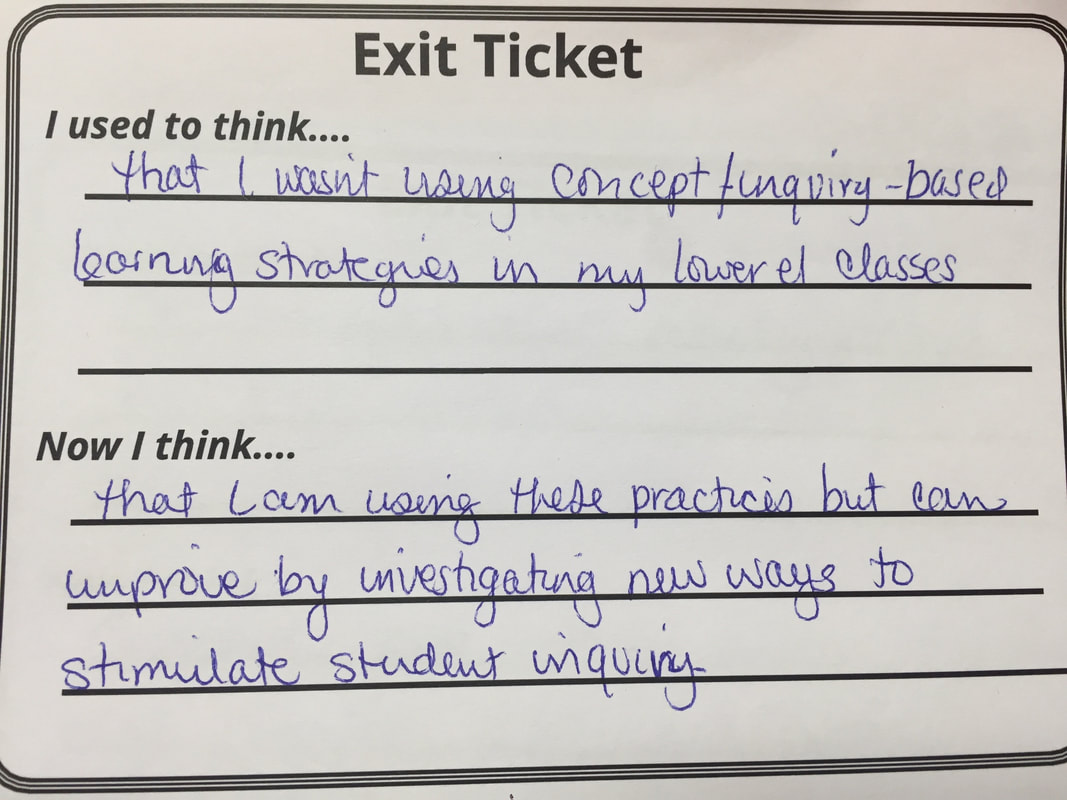
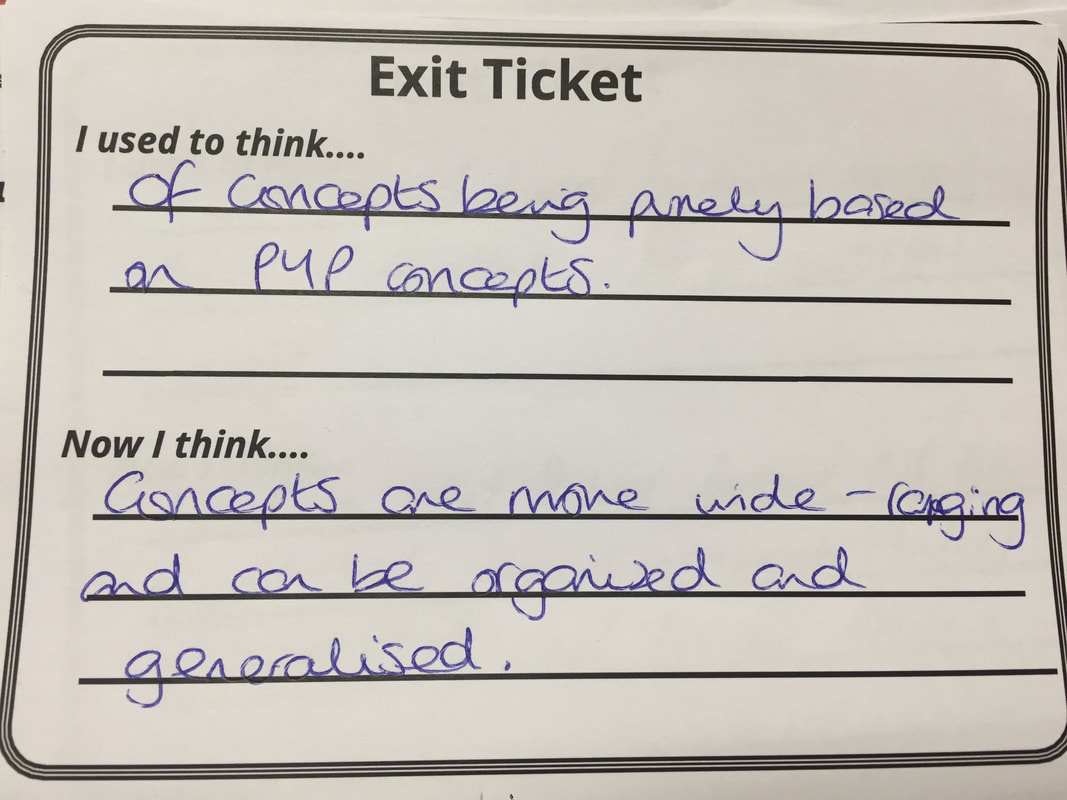
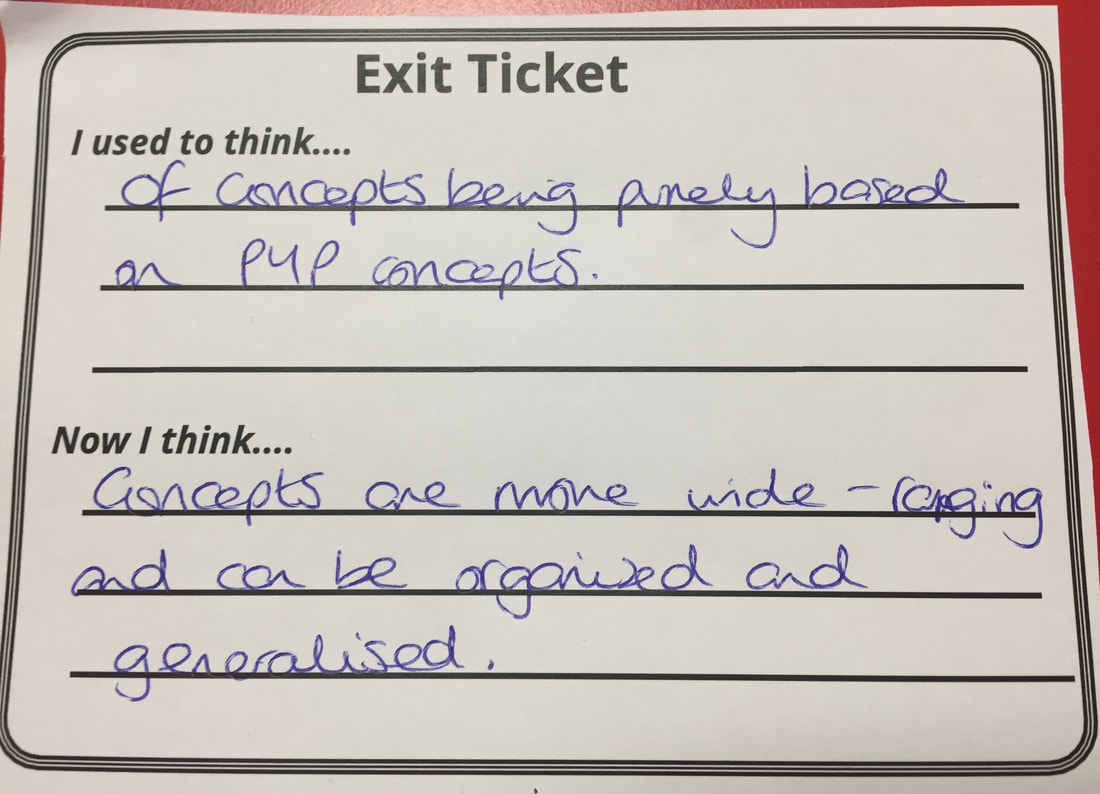
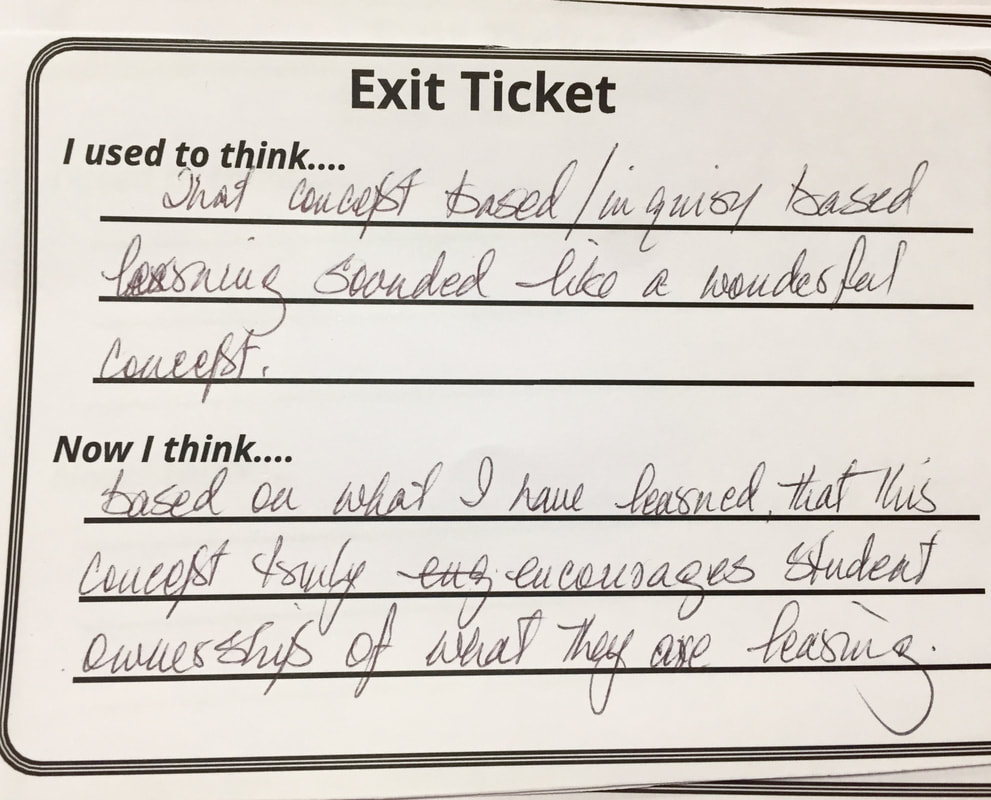
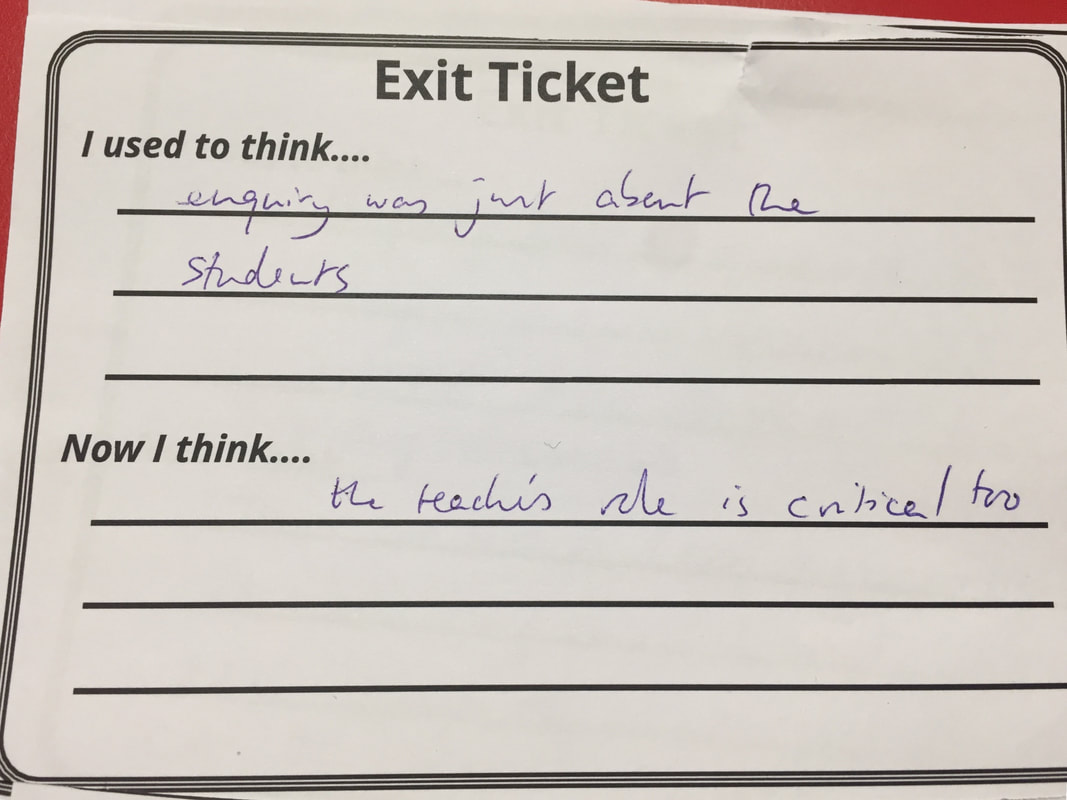
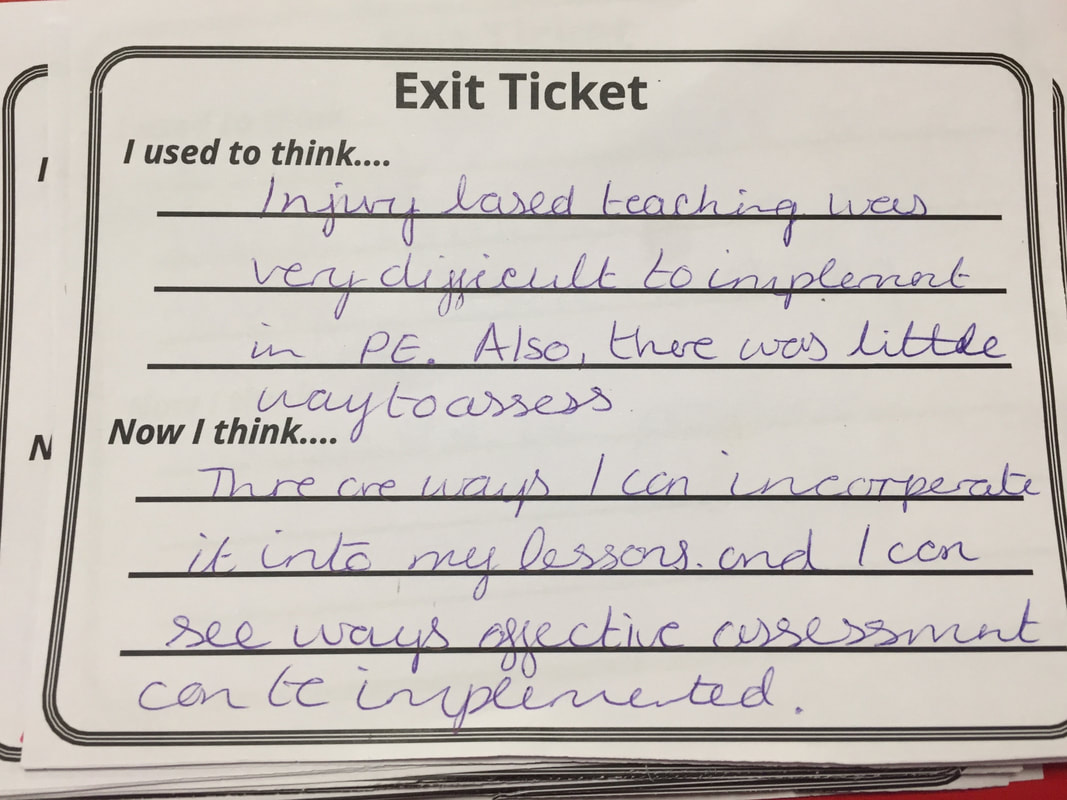
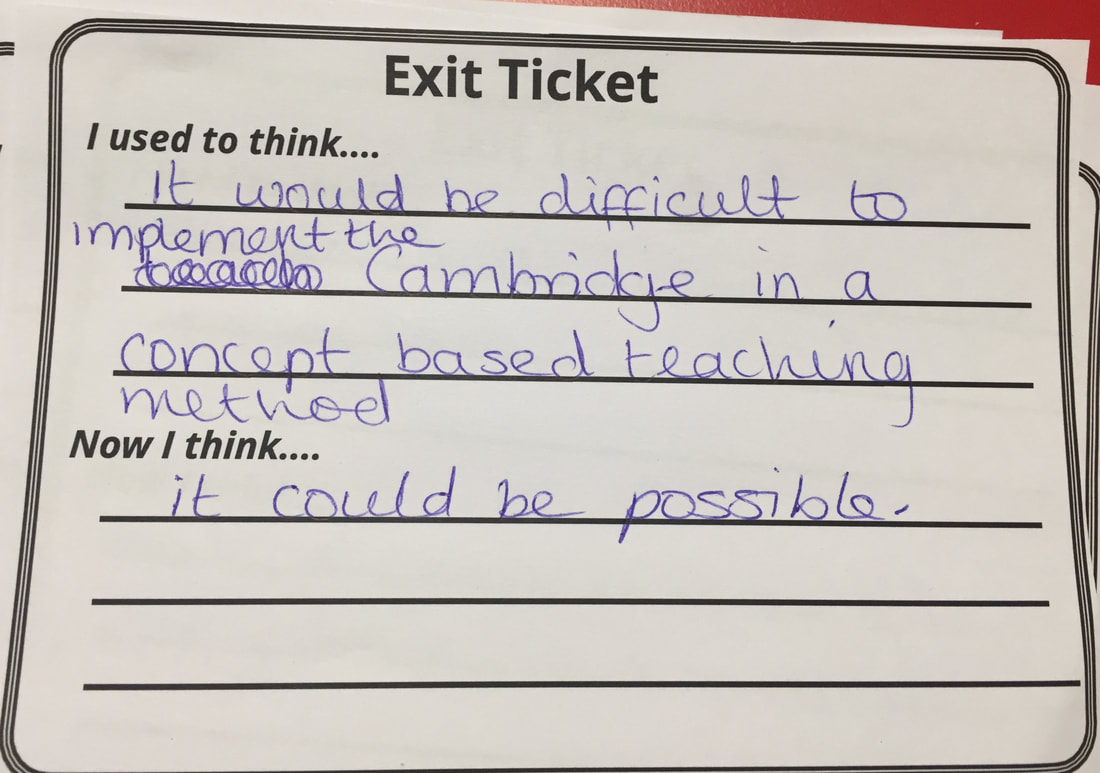
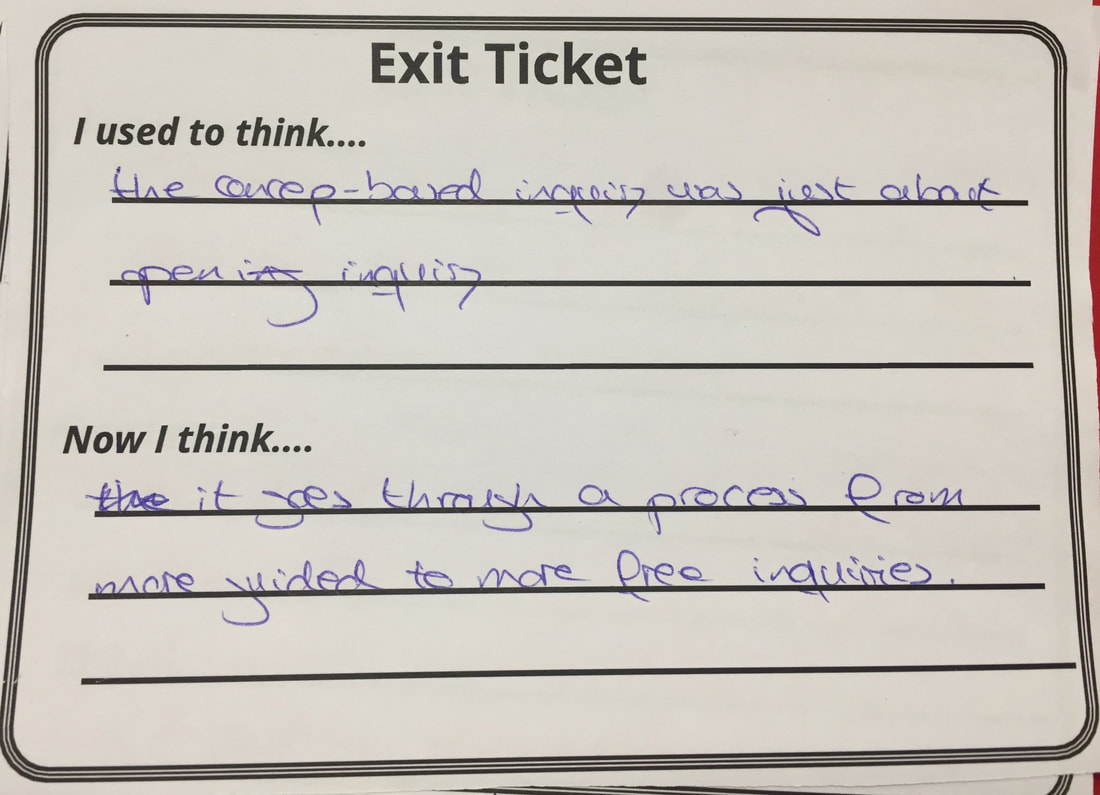
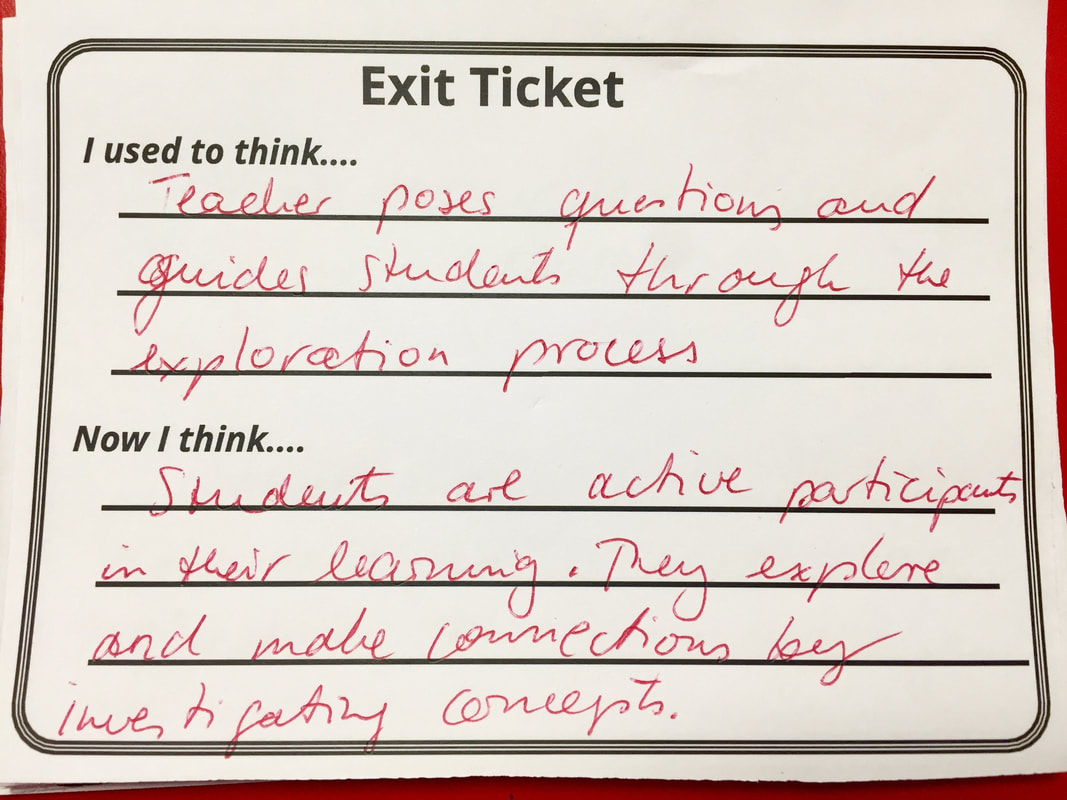
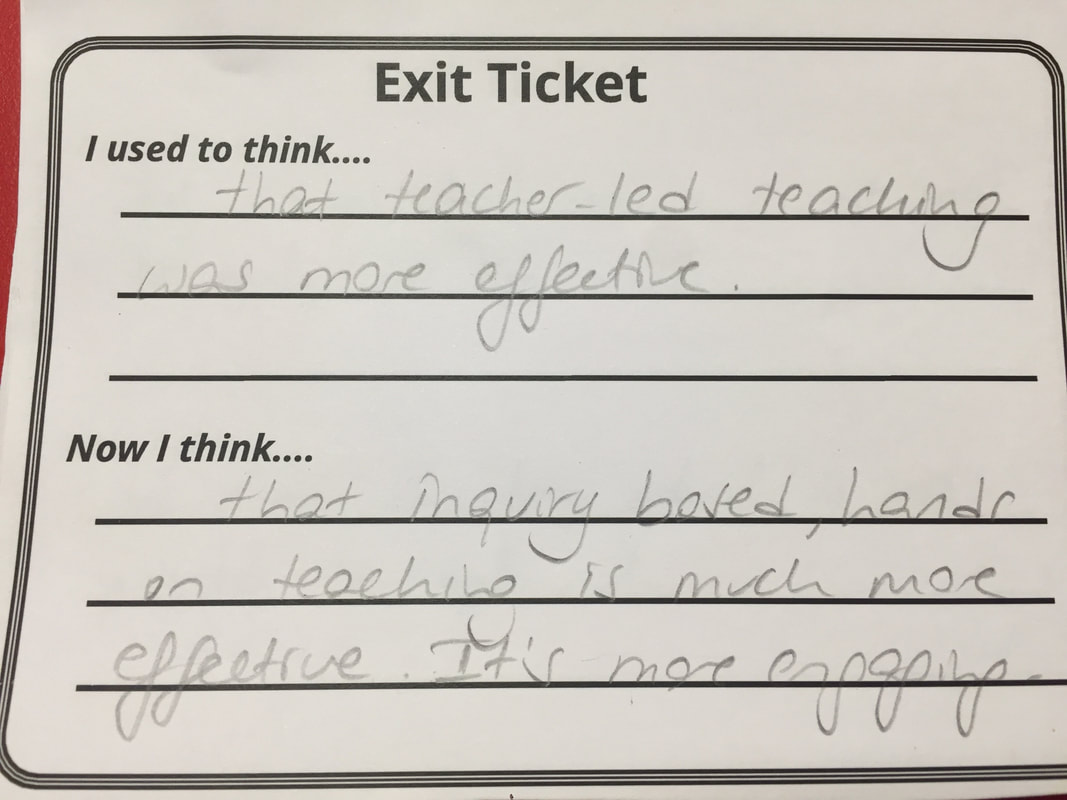
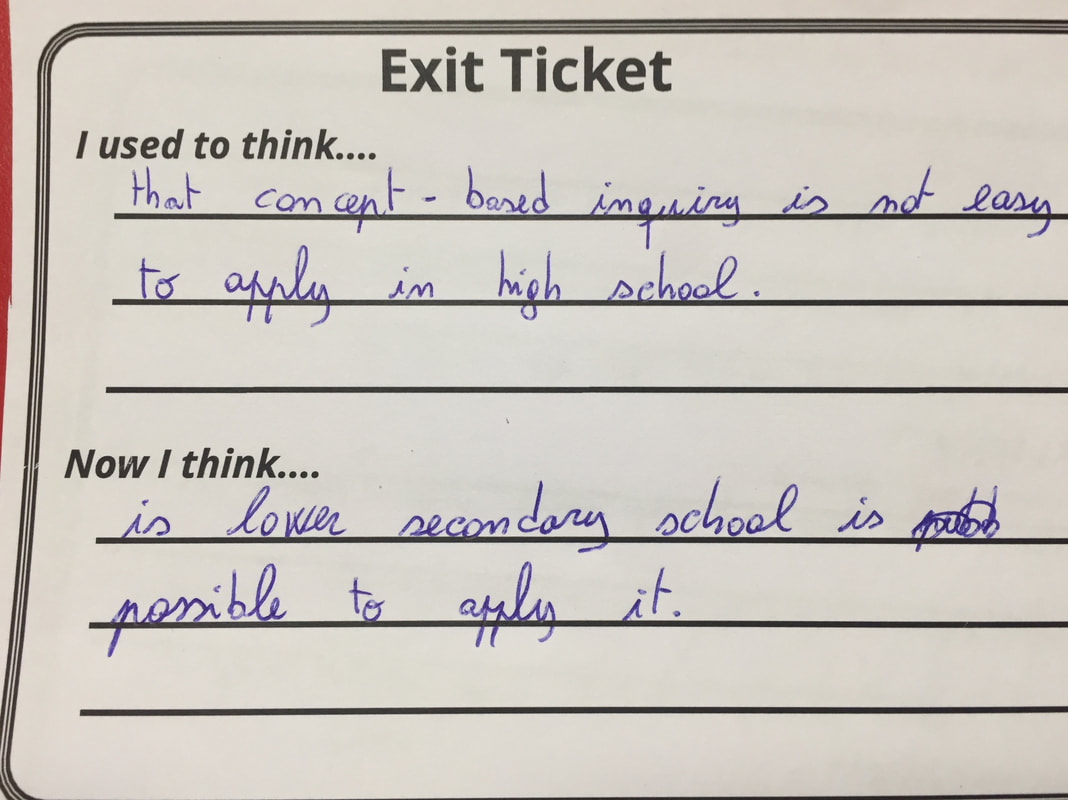
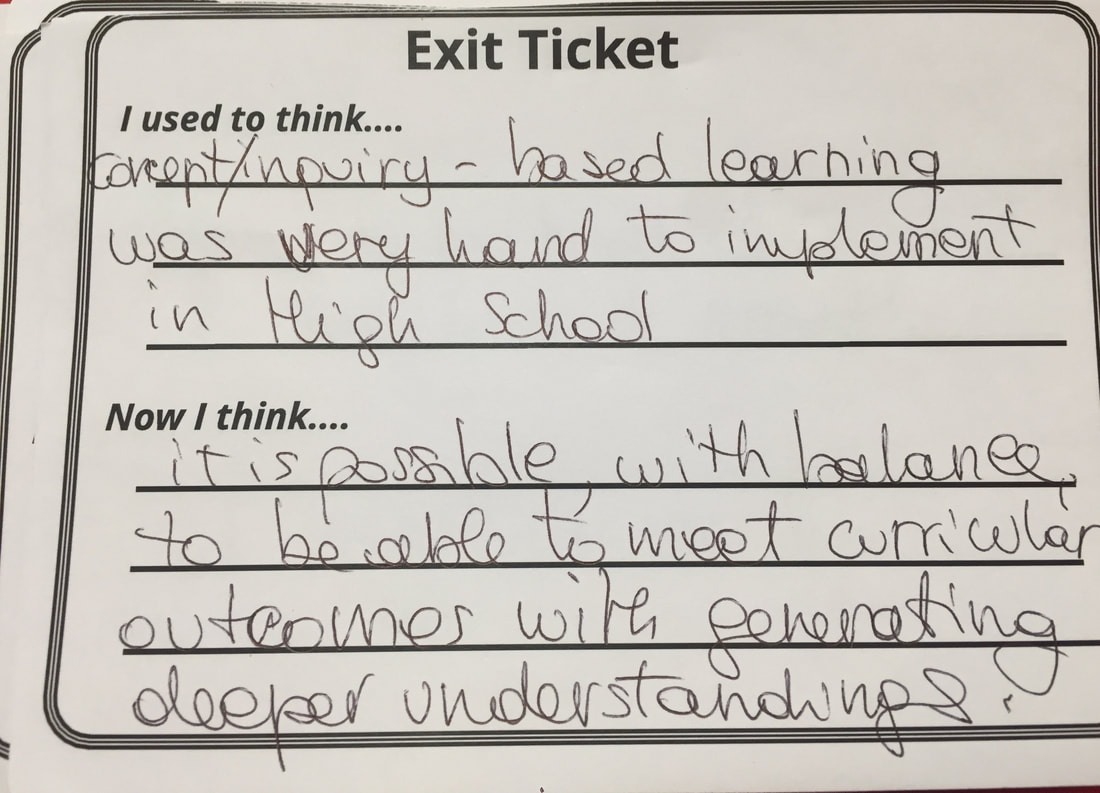
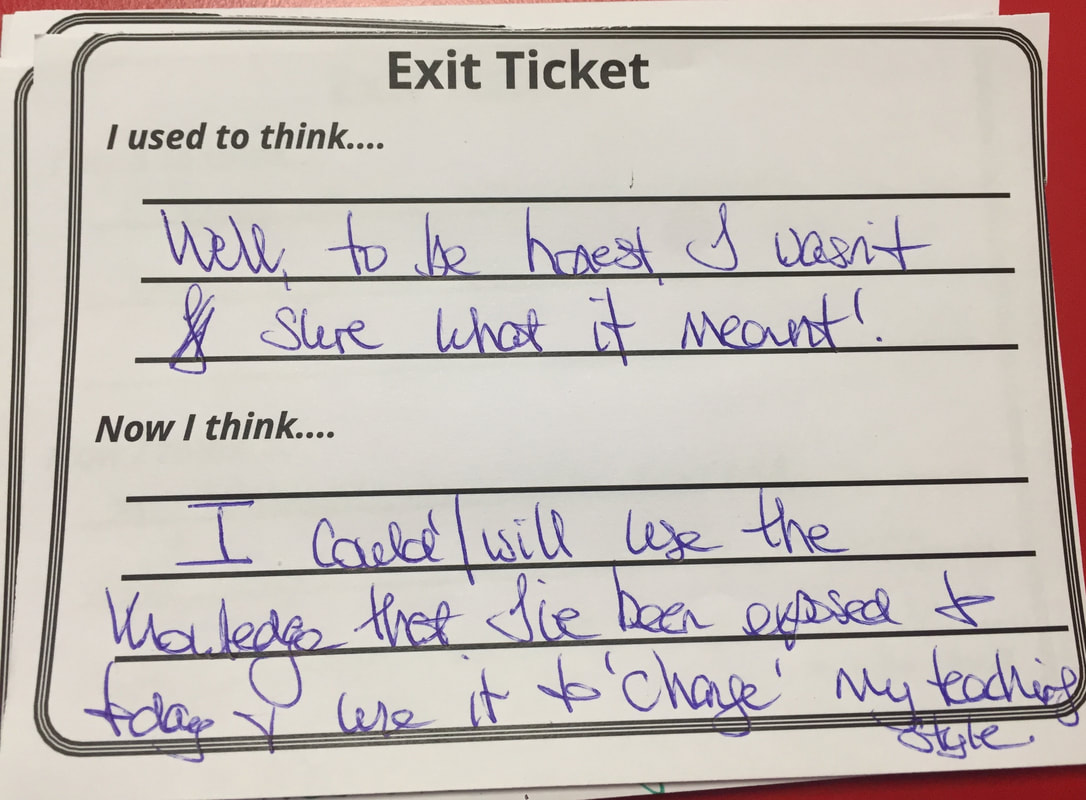
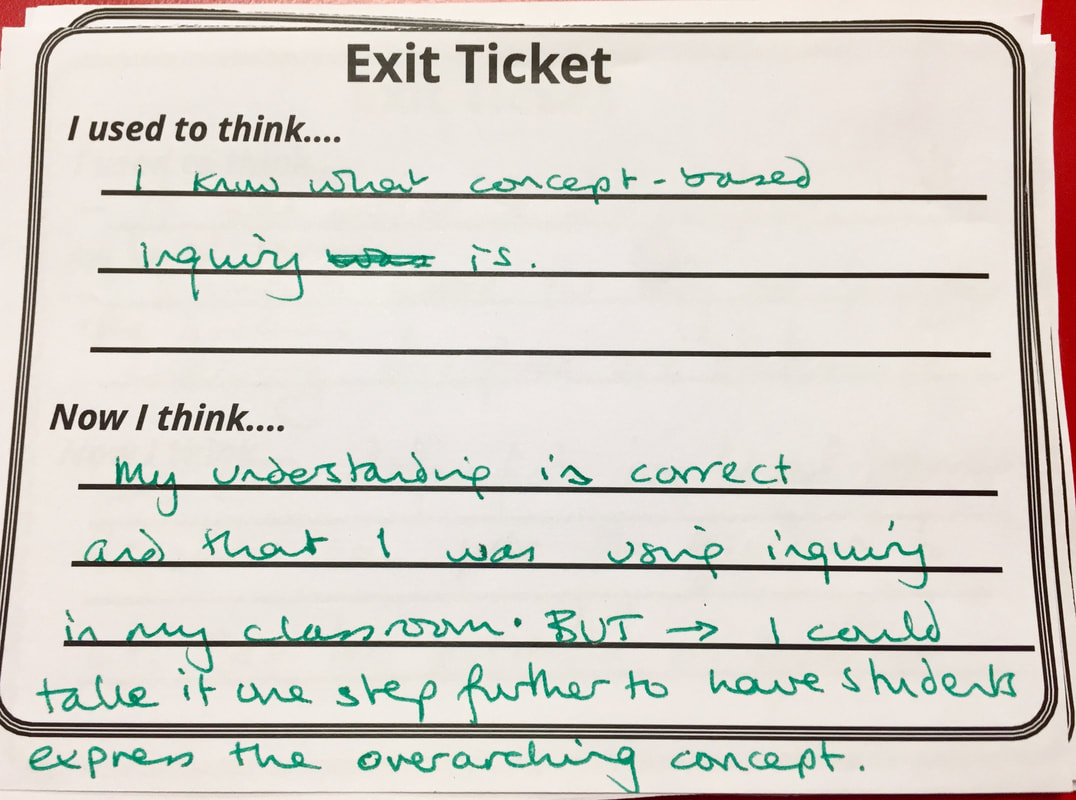
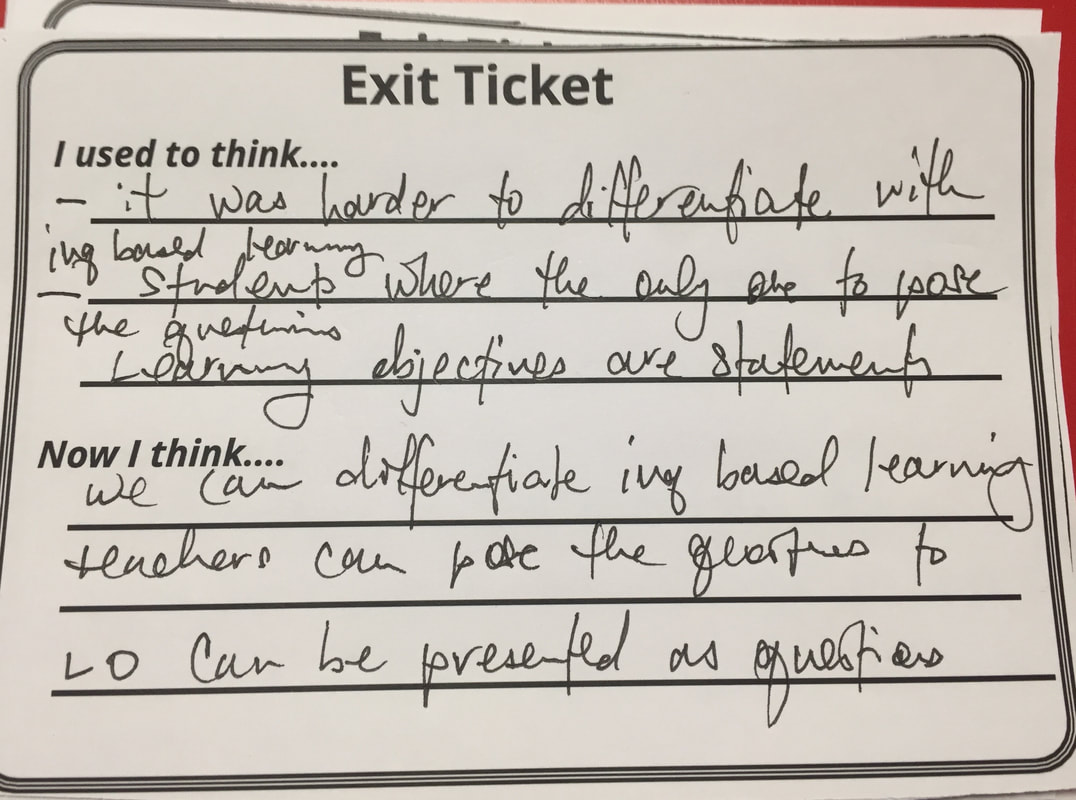
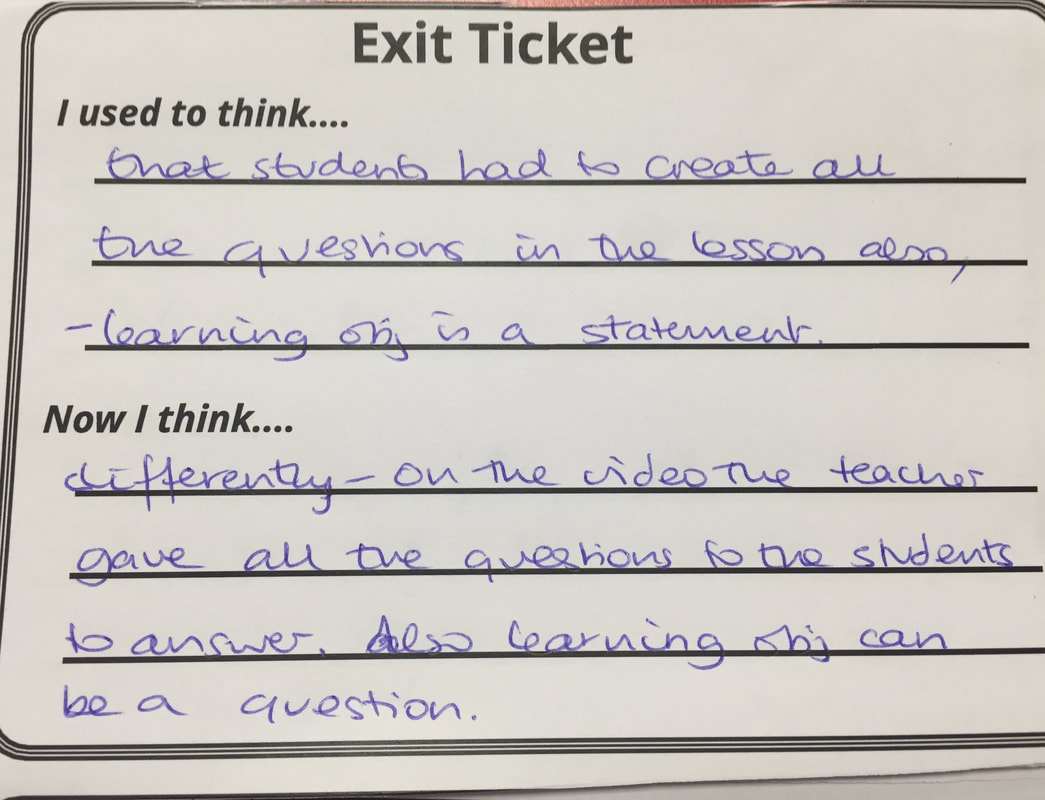
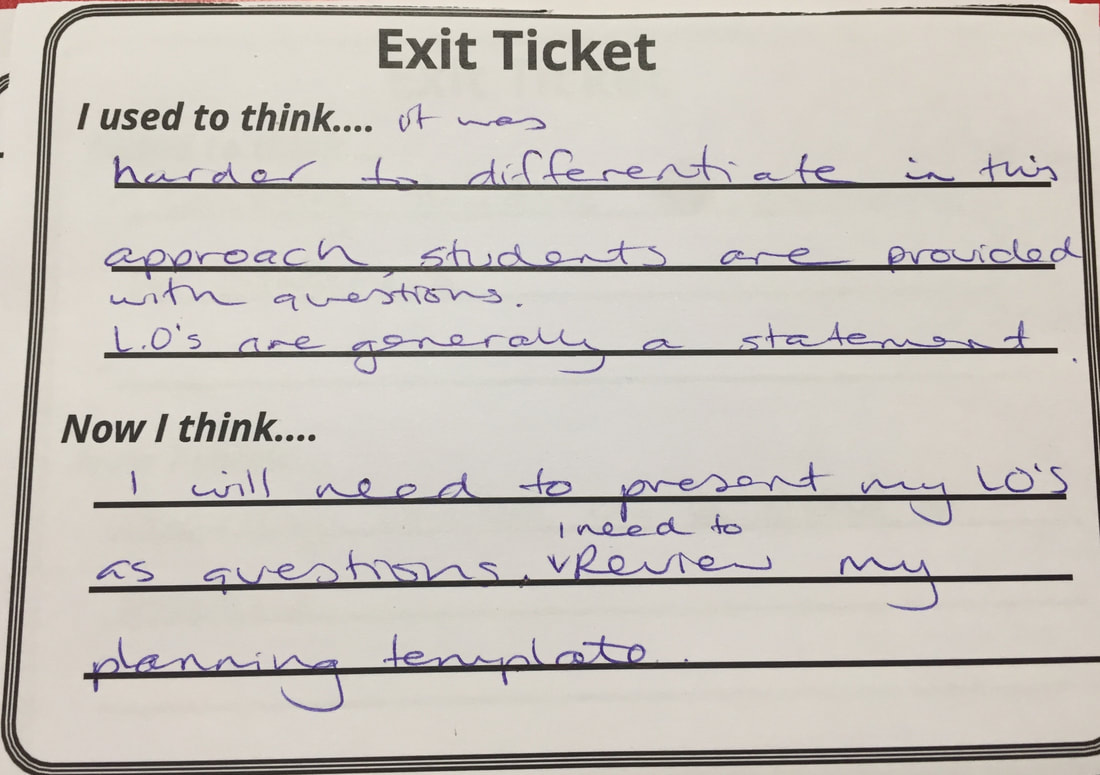
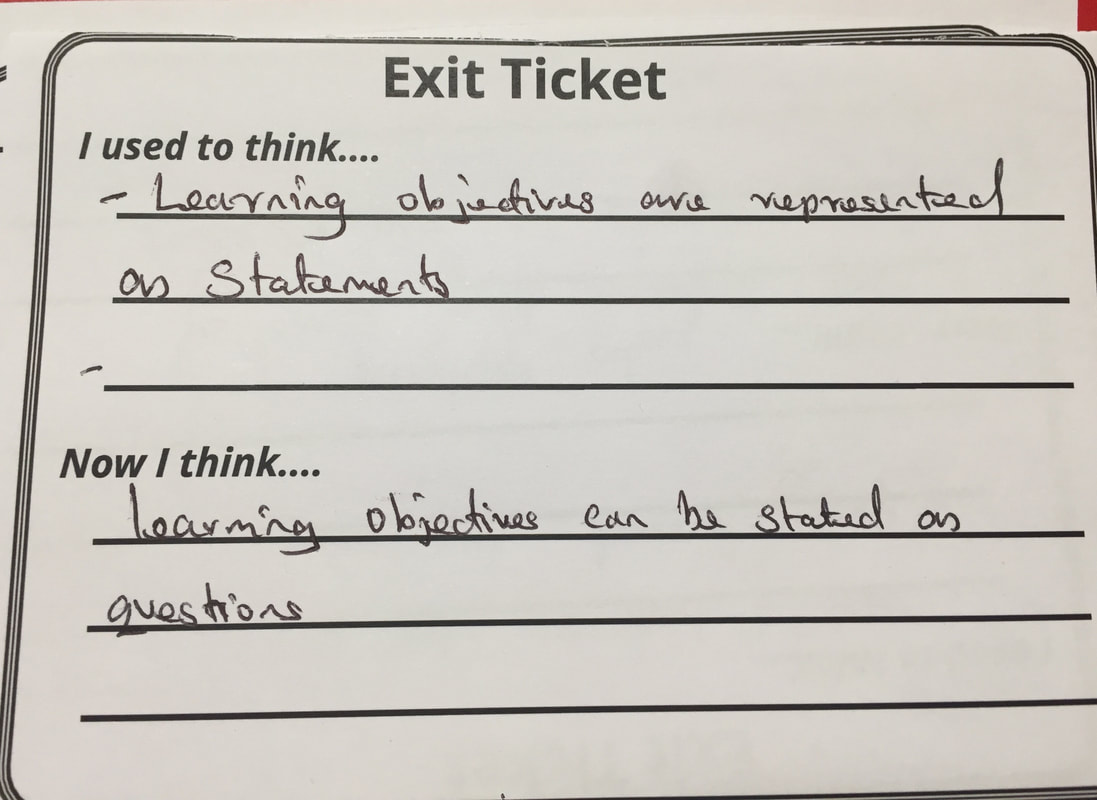
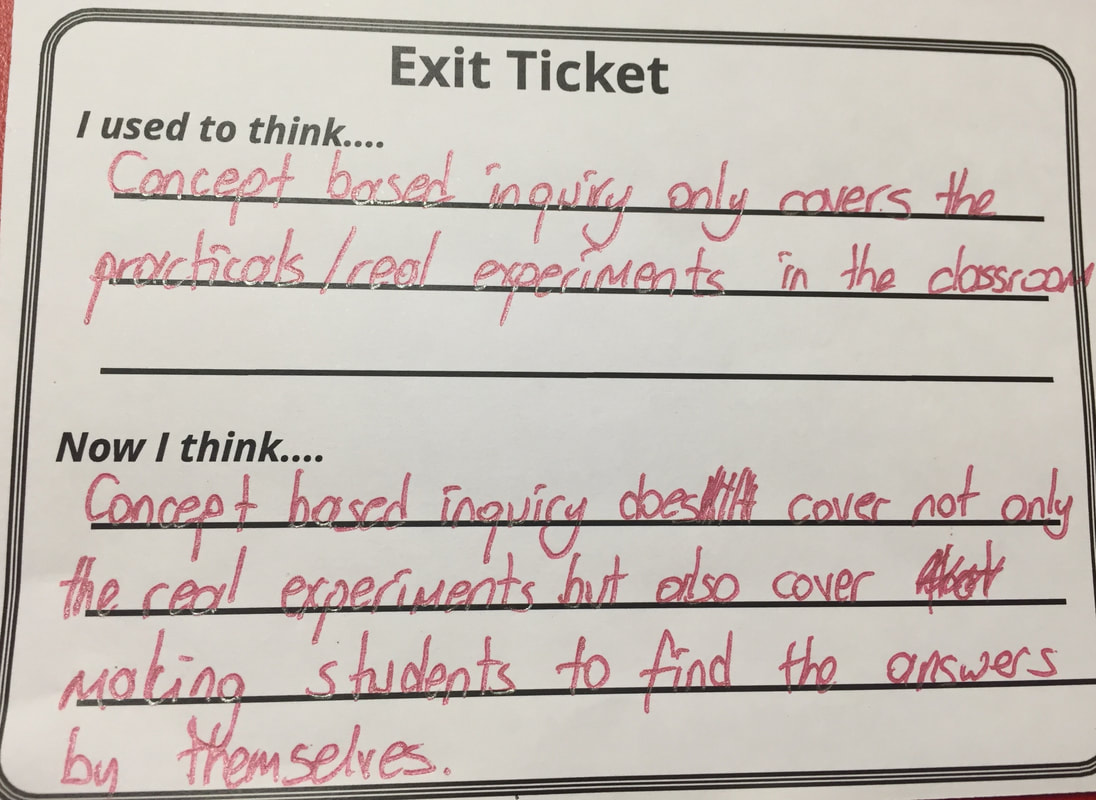
As a time of application, I asked the teachers to plan one lesson that would be inquiry-based using the lesson planner acronym from Jane Pollack, GANAG. We did this rather than planning an entire unit because the workshop was for just one day. To guide the teachers, I gave them a template that explained this acronym more thoroughly with examples to show how it can be useful and relevant to the concept-based inquiry classroom. G - goal - with inquiry, we begin with a question or a series of questions A - access prior knowledge N - new information A - application G - goal review / reflection time Finally, everyone filled out an exit ticket using the visible thinking tool, I used to think but now I think. This was even more rewarding than the conceptual understandings. It was an amazing day and I was so happy to see all teachers finding relevance to their context - from early years to grade 12. Everyone left the workshop feeling challenged and empowered to try out concept-based inquiry in their classrooms.
2 Comments
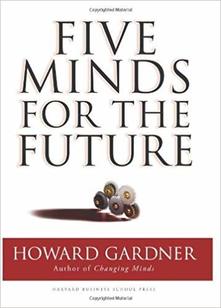 I recently enrolled in a leadership course with Maxine Driscoll and Think Strategic to continue developing my own understandings about leadership and how to approach the changes needed in education today for learners in the 21st century. I haven't made it past module 1 as the reading list is long and rigorous. Currently, I'm making may way through Five Minds for the Future by Howard Gardner. This book addresses the need for schools to develop the cognitive abilities in our students for the needs of the future.
The minds he addresses are: disciplinary, synthesizing, creating, respectful and ethical minds. As I read the chapter on the the disciplined mind, I saw the direct correlation to the work of Erickson and Lanning with concept-based curriculum and instruction as well as the framework of the Primary Years' Program. Howard Gardner defines the disciplined mind as: "the mastery of major schools of thought, including science, mathematics, and history, and of at least one professional craft." He addresses the issues that arise when our students lack a disciplined mind as they are unable to think conceptually, or apply the knowledge in more than one scenario. They may memorize facts about a particular discipline but are unable to demonstrate deep understandings as their teachers have not enabled them to have sufficient experience with the discipline from a variety of entry points, have not enabled them to make connections to concepts or enabled them to demonstrate understandings in a variety of settings or using a scenario that is entirely new to the students (formative as well as summative). I like how Howard Gardner referred to his theory of multiple intelligences in this context. If you approach a discipline with his theory in mind then there will be a variety of entry points and ways to learn about the discipline that enable students to experience it differently and develop understandings. Students don't need to just memorize the facts in mathematics, history or science. They need to understand how things work, generalize about process and apply theory to new scenarios. Concept-based curriculum and instruction addresses the disciplined mind as the teachers plans for conceptual understandings before beginning the unit, scaffold the thinking through questioning and facilitates inquiry that connects to concepts. Tools are provided for organizing knowledge in order to facilitate connections to concepts so that students are able to generalize and make transdisciplinary connections. Our education system depends heavily on standards/outcomes to identify the knowledge our students must learn and know. But simply filling our students with knowledge without facilitating rich discussions through conceptual questions and tools for recording and organizing information will not suffice. It has to be intentional, both thoughtfully and deliberately planned. Do not assume your students will move beyond the facts independently. Understandings are constructed through a variety of experiences working with the knowledge and considering different contexts. It really is essential for educators to continue to learn new ways to prepare for and facilitate concept-based inquiry for the development of deep conceptual understandings. Howard Gardner offers 5 tips for improving your teaching:
Once you begin working with students to identify their conceptual understandings, it becomes somethings that drives you as an educator. It is so much fun working with students to draw out and write generalizations or statements of understandings as they move through the inquiry cycle. In the thinking classroom, we facilitate the thinking through a variety of strategies. One of these is through the use of concept maps. Concepts maps can be created by the students independently, in teams or as a whole class. They can be drawn or constructed with cards to move around. They can be plain, use images or be color coded. There are so many ways to construct them. Students can organize them to make sense out of their learning and draw lines to connect concepts that have more than one connection. Many classes will stop at the concept map. You can take it to the next level by asking students to write generalizations using their concept map as a guide. Concept maps make the learning process more visible especially after having investigated their questions through experiential learning. This month I was working with a Grade 2 teacher to model this strategy. Grade 2 was investigating How We Organize Ourselves. Our central idea was: People create organizations to solve problems and support each other. We were in the Sorting Out stage of the inquiry cycle and the homeroom teacher and I were interested in checking our students' understandings to date. I took all the concepts the students had discovered in the unit of inquiry thus far (it was about the fourth week) and created cards for sorting and color coded them.
I asked the students to sit in a circle on the floor and we worked together to organize the concepts. As I placed the concepts on the floor in front of them, I asked students to identify where they believed it should go. They were asked to explain their thinking and justify its place in that particular order. All students were engaged in the thinking and trying to decide the best fit for the concepts. 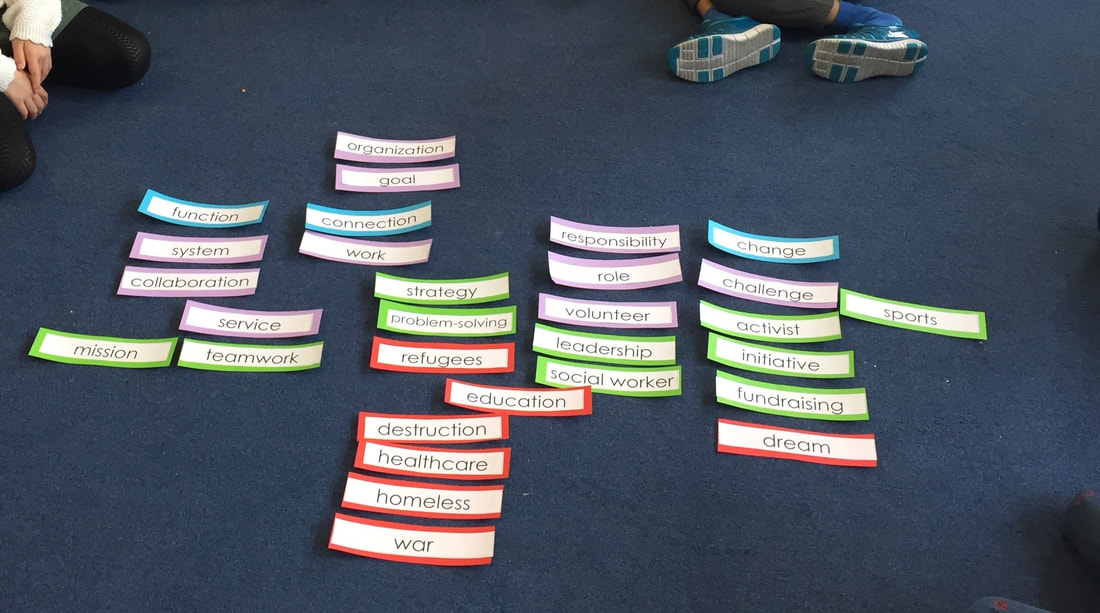 Once we had the concepts in place, I moved to the white board to guide the class to write a generalization together. I asked them to tell me what they understand about organizations now. I wrote 'Organizations' on the board. Then I told them to look at the map and think how we can use the concepts to explain what we know about organizations now. I reminded them of the no, no words: is, are, have and pronouns. I asked them to think deeply about strong verbs. There were moments when it was very quiet as students stared at the board, then the concept map and thought about strong verbs. The first phrase we produced together was: Organizations use teamwork and collaboration strategies... so I added the word 'to' and asked them to continue thinking about our understandings. Wait time was so important here. I gave them time to think and then we were able to add: ... to solve a mission for changes in the world. 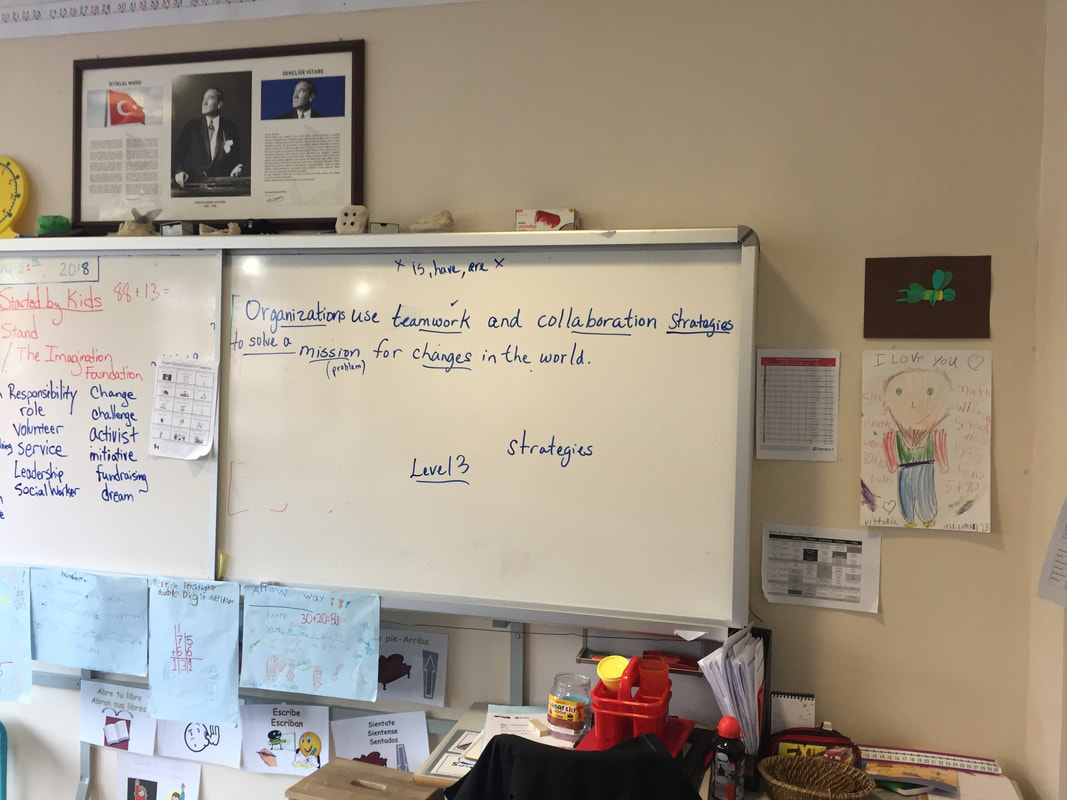 Our generalization after several weeks of investigation was far stronger than the central idea our teachers generated for the unit as you can see below: Teacher generated: People create organizations to solve problems and support each other. Student generated: Organizations use teamwork and collaboration strategies to solve a mission for changes in the world. Next time I try this, there are some things I will do to extend this. - Yarn strips could be used to make connections from one concept to another when they can fit in more than one place. - Each column could have its own statement of understanding - Students can reorganize the concepts at the conclusion of the unit to see if they had different ideas or reasons for placement. Writing generalizations are great for formative assessment especially if you keep a space on the walls in the room for class understandings that is accessible to all. As the class moves from one line of inquiry to the next, writing generalizations together or independently help students to organize their minds and track their learning. For younger students, that may mean modeling and joint construction such as I did with grade 2 until they are able to create their own concept maps. I encourage you to give it a try and begin teaching inductively. Guide your students to discover the understandings through concrete experiences and it will be far more powerful than unpacking the central idea. 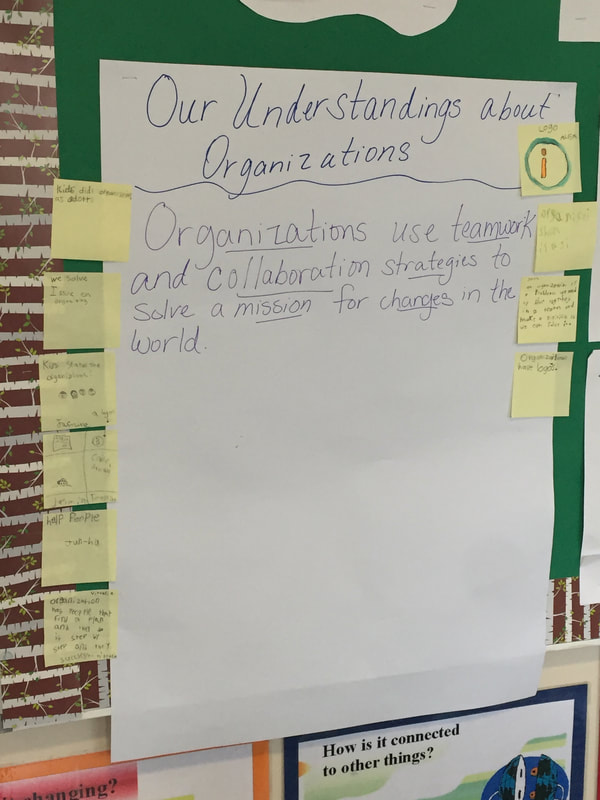
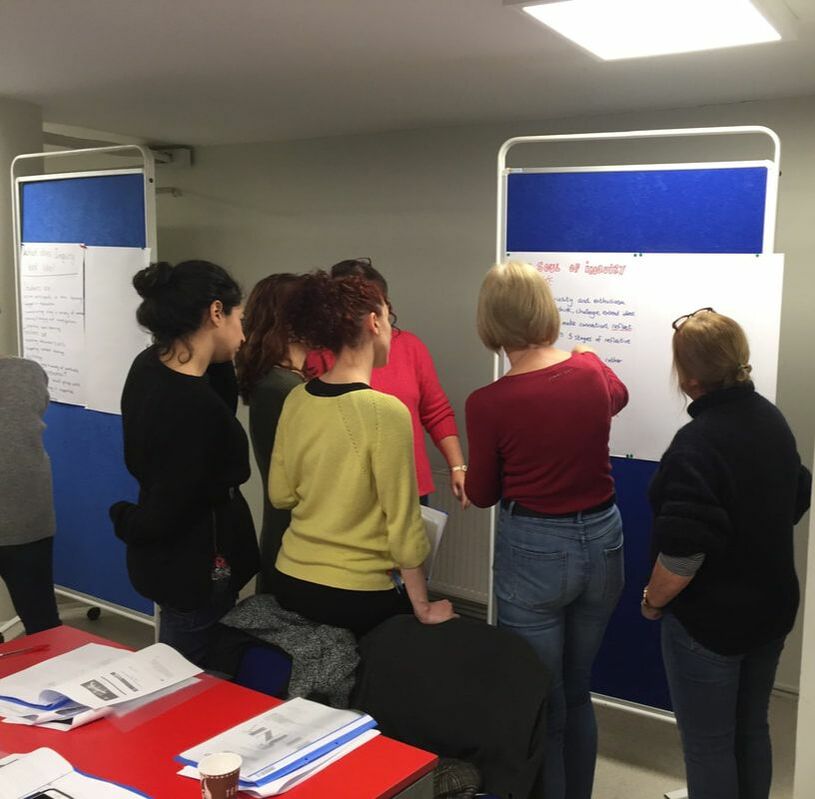
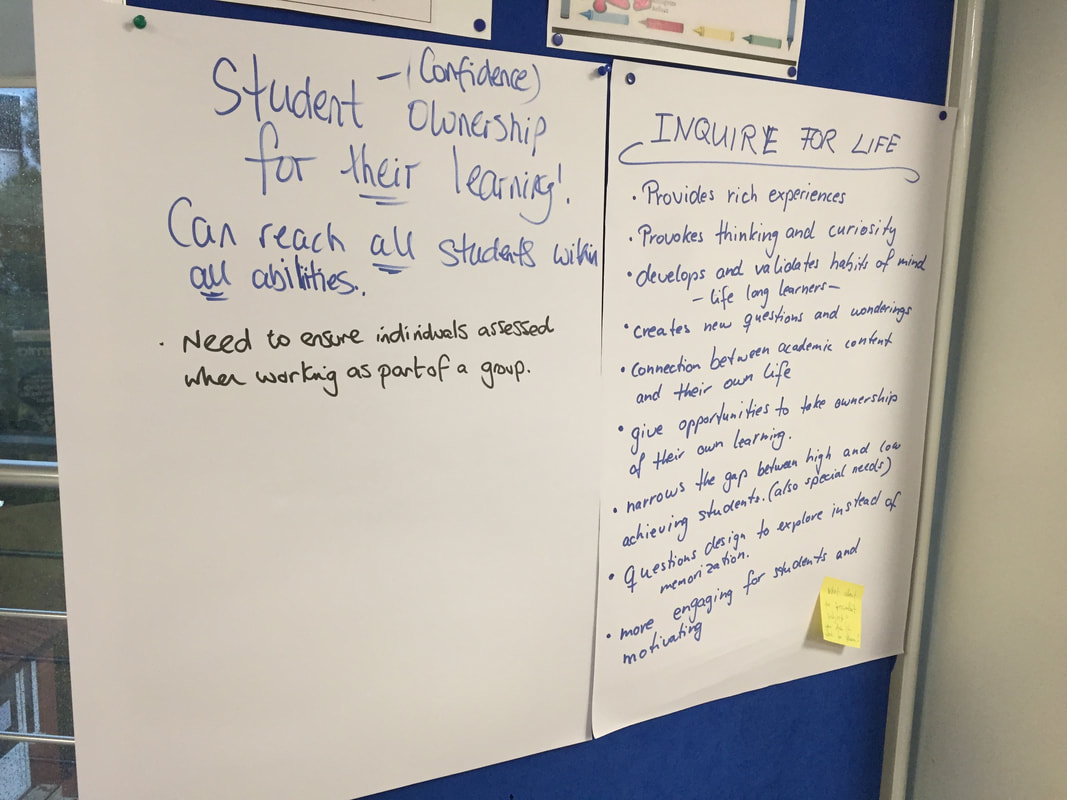
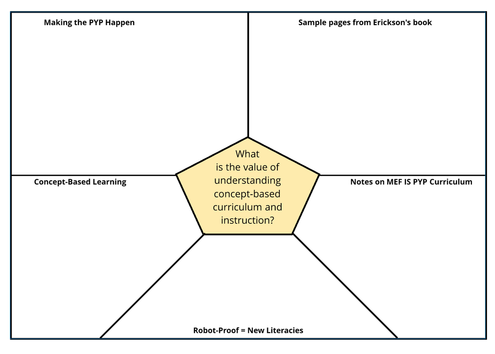 Following that session, we continued to make connections between our professional learning communities (PLC's) and CBCI to develop further our understandings about the value of CBCI. I provided each PLC with a T-Chart to compare CBCI with their inquiry topic. While some were investigating Understanding by Design, others were looking into methods of inquiry, multilingualism, strategies for ELL to use in inquiry or visible thinking tools. As a staff, we were able to make many connections between CBCI and our PLC's. Finally, I shared some of my own learning journey as I had moved from project-based learning to concept-based inquiry. I shared some of my personal questions, frustrations and ideas I had found to both deepen and capture conceptual understandings. My goal was to show them the complexity and validity of the journey I had pursued by making it tangible. I shared my struggles, my fears and victories, and my passion for growing and deepening my own understanding about CBCI in the classroom. We resumed the CBCI course content with a different vibe in the room. There was more interest, more questioning and buy in. Teachers actively engaged in discussions to plan their units of inquiry using the framework of CBCI. At the conclusion of the training, I saw some true shifts in understandings. The most important lesson I learned from my reflection is that learning must be relevant for all - both students and teachers. They must know why.
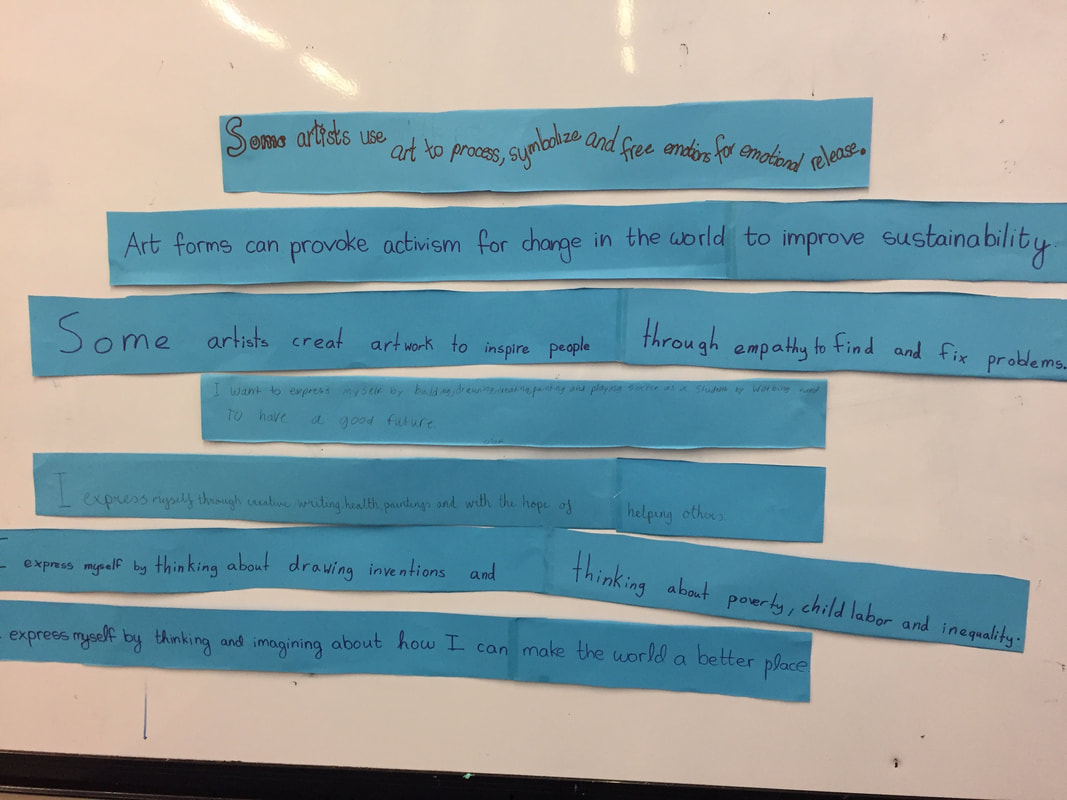
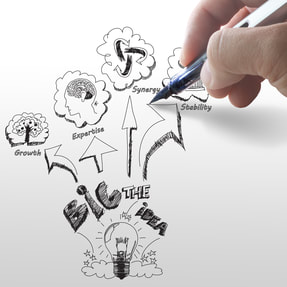
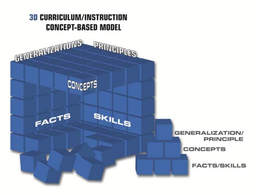
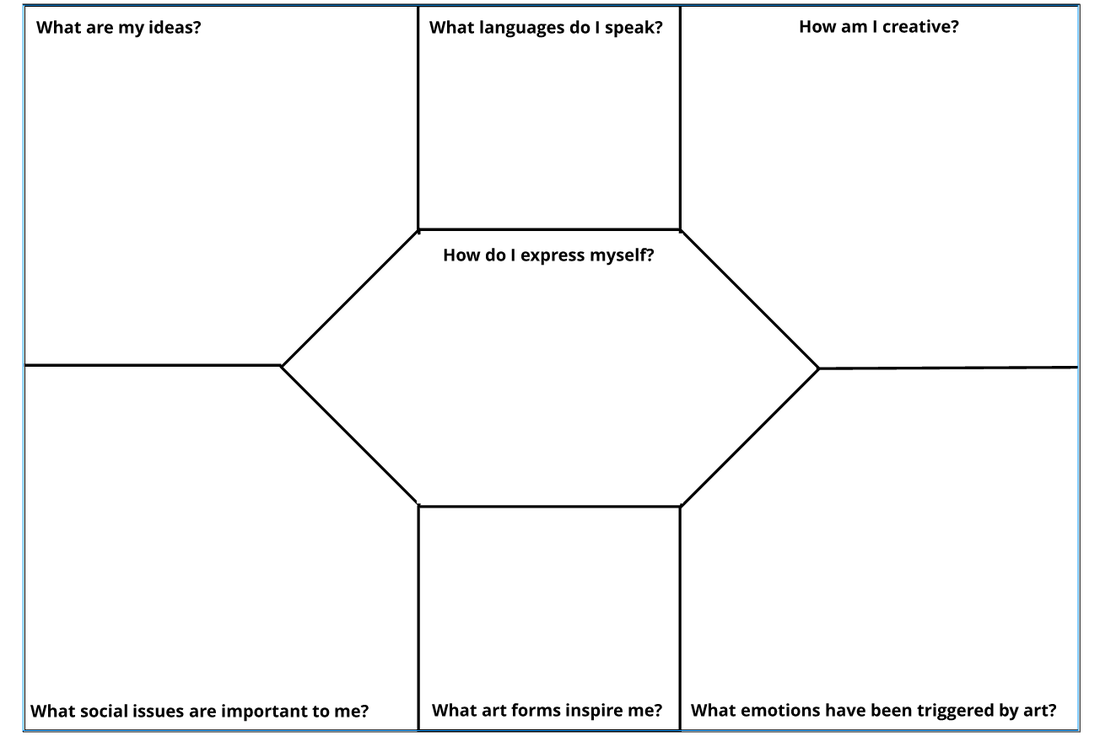
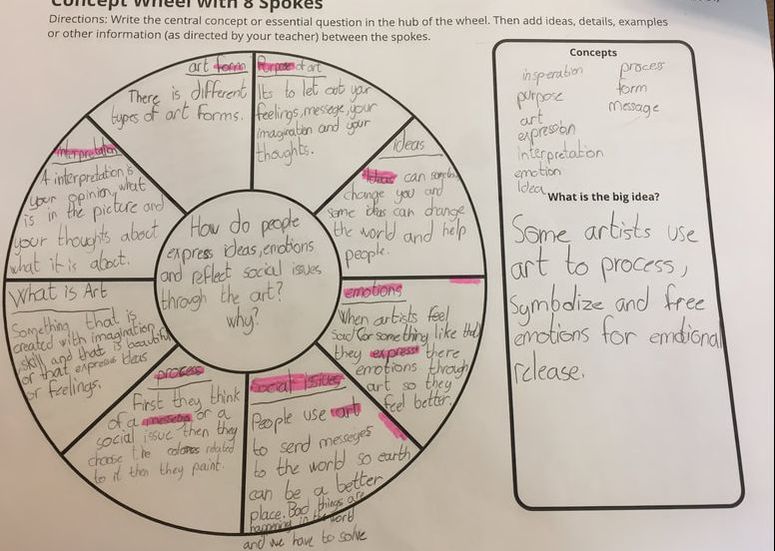
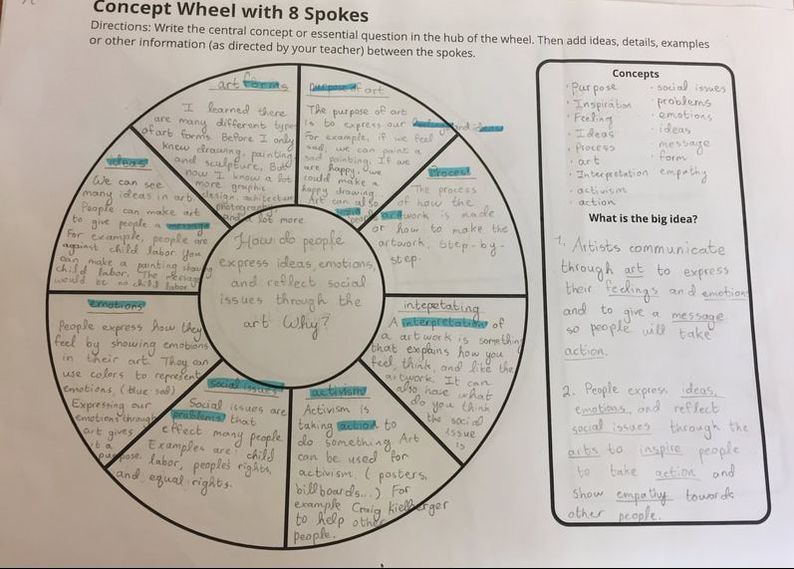
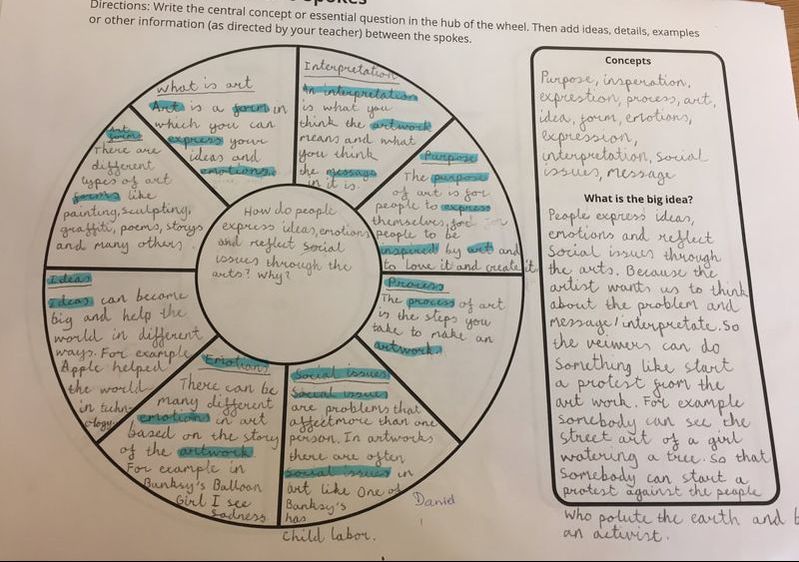
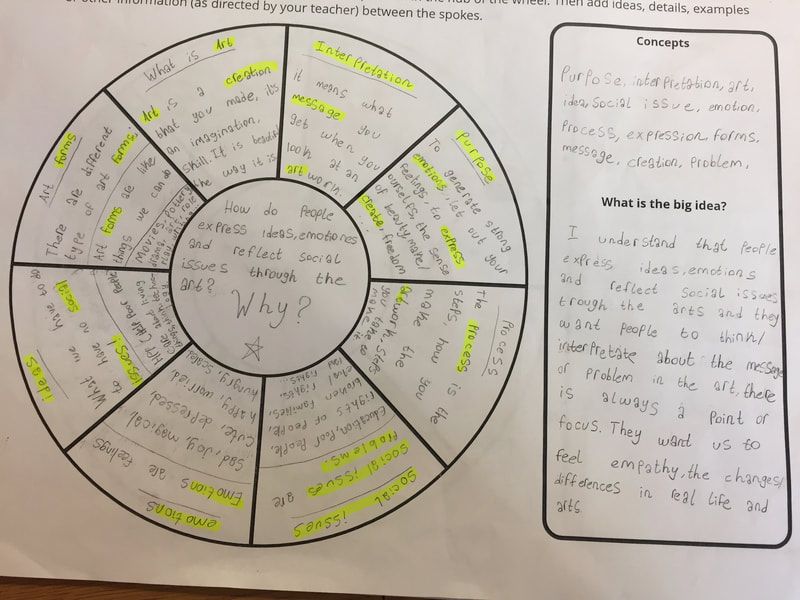
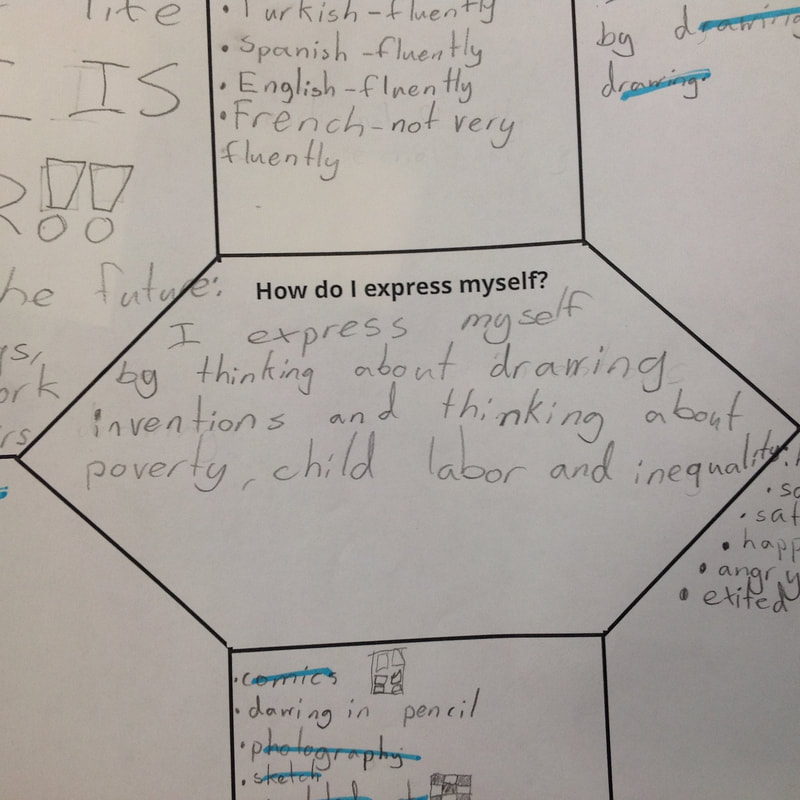
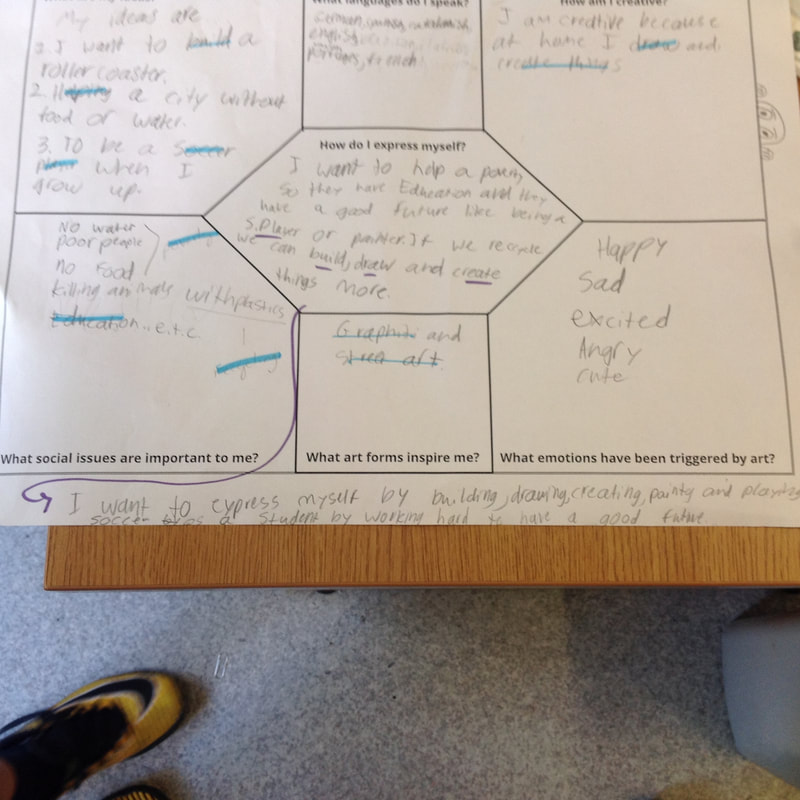
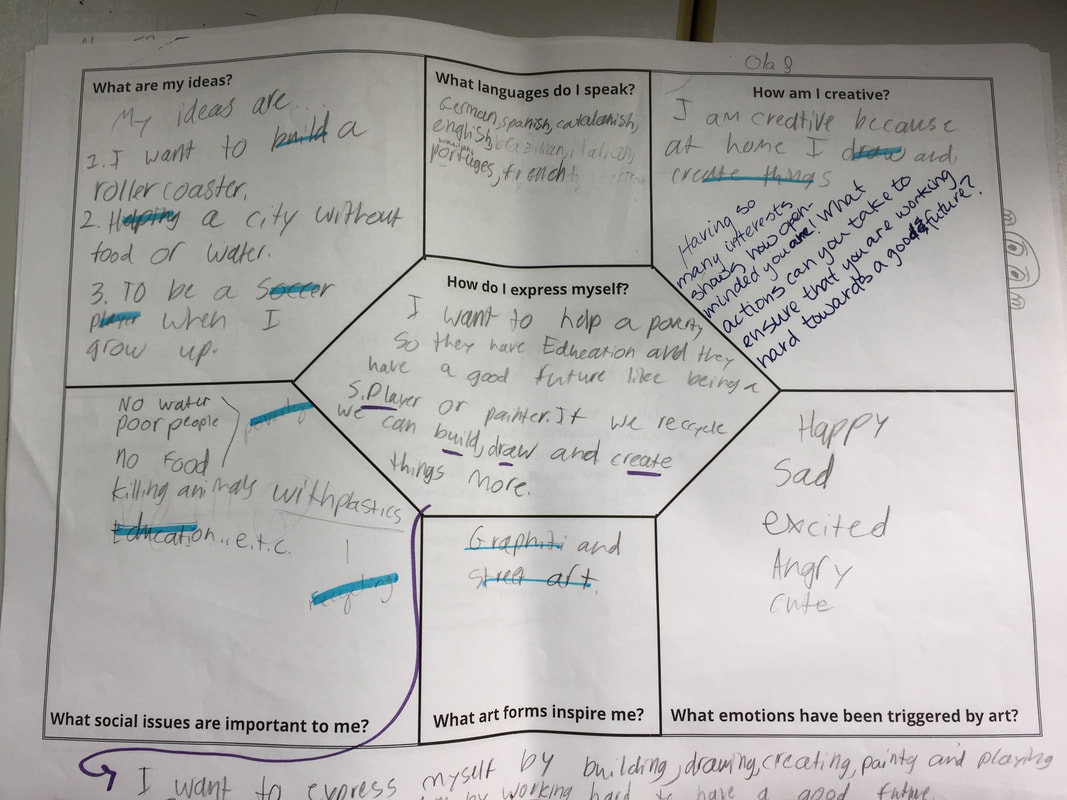
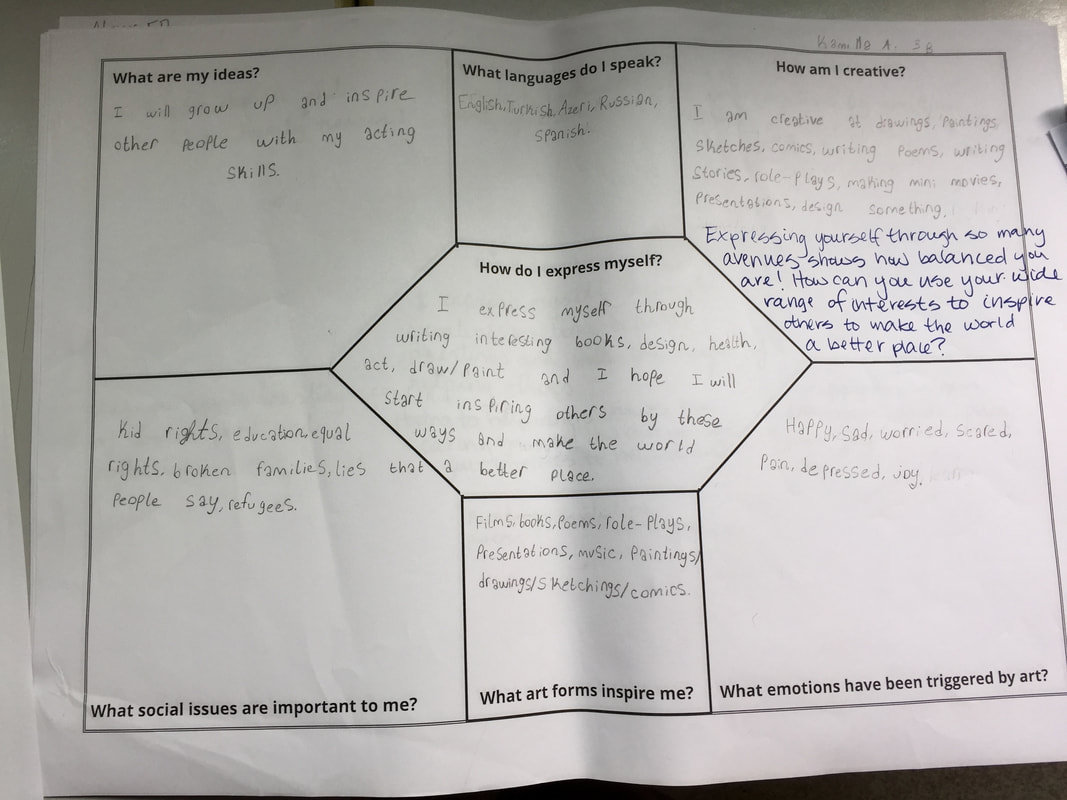
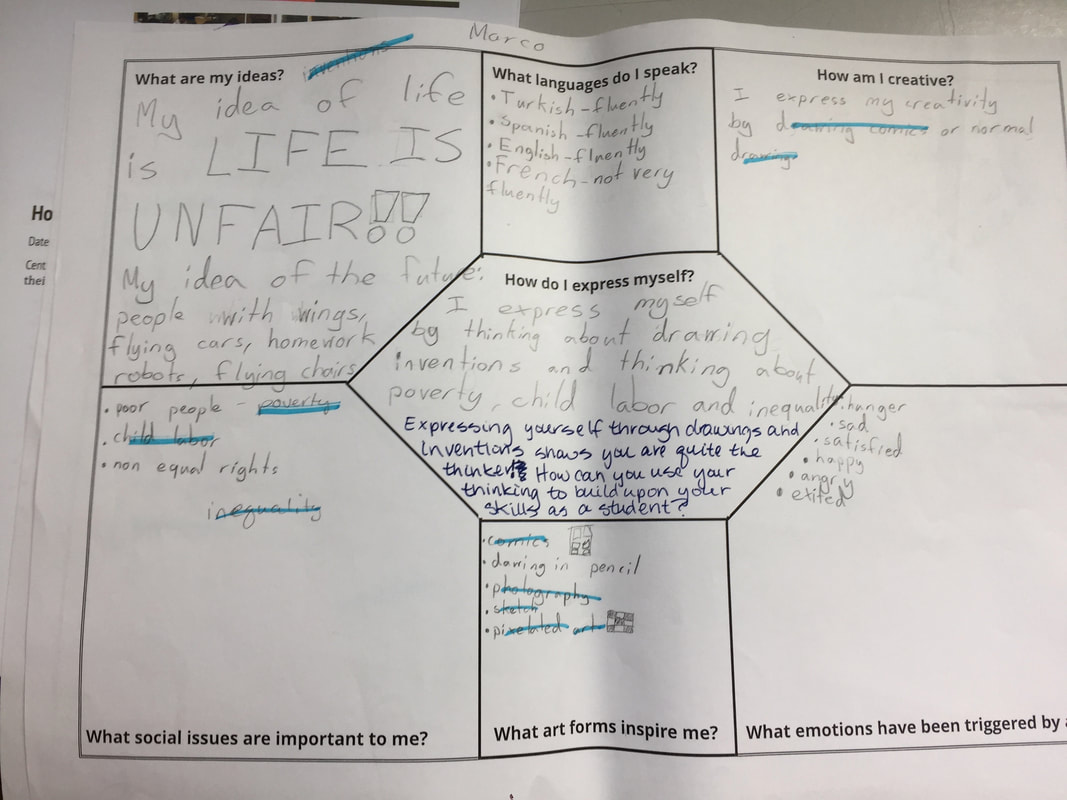
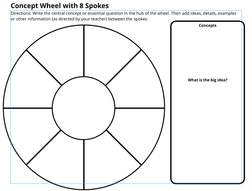 Figure 1 Figure 1 As a concept-based inquiry teacher, I am fascinated with ways in which we can guide students to use their critical thinking skills to find the big idea or produce their own unique generalizations to express understandings about the unit of inquiry. While working with grade 5, I explored the use two different tools to draw out those understandings. I wanted to know if they could produce a generalization that extended the central idea since they had already been exposed to it. Secondly, I wanted to know if they could generate a generalization about the transdisciplinary theme, How We Express Ourselves. To address my first goal of extending the central idea, I gave each student a concept wheel (see figure 1). Because this was their first experience with this tool, I guided them through each step. Together we decided on the concepts we had learned about and used those as our categories around the concept wheel. I observed the students thoughtfully engaging with the engagement which meant we had reached that synergism of thought connected to the 3D curriculum (see figure 2). They were able to write a variety of statements, demonstrating both conceptual understandings and knowledge gleaned from our inquiry around the question posed in the center of the wheel. I then asked them to write a big idea using the concept wheel as a starting point. This was too difficult and I got a lot of thoughtfully confused looks. So, I wrote the central idea on the board: People express ideas, emotions and reflect social issues through their art. But I challenged them to extend it. I asked them the questions, why and so what? This resulted in some nice generalizations but it would have been better if they had never seen the central idea in the first place. I would like to try it again without the central idea on the wall and see if we come close as a class to writing the intended understanding. I will repeat this exercise with grade 5 at the end of this upcoming unit to see if there is a difference. The following day, we thought about our transdisciplinary theme and how it related to each student personally. I developed a tool with questions drawn from our central idea and lines of inquiry with our TD theme at the center (see figure 3). This was also the first time I tried to draw out their new understandings of the TD theme. I am still in the process of developing my own understandings about the best way in which to do this. I realized some of my questions were difficult to answer for some of my students. I realized it is important to continue to develop metacognitive thinking skills in order to learn and know more about themselves. so not all of my students were using enough reflective or metacognitive thinking to be able to interact with the graphic organizer. It will be a skill that I would have to continue to build with them. What is my take away? I see that learning to use these types of tools and becoming a CBCI teacher is a learning curve that takes practice. Each time will get better and as I learn to scaffold the thinking better, the results will get better. It also means more collaboration with other teachers pursuing the same approaches to learning. Discussing our attempts, reflecting together and finding ways to improve together is much better than trying alone. I encourage you to make connections with others who are also working to improve their skills and understandings about CBCI.
Resources"The Big Idea," Global Women Network, Eva Smith, 2014.
Erickson, L, Lanning, L. and French, R. (2017). Concept-based curriculum and instruction for the thinking classroom, 2nd ed. Corwin: Thousand Oaks. |
AuthorAs an international educator, I work with colleagues in my local and global network regularly to implement inquiry through concept-based approaches to learning and teaching. It is a journey of discovery, learning and growing our own understandings about the ways children learn. Categories
All
Archives
March 2020

|






 RSS Feed