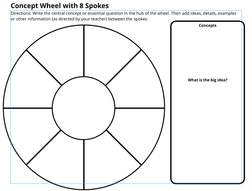
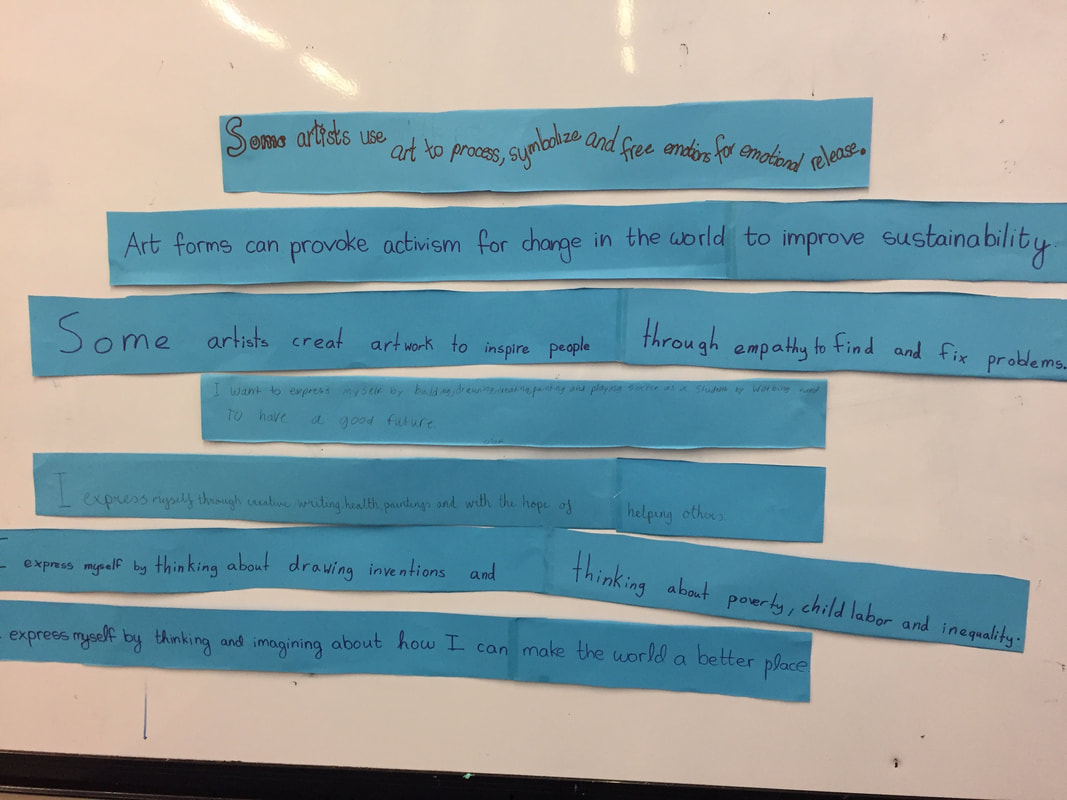
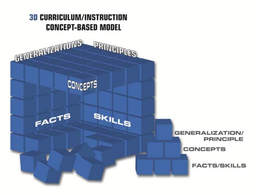
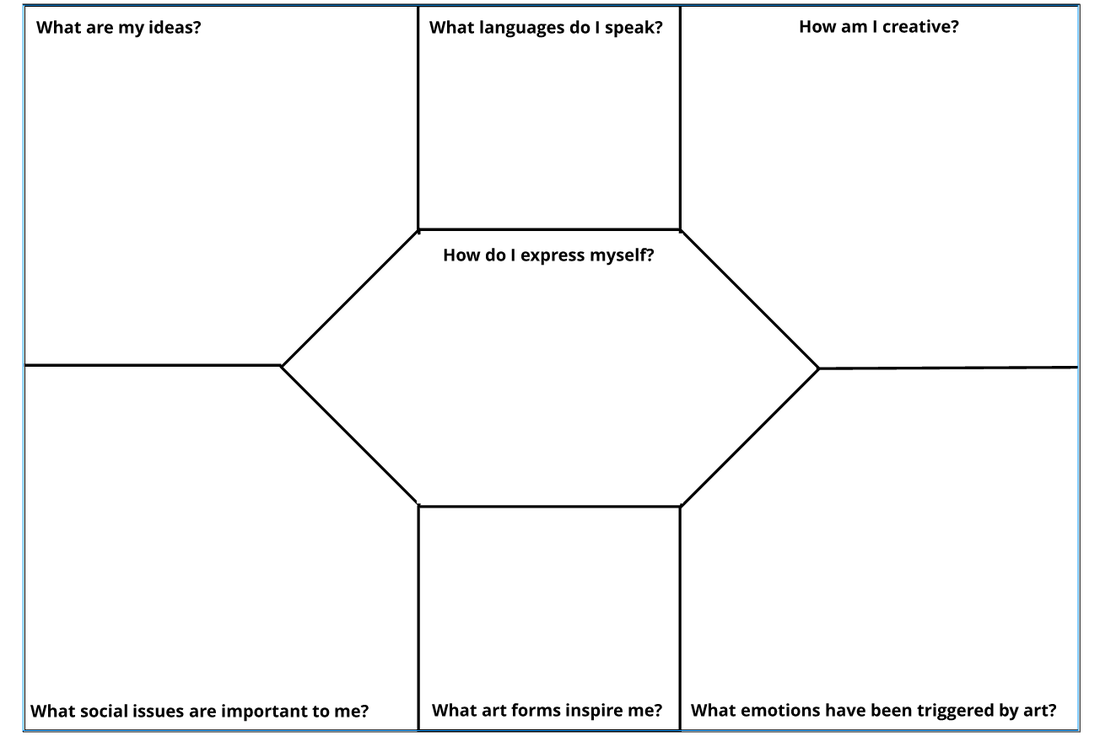
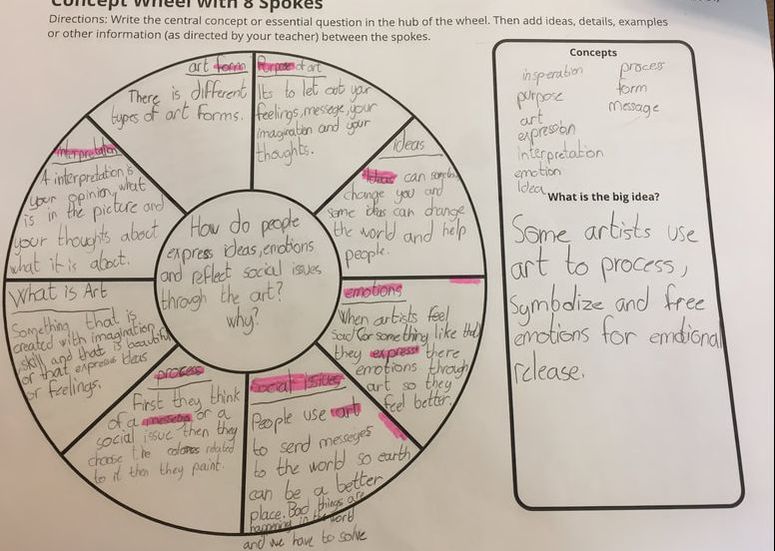
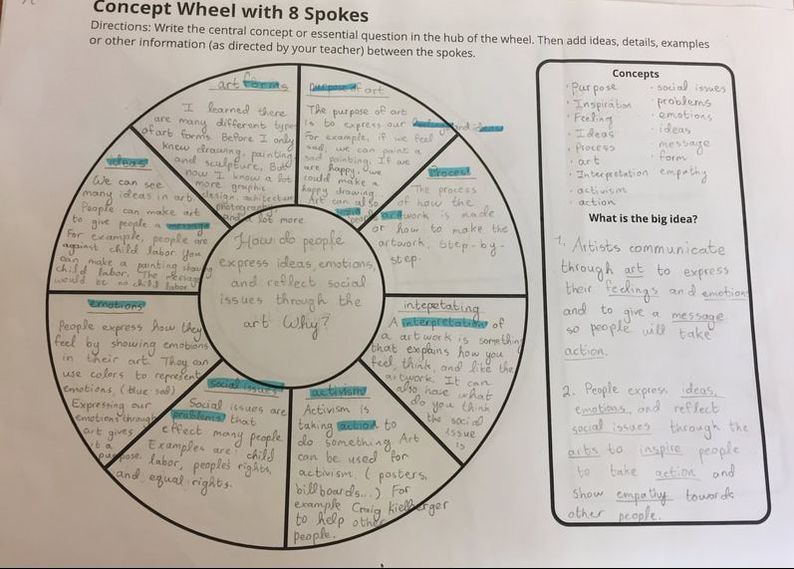
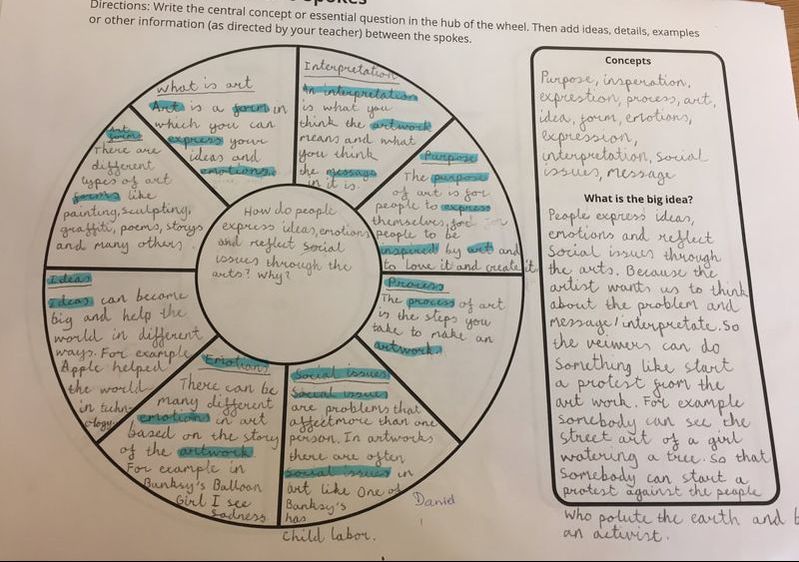
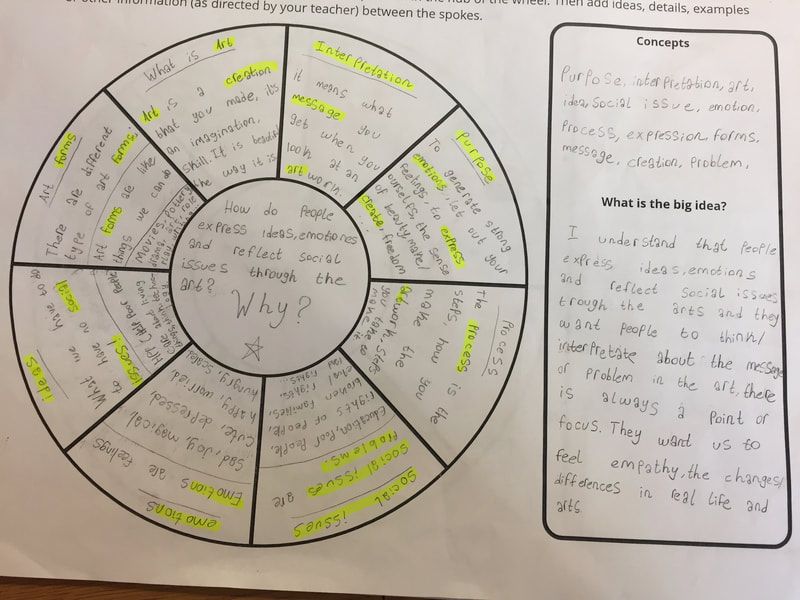
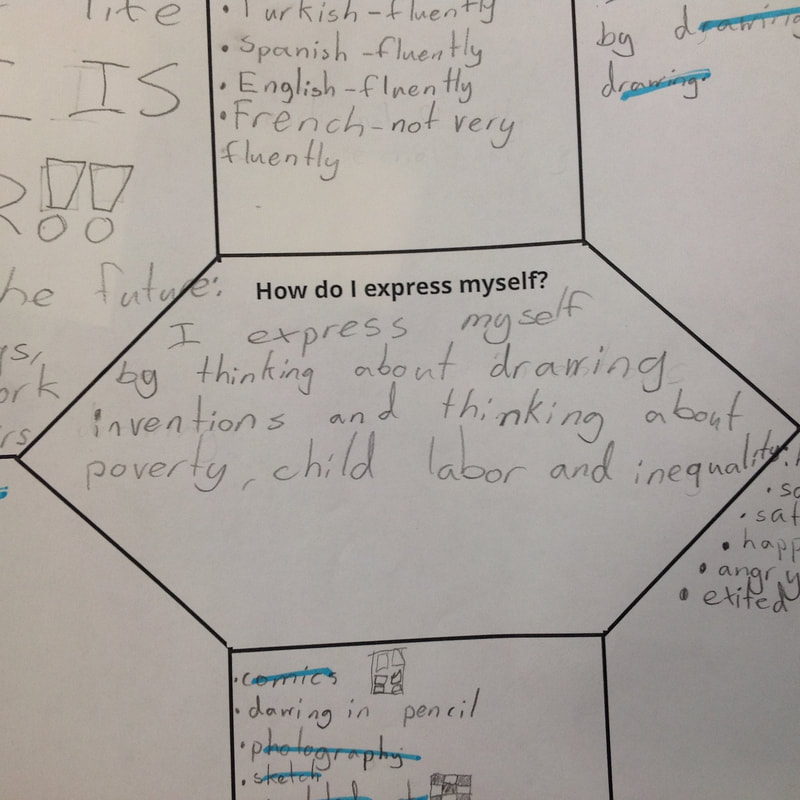
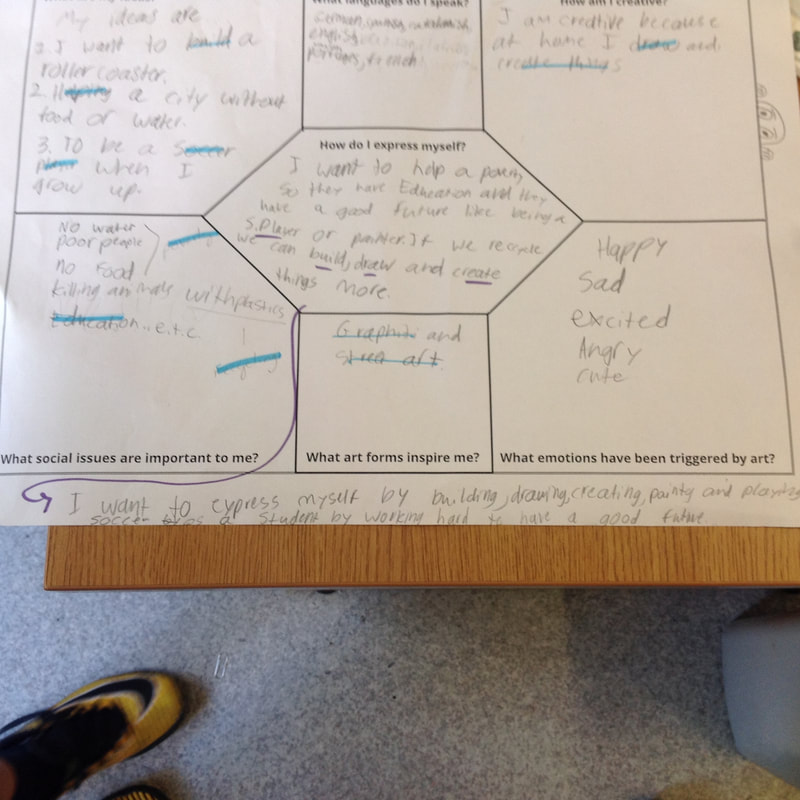
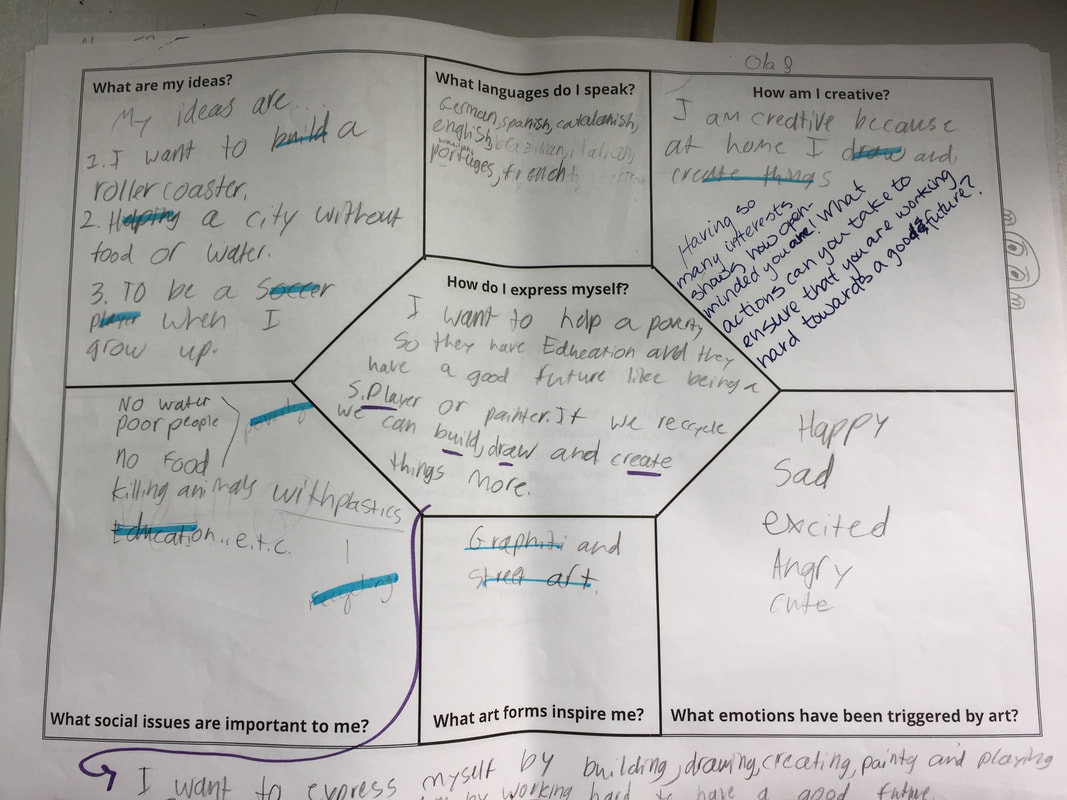
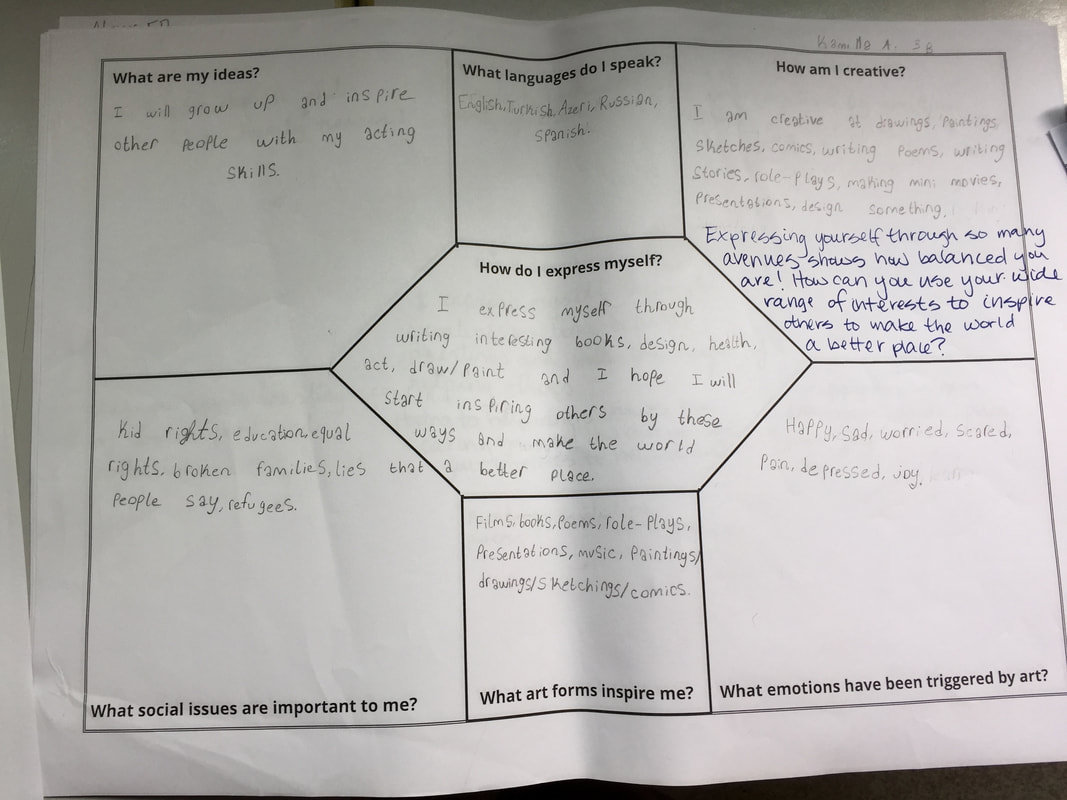
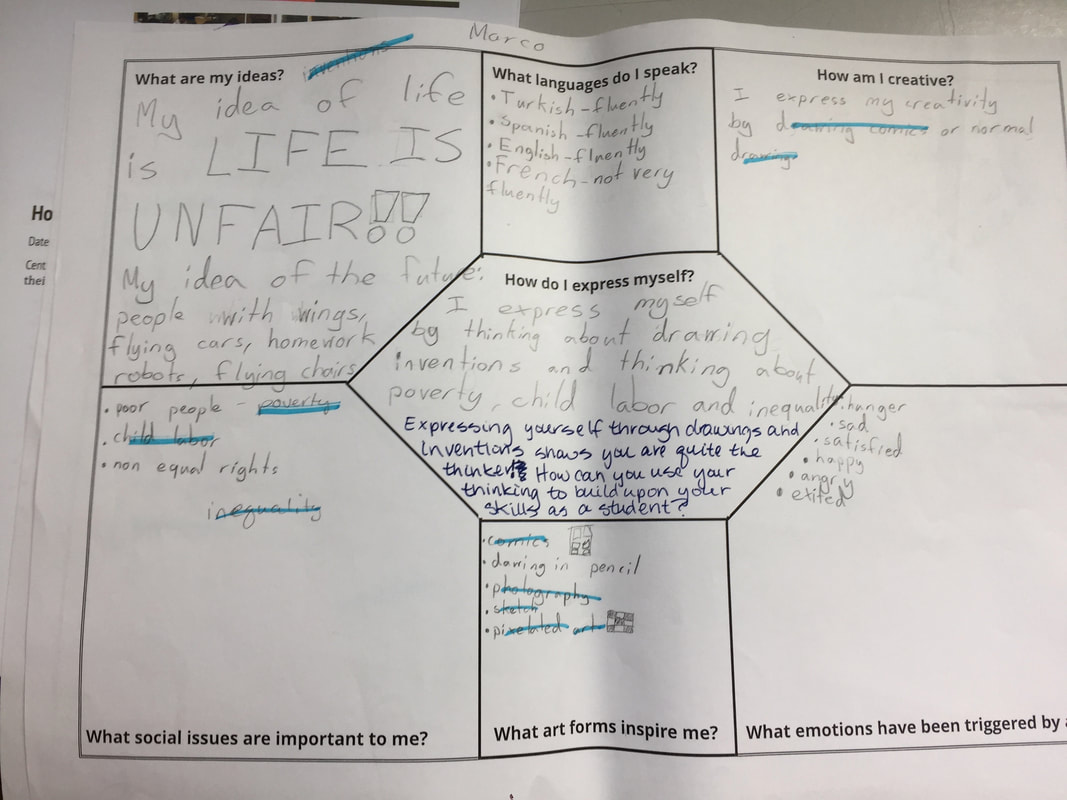
 Figure 1 Figure 1 As a concept-based inquiry teacher, I am fascinated with ways in which we can guide students to use their critical thinking skills to find the big idea or produce their own unique generalizations to express understandings about the unit of inquiry. While working with grade 5, I explored the use two different tools to draw out those understandings. I wanted to know if they could produce a generalization that extended the central idea since they had already been exposed to it. Secondly, I wanted to know if they could generate a generalization about the transdisciplinary theme, How We Express Ourselves. To address my first goal of extending the central idea, I gave each student a concept wheel (see figure 1). Because this was their first experience with this tool, I guided them through each step. Together we decided on the concepts we had learned about and used those as our categories around the concept wheel. I observed the students thoughtfully engaging with the engagement which meant we had reached that synergism of thought connected to the 3D curriculum (see figure 2). They were able to write a variety of statements, demonstrating both conceptual understandings and knowledge gleaned from our inquiry around the question posed in the center of the wheel. I then asked them to write a big idea using the concept wheel as a starting point. This was too difficult and I got a lot of thoughtfully confused looks. So, I wrote the central idea on the board: People express ideas, emotions and reflect social issues through their art. But I challenged them to extend it. I asked them the questions, why and so what? This resulted in some nice generalizations but it would have been better if they had never seen the central idea in the first place. I would like to try it again without the central idea on the wall and see if we come close as a class to writing the intended understanding. I will repeat this exercise with grade 5 at the end of this upcoming unit to see if there is a difference. The following day, we thought about our transdisciplinary theme and how it related to each student personally. I developed a tool with questions drawn from our central idea and lines of inquiry with our TD theme at the center (see figure 3). This was also the first time I tried to draw out their new understandings of the TD theme. I am still in the process of developing my own understandings about the best way in which to do this. I realized some of my questions were difficult to answer for some of my students. I realized it is important to continue to develop metacognitive thinking skills in order to learn and know more about themselves. so not all of my students were using enough reflective or metacognitive thinking to be able to interact with the graphic organizer. It will be a skill that I would have to continue to build with them. What is my take away? I see that learning to use these types of tools and becoming a CBCI teacher is a learning curve that takes practice. Each time will get better and as I learn to scaffold the thinking better, the results will get better. It also means more collaboration with other teachers pursuing the same approaches to learning. Discussing our attempts, reflecting together and finding ways to improve together is much better than trying alone. I encourage you to make connections with others who are also working to improve their skills and understandings about CBCI.
Resources"The Big Idea," Global Women Network, Eva Smith, 2014.
Erickson, L, Lanning, L. and French, R. (2017). Concept-based curriculum and instruction for the thinking classroom, 2nd ed. Corwin: Thousand Oaks.
0 Comments
Your comment will be posted after it is approved.
Leave a Reply. |
AuthorAs an international educator, I work with colleagues in my local and global network regularly to implement inquiry through concept-based approaches to learning and teaching. It is a journey of discovery, learning and growing our own understandings about the ways children learn. Categories
All
Archives
March 2020

|


 RSS Feed